
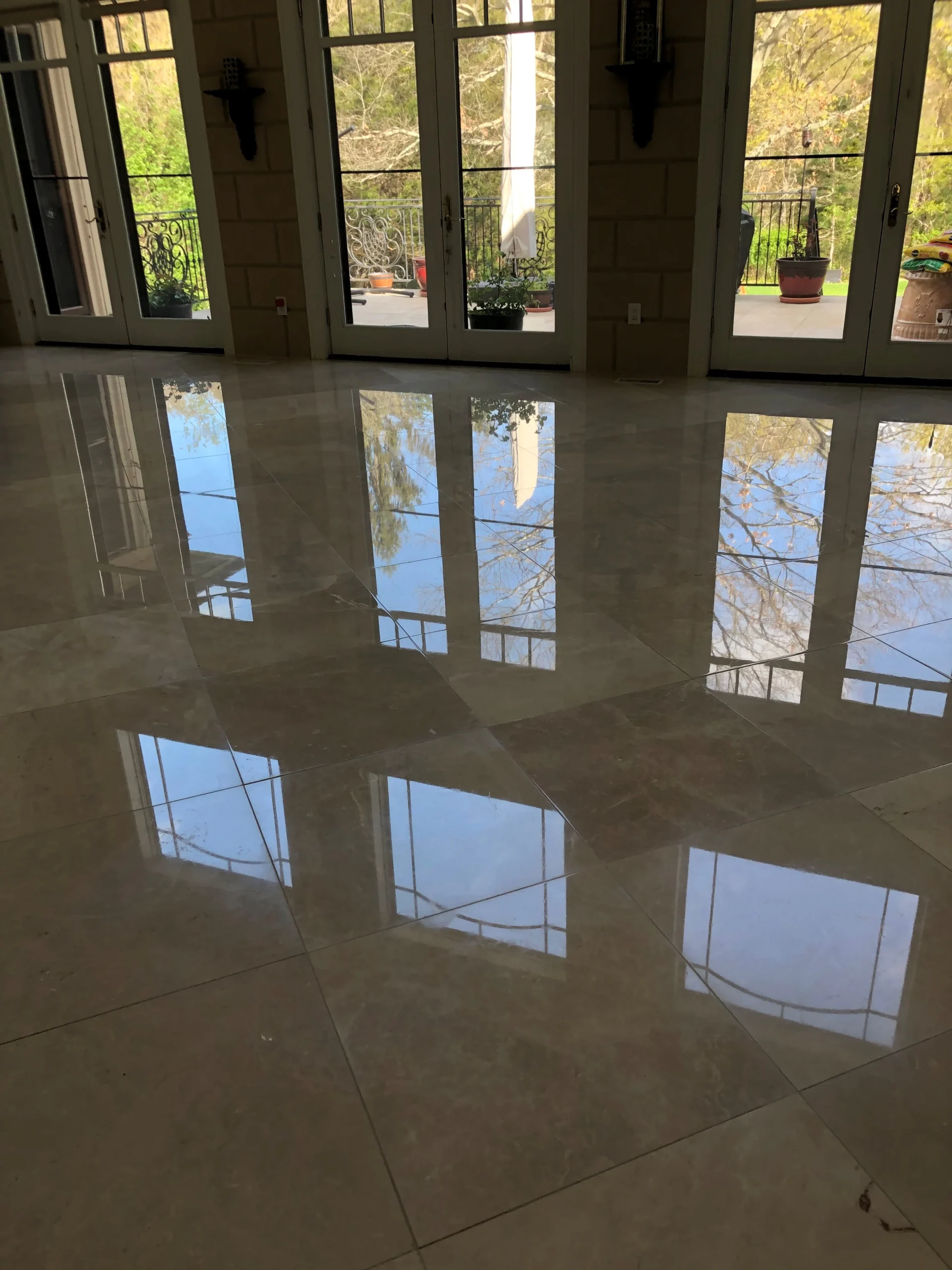
You get the shine back. The kind that makes you stop and look twice when you walk through the room.
Scratches disappear. Etches from decades of wear get polished out. Dull, lifeless surfaces turn glossy again without ripping out irreplaceable stone that’s been in your home for a century.
Most jobs finish in under two days. You’re not living in construction chaos for weeks like you would with replacement. And you’re not spending $70 to $190 per square foot on new marble when the floors you already have just need proper restoration.
The real win? You keep the authentic character. Once original floors are gone, they’re gone forever. Restoration brings them back to life while protecting what made your historic Uniondale home worth buying in the first place.
We specialize in the hard jobs. The century-old floors. The ones other companies look at and say it’s easier to replace.
We’re owner-operated, which means you get direct expertise on every project. No subcontractors guessing their way through your historic marble. The New York Times featured our work back in 2001, and we’ve spent over two decades since then refining how we approach floors in older Uniondale homes.
Homes built in the 1940s and 1950s around here weren’t constructed with modern moisture barriers. That matters when you’re near water and dealing with humidity that affects calcium carbonate in marble. We know what to look for because we’ve seen it hundreds of times across Nassau and Suffolk Counties.
You call for a free quote. We come out, look at your floors, and tell you exactly what’s possible and what it’ll cost. No surprises later.
If you move forward, we start with a full assessment of damage. Cracks, etches, stains, dullness—we map out what needs attention. Then we carefully mask and protect everything around the work area because marble restoration creates dust and we’re not leaving your house a mess.
The actual restoration involves grinding down damaged layers, honing the surface smooth, and polishing it back to a high-gloss finish. We’re removing scratches and etches at the microscopic level, not just buffing the surface and hoping it looks better.
For historic floors, we’re also checking for hidden defects. A century gives problems plenty of time to develop, and catching them during restoration prevents bigger issues later. Most straightforward jobs wrap up in less than two days of actual work. You’re back to normal life fast, but with floors that look completely different.

Ready to get started?
You get a complete evaluation before any work starts. We identify every issue—scratches, etches, stains, cracks, dullness. Then we explain what’s fixable and what’s not, because honesty matters more than landing every job.
The restoration itself covers grinding, honing, and polishing. We’re not cleaning your floors. We’re rebuilding the surface layer to remove damage and bring back the original finish. That’s a different process entirely, and it requires different equipment and expertise.
In Uniondale, where 72% of housing units are owner-occupied and the median home value sits at $539,000, you’re protecting a significant investment. Well-maintained original marble floors can increase property value by 3-5%. Buyers pay premium prices for authentic, restored features in historic homes.
We also handle concrete restoration and polishing now. It’s one of the fastest-growing flooring trends, and the process is similar to marble work. If you’ve got old concrete that could use new life, we can turn it into a glossy, durable surface that rivals traditional stone.
Professional marble restoration typically runs $10 to $25 per square foot in the New York area. Simple polishing sits on the lower end. Extensive repairs with crack filling and deep stain removal cost more.
Replacement costs $70 to $190 per square foot for new marble installation on Long Island. You’re paying for materials, demolition, disposal, new stone, and installation labor. That’s before you factor in the weeks of disruption and the loss of irreplaceable historic character.
Restoration makes financial sense when your existing marble is structurally sound. If the stone itself isn’t cracked beyond repair or completely destroyed, bringing it back costs a fraction of starting over. You also finish faster and keep the authentic floors that add value to historic Uniondale properties.
Yes, but it depends on how deep the damage goes. Marble is calcium carbonate, which means acids etch it easily. Spills from cleaning products, wine, citrus—they all leave dull spots by dissolving the surface.
We remove etches by grinding down past the damaged layer, then honing and polishing the marble back to a smooth, glossy finish. Surface-level etches come out completely. Deeper damage takes more work but is still fixable in most cases.
Scratches work the same way. Light scratches disappear during polishing. Deeper gouges require more aggressive grinding first. The key is having enough marble thickness to work with, which most century-old floors do. They were installed thick because that’s how it was done back then, giving us room to restore without compromising structural integrity.
Most straightforward restoration jobs finish in less than two days of actual work. That’s for polishing, honing, and addressing typical wear like scratches and dullness.
More complex projects take longer. If we’re repairing significant cracks, removing deep stains, or dealing with extensive damage across a large area, you’re looking at additional time. We’ll tell you upfront during the quote so there’s no confusion.
Compare that to replacement, which can take weeks. You’re scheduling demolition, waiting for new materials, coordinating installation, and dealing with the mess of tearing out old floors. Restoration keeps you in your home with minimal disruption, and you’re back to normal life while still getting dramatic results.
Cleaning addresses surface dirt. Restoration rebuilds the actual stone surface. They’re completely different processes, and a lot of companies blur the line because restoration requires specialized equipment and expertise.
Cleaning companies often use harsh abrasives and acids that can destroy marble over time. They’re scrubbing away grime, but they’re also damaging the stone if they don’t know what they’re doing. You might get temporary shine, but you’re creating long-term problems.
Restoration involves diamond abrasives in progressively finer grits. We’re grinding down damaged layers, honing the surface perfectly flat, and polishing it to a mirror finish. This removes scratches, etches, and dullness at the structural level. It’s not a surface treatment—it’s rebuilding the top layer of your marble to factory-new condition.
It depends on the type of water damage. Surface staining from hard water or mineral deposits usually comes out during restoration. We’re grinding past the stained layer and polishing fresh marble underneath.
Structural damage from prolonged moisture exposure is different. If water has gotten underneath the marble and caused the substrate to fail, you’ve got bigger problems than surface restoration can fix. That requires addressing the underlying moisture issue first, then potentially resetting tiles.
Water damage is particularly common in older Nassau County homes near the water, where humidity and occasional flooding affect installations. Homes built in the 1940s and 1950s around Uniondale often lack modern moisture barriers, making marble vulnerable. We assess the full extent during the initial quote so you know exactly what you’re dealing with before committing to anything.
If you’ve got original marble floors in a historic Uniondale home, restoration can increase property value by 3-5%. Buyers pay premium prices for authentic, well-maintained period features.
Dull, scratched marble sends the opposite message. It looks like deferred maintenance, and buyers either negotiate down or budget for replacement in their heads. Restored floors show the home has been cared for and highlight the character that makes historic properties desirable.
The math usually works in your favor. Spending $10 to $25 per square foot on restoration beats the alternative of buyers discounting your asking price by thousands because the floors look neglected. And it’s far cheaper than the $70 to $190 per square foot you’d spend on replacement just to get the home market-ready.