

Your marble floors look dull, scratched, or stained. You’re worried that replacement is the only option, which means losing the authentic character that makes your Thomaston home special.
Restoration changes that equation completely. The original marble stays. The historic patterns remain intact. And you end up with a surface that looks better than it has in decades—often for a fraction of what replacement would cost.
Most marble floor restoration projects in Thomaston wrap up in one to three days depending on size and condition. That means your bathroom or entryway isn’t out of commission for weeks. You get your space back quickly, and the results speak for themselves.
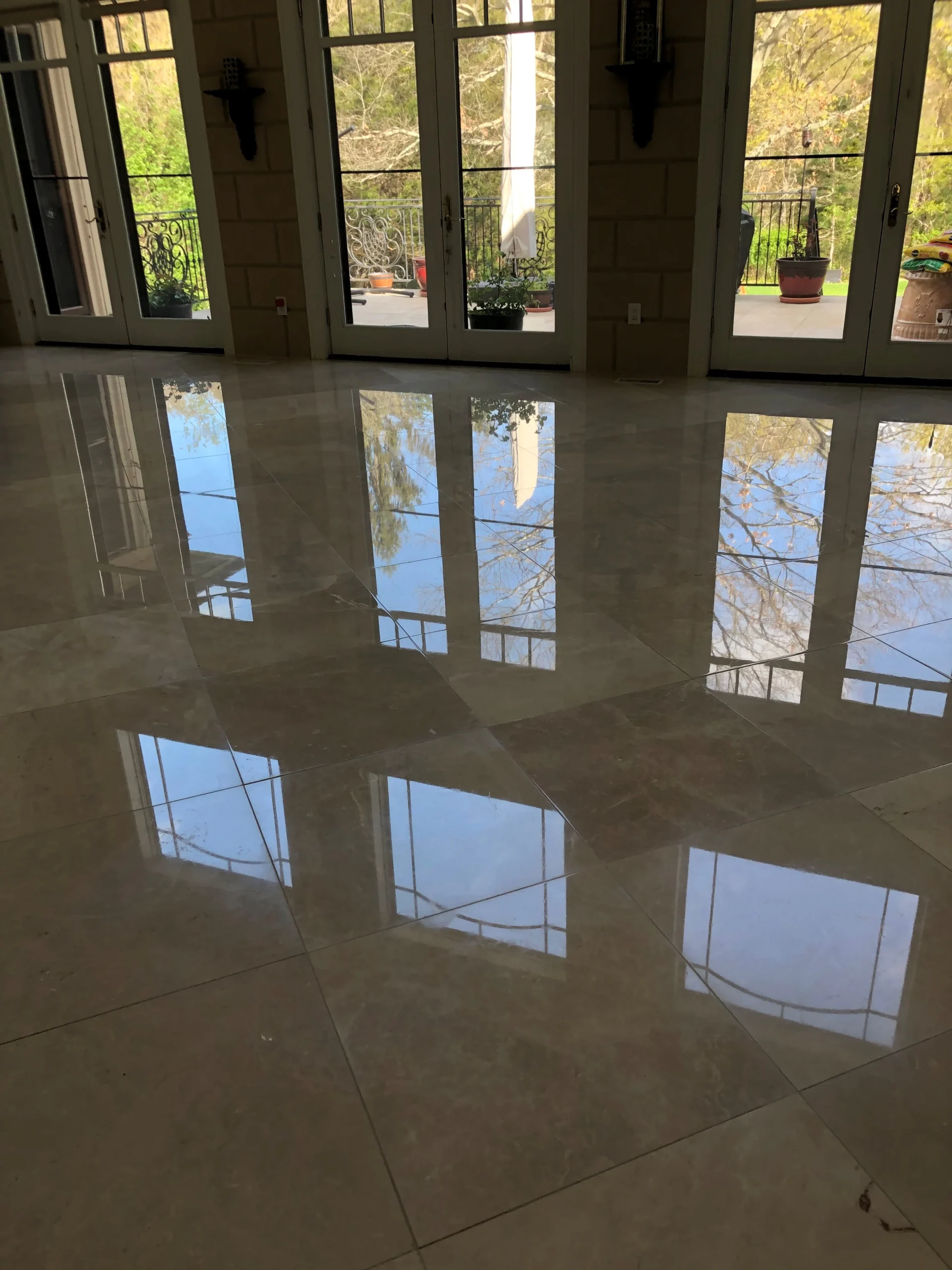
The floors that seemed beyond saving? They’re not. Proper marble floor polishing and refinishing techniques can reverse years of wear, water damage, and neglect. You just need someone who knows how to work with historic materials without destroying them in the process.
We’ve spent over 25 years working on some of Nassau County’s most challenging restoration projects. The New York Times featured our work back in 2001, but what matters more is what happens on your floor.
This is an owner-operated business. That means the person who quotes your job is the same person overseeing the work. No subcontractors. No handoffs. Just direct accountability from start to finish.
Thomaston’s historic homes—many built during Long Island’s Gold Coast era—feature marble and stone that can’t be replicated today. The materials, the craftsmanship, the installation techniques are all from a different time. We understand that, and we treat every restoration job like the preservation project it actually is.
First, we assess the condition of your marble. Not every floor needs the same level of work, and we’re not going to upsell you on services you don’t need. Some floors just need polishing. Others require more intensive restoration to address deep scratches, etching, or staining.
Once we know what we’re working with, we start with surface preparation. This involves carefully removing any buildup, old sealers, or contaminants without damaging the marble itself. This step matters because it determines how well the restoration takes.
Next comes the actual restoration work—honing and polishing using progressively finer abrasives. This is where experience counts. Too aggressive, and you damage the stone. Too light, and you don’t get results. We’ve refined this process over decades, and it shows in the finish.
Finally, we seal the marble to protect it moving forward. You get clear instructions on care and maintenance so the restoration lasts. Most jobs are complete within a couple of days, and we handle all the masking and cleanup so your home stays protected throughout.

Ready to get started?
Marble floor restoration covers everything from initial assessment to final sealing. You get a detailed evaluation of your floor’s condition, a transparent quote before any work begins, and a clear timeline for completion.
The restoration itself includes honing to remove scratches and etching, polishing to bring back the original shine, and sealing to protect against future damage. For bathroom floors—common in Thomaston’s older homes—we also address the mineral deposits and soap scum that Long Island’s hard water leaves behind.
Historic marble floors often have unique challenges. Lippage between tiles. Uneven wear patterns. Damage from previous cleaning attempts using harsh chemicals. We handle all of it, and we do it without replacing materials that took skilled craftsmen weeks to install a century ago.
You also get the peace of mind that comes with working with a marble restoration company that’s been serving Nassau County since 1998. We know the local architecture. We understand the materials used in homes from different eras. And we’ve seen just about every type of marble damage you can imagine—which means we know how to fix it.
Marble floor restoration typically costs a fraction of replacement. Professional restoration usually runs between $3 to $8 per square foot depending on the condition and size of the area. Full marble replacement in Thomaston can easily hit $70 to $190 per square foot once you factor in removal, disposal, new materials, and installation.
For a 100-square-foot bathroom floor, you’re looking at roughly $300 to $800 for restoration versus $7,000 to $19,000 for replacement. The math makes sense on its own, but there’s more to it than cost.
Replacement means you lose the original materials. If you’re in a historic Thomaston home with century-old marble, those materials can’t be replicated. The patterns, the stone quality, the installation craftsmanship—it’s all gone. Restoration preserves that character while giving you a floor that looks brand new.
Yes. The worse the condition, the more dramatic the results tend to be. We’ve restored marble floors in Thomaston homes that hadn’t been properly maintained in decades—deep scratches, heavy etching from acidic cleaners, staining that seemed permanent.
Marble is more resilient than most people realize. Surface damage that looks catastrophic is often just that—surface level. Proper honing removes the damaged layer and exposes fresh marble underneath. Then polishing brings back the shine.
There are limits. If the marble is cracked all the way through or if large sections are missing, restoration becomes more complicated. But dullness, scratches, etching, staining, and even some lippage issues can all be addressed without replacement. The key is working with someone who has the experience to assess what’s actually salvageable and the skill to execute the restoration properly.
Most marble floor restoration projects in Thomaston take one to three days depending on the square footage and condition. A typical bathroom floor can often be completed in a single day. Larger areas like entryways or living spaces might take two to three days.
The timeline depends on how much work the marble needs. Light polishing to restore shine on a well-maintained floor goes faster than full restoration on a heavily damaged surface. We’ll give you an accurate timeframe upfront so you can plan accordingly.
We also understand that having a bathroom or kitchen out of commission is disruptive. That’s why we work efficiently and keep the workspace clean throughout the project. You’re not dealing with weeks of construction chaos. Most clients are surprised by how quickly the work gets done and how minimal the disruption actually is.
Absolutely. Bathroom floor restoration is one of our most common projects in Thomaston and throughout Nassau County. Long Island’s hard water creates specific challenges—mineral buildup, soap scum, and etching that dulls the marble over time.
The restoration process removes all that buildup and addresses the etching underneath. We’re not just cleaning the surface. We’re actually removing the damaged layer of marble and polishing the stone back to its original finish.
After restoration, proper sealing helps protect against future water damage. We also give you specific care instructions for maintaining marble in bathrooms. With the right approach, you can keep that restored look for years even with daily water exposure. The key is using pH-neutral cleaners and avoiding anything acidic that will etch the marble again.
We restore all types of natural stone—marble, granite, limestone, travertine, and terrazzo. Each material requires slightly different techniques, but the core process is similar. We also handle concrete restoration and polishing, which is becoming more popular in both residential and commercial spaces.
What we don’t work on is porcelain. That’s a different material entirely and requires different tools and expertise. We focus on natural stone because that’s where our experience lies and where we can deliver the best results.
If you have a historic Thomaston home with mixed stone surfaces—marble in the bathroom, granite in the kitchen, limestone in the entryway—we can handle all of it. Many of the Gold Coast era homes in this area feature multiple stone types, and we’re familiar with the specific materials and installation methods used during that period.
If your marble looks dull even after cleaning, or if you can see scratches and etching on the surface, you need restoration. Regular cleaning removes dirt and grime, but it can’t fix damage to the marble itself.
Etching happens when acidic substances—wine, citrus, certain cleaners—eat away at the marble’s surface. It leaves dull spots that won’t buff out with regular cleaning. Scratches from foot traffic, furniture, or improper cleaning tools also require honing and polishing to remove.
The easiest way to know for sure is to get a professional assessment. We offer free quotes and can tell you exactly what your floors need. Sometimes it’s just a light polish. Other times, more intensive restoration makes sense. Either way, you’ll know what you’re dealing with and what it will cost before we start any work. No surprises, no upselling—just a straightforward evaluation of what your marble actually needs.