


Your marble floors have lost their shine. Not because they’re old, but because decades of foot traffic, improper cleaning products, and daily wear have left behind microscopic scratches you can’t see but definitely notice. The result is a dull, lifeless surface that no amount of mopping will fix.
Here’s what changes after proper marble floor restoration. You get back that deep, reflective finish the stone had when it was first installed. The etching from acidic cleaners disappears. The discoloration from years of staining agents pulling into the porous surface gets lifted out. And most importantly, you avoid the cost of tearing out and replacing floors that just needed the right expertise.
This isn’t about making old floors look acceptable. It’s about bringing back the exact finish they were designed to have a century ago. That’s what restoration means when it’s done right.
High Definition Marble Restoration Inc has spent over 25 years working on the kinds of floors most companies won’t touch. We’re talking about century-old marble in Gold Coast mansions, original installations in Stanford White cottages, and historic estates throughout Shinnecock Hills and Southampton where the flooring predates modern installation methods.
We’re owner-operated, which means you’re getting direct expertise on every project, not a corporate crew following a generic checklist. That matters when you’re working with irreplaceable materials that can be permanently damaged by the wrong approach.
The New York Times featured our work back in 2001, but what keeps us in business is pretty straightforward. We understand what these floors were supposed to look like when they were first installed, and we know how to get them back there.
We start with a free consultation where we assess the actual condition of your floors, not just what’s visible on the surface. That means checking for structural issues like settling cracks, loose grout, or substructure problems that need addressing before any cosmetic work begins.
Once we understand what we’re working with, the restoration process involves removing the damaged surface layer through careful grinding and honing. This isn’t aggressive sanding that removes too much material. It’s precision work that takes off just enough to eliminate etching, scratches, and stains while preserving the integrity of historic stone.
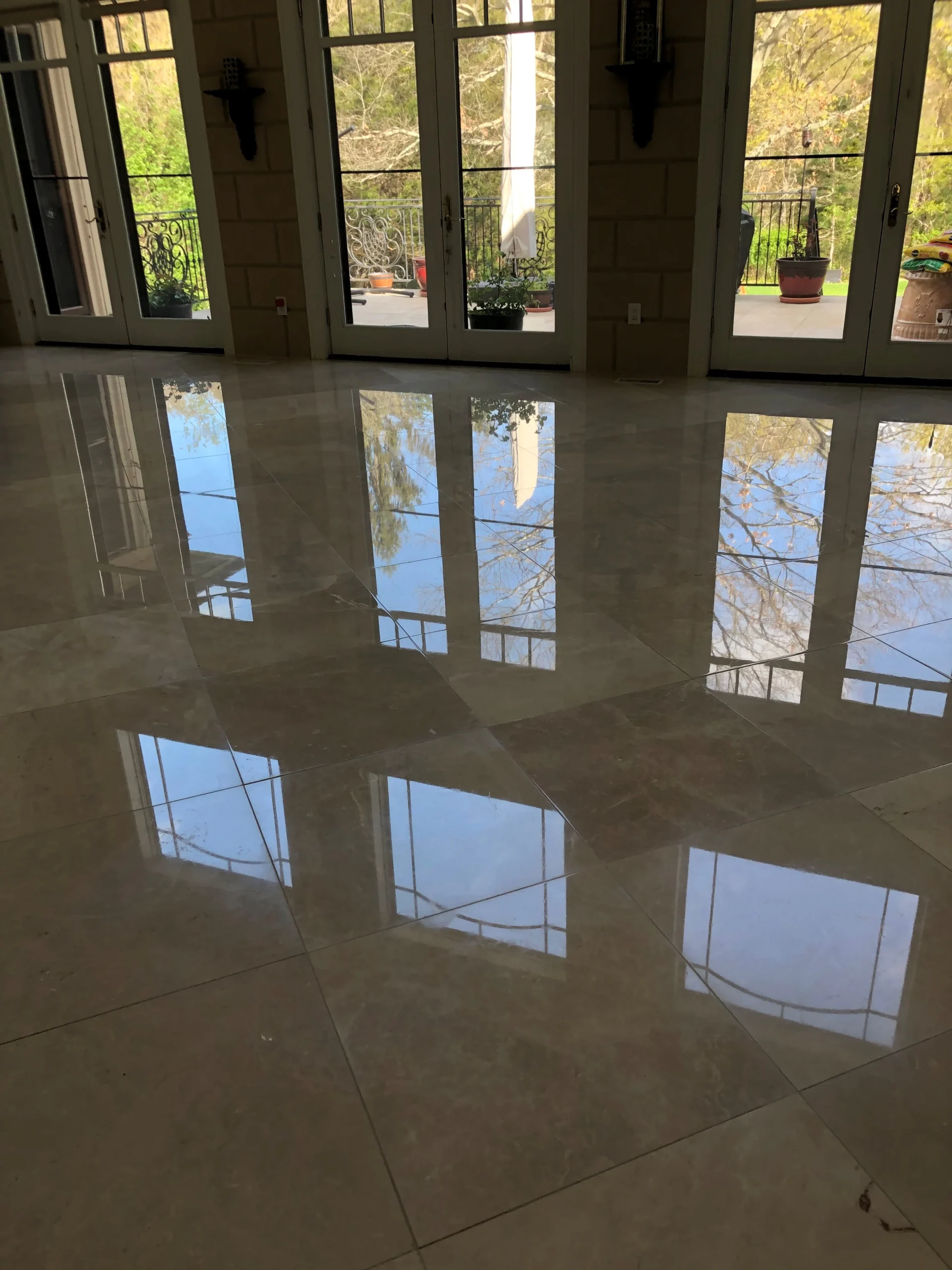
After honing comes polishing, which rebuilds that mirror-like finish using progressively finer abrasives. We’re talking about the kind of shine that reflects light clearly, not the dull coating you get from topical sealers. Then we apply the right penetrating sealer for your specific marble type, which protects against future staining without changing the appearance.
The timeline depends on square footage and condition, but most residential projects in Shinnecock Hills take between two to four days. You’ll know the exact schedule before we start.

Ready to get started?
You’re getting comprehensive marble floor care that addresses both structural and cosmetic issues. That includes crack repair, grout restoration, lippage correction for uneven tiles, and complete surface refinishing from honing through final polishing.
We also handle bathroom floor restoration, which presents its own challenges. Smaller spaces, more intricate layouts, and constant moisture exposure mean the marble needs different treatment than open floor areas. The process is the same, but the execution accounts for these factors.
In Shinnecock Hills, we’re often working with marble that’s over 100 years old. These historic installations used different setting methods and materials than modern floors, which is why they require specialized knowledge. Many of these floors have settled over time, creating cracks and structural issues that need repair before any polishing happens. Ignoring those problems and just buffing the surface is how you end up with floors that look worse six months later.
We’ve also added concrete restoration and polishing to our services. If you have original concrete in basements, garages, or utility areas that you want brought up to the same standard as your marble, we can handle that too.
Professional marble restoration typically costs a fraction of what you’d pay for replacement. We’re talking about a difference of thousands of dollars in most cases.
Here’s why the gap is so large. Replacement means demolition, disposal, subfloor repair, new material costs, and installation labor. You’re also losing the original marble, which in historic Shinnecock Hills homes is often irreplaceable. Modern marble doesn’t match the quality or character of stone quarried and installed a century ago.
Restoration preserves what you have while bringing it back to original condition. The cost depends on square footage and current condition, but even complex restoration projects with structural repairs come in well below replacement costs. You also avoid the disruption of a full demolition and reinstall, which in historic homes can reveal additional problems that drive costs even higher.
Yes, both etching and staining can be corrected through proper marble floor polishing and restoration. But the approach is different for each problem.
Etching happens when acidic substances like vinegar, wine, or harsh cleaners eat into the marble surface. You’ll see dull spots or rings where the acid made contact. This damage is in the stone itself, not on top of it, which is why wiping or buffing doesn’t help. The fix involves honing away the damaged layer and repolishing to restore the original finish.
Staining is different. Marble is porous, and when the sealer wears away, liquids can penetrate into the stone and cause discoloration. Oil-based stains, rust, organic materials, and even water can create stains that won’t wipe away. Removing these requires drawing the staining agent back out of the stone using specialized poultices, then resealing to prevent future staining.
Most floors we see in Shinnecock Hills have both issues. The good news is that proper restoration addresses everything in one process.
Properly restored and maintained marble floors can go 10 to 15 years before needing another full restoration. But that timeline depends entirely on how you care for them afterward.
The biggest factor is cleaning products. Most generic cleaners are too caustic and will etch the finish, creating the same dullness you just paid to remove. You need pH-neutral cleaners specifically designed for marble. We’ll tell you exactly what to use and what to avoid.
The second factor is resealing. Penetrating sealers don’t last forever. Depending on foot traffic and use, you’ll want to reseal every two to four years. This isn’t a full restoration, just maintenance that keeps staining agents from penetrating the stone. You can do this yourself or have us handle it.
High-traffic areas will show wear sooner than low-traffic spaces. Entryways, kitchens, and main hallways might need attention before bedrooms or formal areas. But even with heavy use, you’re looking at many years of beautiful floors after a proper restoration.
Polishing and refinishing are often used interchangeably, but they’re technically different levels of work. Understanding the difference helps you know what your floors actually need.
Polishing is the final step in marble restoration. It uses progressively finer abrasives to create that smooth, reflective finish. If your floors are in decent shape with minor dullness but no major etching or damage, polishing alone might be enough. This is maintenance-level work.
Refinishing is the complete process. It starts with grinding to remove damaged surface material, moves through honing to smooth the stone, and finishes with polishing. This is what you need when floors have significant etching, deep scratches, stains, or haven’t been professionally maintained in years. Refinishing essentially gives you a new surface.
Most historic floors in Shinnecock Hills need full refinishing, not just polishing. Decades of wear, improper cleaning, and deferred maintenance mean the damage goes deeper than a simple polish can fix. We’ll assess your specific situation during the free consultation and tell you exactly what’s needed.
Yes, but structural repairs need to happen before any cosmetic restoration work begins. This is especially important in historic Shinnecock Hills homes where settling and age have created foundation movement.
Cracks in marble floors usually indicate one of two things. Either the substructure has shifted, or the marble itself has fractured. Both need repair, but the approach is different. Substructure issues require addressing the underlying cause, stabilizing the base, and then repairing the marble. Surface cracks can be filled and color-matched so they’re nearly invisible after polishing.
Loose grout is another common structural problem we see. When grout fails, tiles can shift and create lippage, where edges are uneven. This needs correction before polishing, or you’ll just have a shiny uneven floor. We remove failed grout, reset any loose tiles, regrout properly, and then move forward with surface restoration.
The worst floors make the best projects for us because we know how to handle these complex issues. We’ve worked on century-old installations throughout the area where structural problems were extensive. The key is addressing everything systematically, not just covering up problems with a quick polish.
Absolutely. Bathroom floor restoration is a significant part of what we do, and small spaces actually require more precision than large open areas.
Bathrooms present specific challenges. Constant moisture exposure, soap residue, and cleaning products create more etching and staining than you’d see in a living room or hallway. The marble also tends to be different, often with more intricate patterns or inlays that need careful handling.
The restoration process is the same, but the execution accounts for tight spaces, fixtures, and drainage considerations. We work around toilets, vanities, and showers without requiring full demolition. The result is the same mirror-like finish you’d get on a large floor, just in a more compact area.
We also handle entryways, foyers, and other small marble installations throughout Shinnecock Hills homes. Size doesn’t determine whether restoration makes sense. Condition, historical value, and cost compared to replacement are what matter. In most cases, restoring original marble in any room is the smarter choice.