

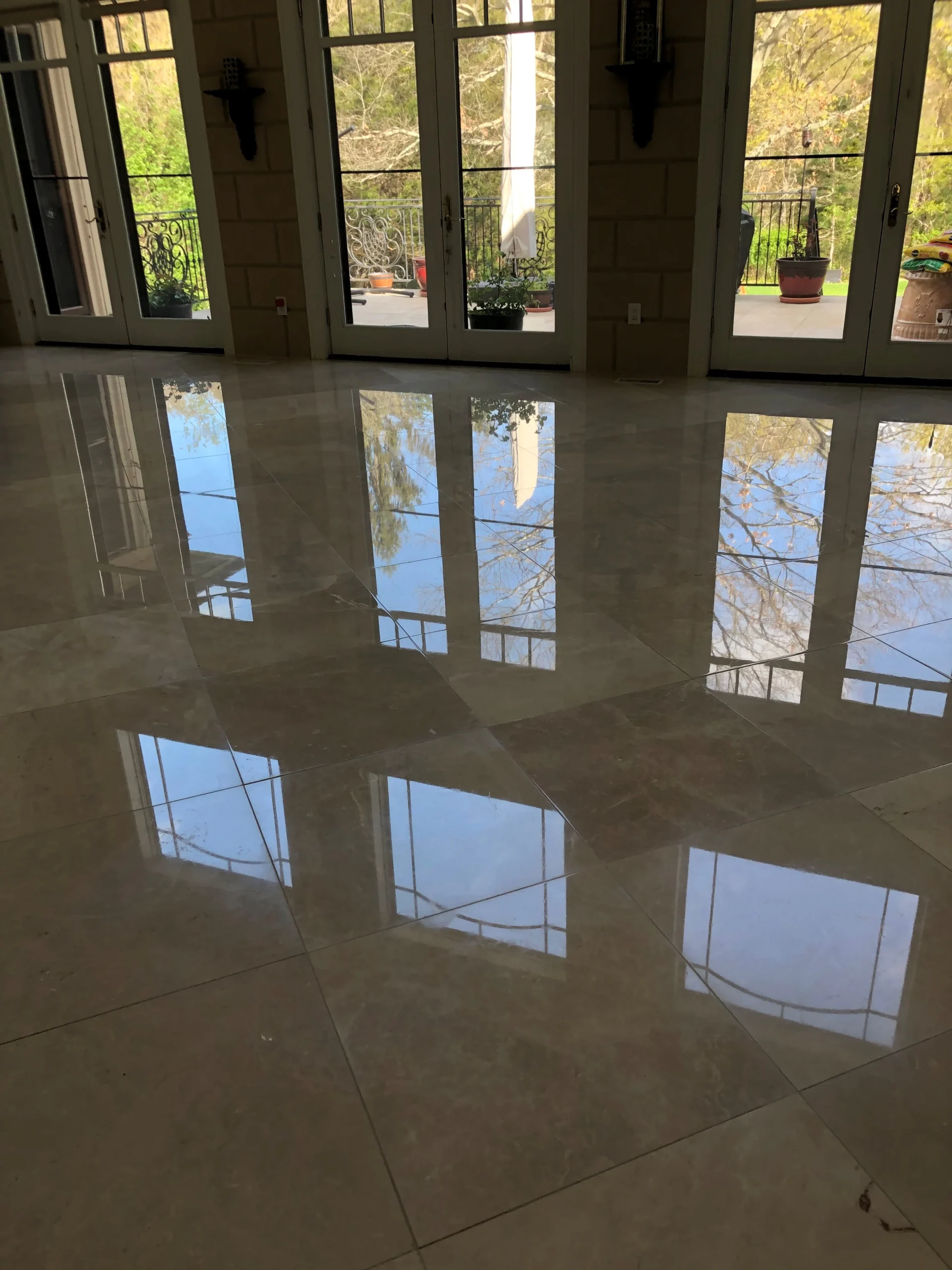
You walk into your entryway and actually see reflection again. The dullness is gone. The etching from years of wrong cleaners—erased. Those scratches that made you wince every time guests came over? You’d have to get on your hands and knees to find them now.
Your marble looks the way it did when it was first installed. Maybe better, because now you know how to keep it that way.
This isn’t a temporary fix or a coating that’ll wear off in six months. We remove the damaged layers entirely using diamond grinding technology, working through progressive grit levels until we’ve created a uniform, polished surface. The shine you see is the stone itself—not a topical treatment.
Most jobs wrap up in under two days. You’re not living in a construction zone for weeks. And because we’re restoring what’s already there instead of ripping it out, you’re typically spending 50-80% less than replacement while keeping the authentic character that makes your home worth what it is.
High Definition Marble Restoration Inc specializes in historic floor restoration throughout Nassau and Suffolk Counties. We’re owner-operated, which means you’re getting direct expertise on your project—not a subcontractor who showed up in a van.
The New York Times featured our work back in 2001. Our philosophy hasn’t changed since then: the worse the condition, the better the opportunity to show what real restoration looks like.
Shelter Island Heights has 141 contributing buildings in its historic district, most dating back to the 1880s and 1890s. We understand what it takes to work with century-old materials. Your Victorian home wasn’t built with modern marble, and it shouldn’t be restored like it was.
We start with a full assessment of your floors. Not every marble floor needs the same approach, and we’re looking at the type of stone, the extent of damage, and what’s causing the problems in the first place.
Then comes the grinding process. We use diamond abrasives to systematically remove the damaged surface layers—the etching, scratches, and dullness that regular cleaning can’t touch. We work through different grit levels, each one finer than the last, until we’ve rebuilt a smooth, uniform surface.
After grinding comes honing and polishing. This is where we bring back that mirror-like finish. We’re not applying anything to create shine—we’re refining the stone itself until it reflects light the way it’s supposed to.
Finally, we seal the surface properly and walk you through maintenance. You’ll know exactly what products are safe to use and which ones will undo all this work. Most of the marble floors we see have been damaged by cleaners that were too harsh—we make sure that doesn’t happen again.

Ready to get started?
You’re getting comprehensive surface renewal. We address the damage at its source by removing compromised layers and rebuilding the finish from the stone up. This includes repairing cracks, filling chips, and addressing lippage issues where tiles have become uneven over time.
In Shelter Island Heights, we’re often working with marble that’s over 100 years old. These installations used different setting methods than modern floors, and the stone itself has characteristics you don’t see in newer material. We account for that. The goal isn’t to make your floor look brand new—it’s to make it look like itself again, just properly maintained.
Bathroom floor restoration is particularly common in historic homes here. Small spaces with original marble that’s been subjected to decades of moisture and harsh cleaning products. We’ve brought back floors that homeowners were convinced needed total replacement. The stone was fine—it just needed someone who knew how to work with it.
You also get transparent pricing upfront. You know what you’re paying before we start. And because the owner is directly involved in your project, you’re getting quality control that matters.
Most residential marble floor restoration projects are completed in less than two days. That timeline includes the full process: grinding, honing, polishing, and sealing.
The actual duration depends on the square footage and condition of your floors. A small entryway might be done in a day. A large foyer or multiple rooms could stretch into a second day, but you’re still not looking at the weeks of disruption that come with replacement.
We work efficiently because we’re experienced and because we’re using professional-grade equipment designed specifically for this work. You’re not dealing with a learning curve or trial-and-error approaches. We know exactly what your floors need when we assess them, and we execute that plan without unnecessary delays.
Yes. Etching from acidic cleaners is actually the most common problem we see, and it’s completely reversible through proper restoration.
When acidic products contact marble, they dissolve the calcium carbonate in the stone, leaving a dull, rough spot. You can’t buff that out or cover it up with polish—the surface itself has been chemically altered. The only real fix is to remove that damaged layer through grinding and rebuild the finish.
This is why we emphasize maintenance education after restoration. Most homeowners don’t realize their everyday cleaners are too harsh for marble. Products that work fine on other surfaces will destroy marble over time. We make sure you know what’s safe to use so you’re not creating the same problem again six months from now.
In almost every case, yes. Restoration typically costs 50-80% less than full replacement, and you’re keeping the original material that adds authentic value to your home.
Replacement means demolition, disposal, new material costs, new installation, and significantly more labor time. You’re also losing whatever premium the original marble adds to your property value—and in Shelter Island Heights’ historic district, that’s not insignificant. Buyers pay more for authentic, well-maintained original features.
Restoration makes sense when the stone itself is still structurally sound. If your marble is cracked throughout, unstable, or severely damaged beyond the surface, replacement might be necessary. But surface damage—dullness, etching, scratches, staining—that’s all fixable. We’ve restored floors that looked completely shot and brought them back to better condition than some newer installations.
Polishing is the final step in restoration, but they’re not the same thing. Polishing creates shine on an already-smooth surface. Restoration repairs the surface first, then polishes.
If your marble is etched, scratched, or uneven, polishing alone won’t fix it. You’d be trying to shine a damaged surface, and the results won’t last because the underlying problems are still there. True restoration involves grinding away the damaged layers with diamond abrasives, honing the surface smooth, and then polishing to bring back the reflective finish.
Some companies offer “marble polishing” that’s really just buffing with a topical product. That might add temporary shine, but it’s not addressing actual damage, and it’ll wear off quickly. We’re restoring the stone itself—removing damage and rebuilding the surface so the shine comes from the marble, not from something sitting on top of it.
Yes, though the approach varies depending on the specific type of marble and its condition. Historic homes in Shelter Island Heights often have marble varieties that aren’t commonly used anymore, and each type has different characteristics.
Some marbles are softer and more porous. Others are denser and more durable. The age of the installation matters too—century-old marble has been subjected to decades of foot traffic, cleaning products, and settling. We assess all of this before starting work.
Our experience with historic restoration means we understand these older materials. We’ve worked with marble floors that were installed in the 1880s using methods that are completely different from modern techniques. The stone might be set in a thick mortar bed, or there might be lippage issues from settling over time. We know how to work with these conditions without causing further damage, and we know what results are realistic based on what we’re starting with.
Maintenance is straightforward once you know what to avoid. The biggest threat to your newly restored marble is using the wrong cleaning products—specifically anything acidic or abrasive.
Use a pH-neutral cleaner designed for natural stone. Regular household cleaners, even ones that seem mild, often contain acids that will etch marble. Vinegar, lemon-based products, and most bathroom cleaners are out. We’ll give you specific product recommendations that are safe.
Sweep or vacuum regularly to remove grit and dirt that can scratch the surface over time. Use mats at entryways to catch debris before it gets tracked across your floors. Wipe up spills quickly, especially anything acidic like wine, coffee, or fruit juice.
Resealing depends on the type of marble and how much traffic your floors get, but it’s typically needed every one to three years. We seal your floors as part of the restoration process, and we’ll let you know when you should have them resealed based on your specific situation.
Other Services we provide in Shelter Island Heights