

Your marble floors look dull, scratched, or stained. You’re weighing replacement costs that could hit $70-190 per square foot—plus weeks of disruption tearing out original materials that can’t be replicated today.
Restoration changes that equation completely. Most projects finish in 1-3 days depending on size and condition. You’re looking at $5-15 per square foot for professional marble floor polishing and refinishing instead of five-figure replacement bills.
The bigger win? You keep the authentic marble that adds character and value to your home. Restored original floors in historic Long Island properties can increase your property value by 3-5% because buyers pay premium prices for authentic features. You get dramatic results without losing what makes your home special.
This isn’t about making old marble “good enough.” It’s about bringing it back to the condition it was in decades ago—sometimes better than it’s looked in your lifetime.
We specialize in the kind of complex historic restoration work that other contractors avoid. Since 1998, we’ve focused on bringing century-old floors throughout Nassau and Suffolk Counties back to life.
The New York Times featured our work in 2001 because our philosophy is simple: the worse the condition, the better the opportunity to showcase what real restoration expertise looks like. Our very first client, the Garden City Hotel, has used our services exclusively for over 16 years.
Every project gets direct owner involvement. No subcontractors, no surprises, no wondering who’s actually working on your floors. You’re dealing with someone who’s spent over 25 years understanding historic materials, Long Island’s unique conditions, and what it takes to restore marble that’s been in place for a century.
Ronkonkoma homes—especially older properties built during Long Island’s estate construction era—often feature original marble installations using techniques and materials that simply aren’t available anymore. We understand both the technical challenges and the preservation responsibilities that come with restoring these floors.
First, we assess the current condition of your marble. This tells us what level of restoration you actually need—whether it’s deep cleaning, honing to remove etching and scratches, or full polishing to bring back that original shine.
We start with thorough cleaning to remove years of buildup, soap scum, and mineral deposits. Long Island’s hard water creates specific challenges, especially in bathrooms, so this step matters more than most people realize.
Next comes honing if your marble has scratches, etching, or uneven areas. We use progressively finer abrasives to smooth the surface and remove damage. This is where experience separates real restoration from surface-level cleaning—marble can be ruined easily by someone using the wrong techniques or harsh acids.
The final step is polishing. We bring the marble to the level of shine appropriate for its type and your preferences. Some historic marble looks best with a honed matte finish. Others should have a high-gloss polish.
Throughout the process, we mask and protect surrounding areas. You won’t have marble dust coating your home. Most residential projects take 1-3 days, and we’re transparent about timing upfront so you know exactly how long your bathroom or entryway will be out of commission.

Ready to get started?
Professional marble floor restoration covers everything from deep cleaning through final polishing. You’re not getting a quick buff and some sealer—you’re getting a complete restoration process tailored to your marble’s specific condition and type.
Deep cleaning runs $0.50-1.50 per square foot and removes the buildup that regular mopping can’t touch. Polishing and refinishing range from $1-7 per square foot depending on the level of work needed. If you have cracks, chips, or missing pieces, marble repair is part of the process before we move to refinishing.
In Ronkonkoma and throughout Suffolk County, we see a lot of bathroom floor restoration projects where humidity and hard water have taken a toll on Carrara, Thassos, and other marble types common in historic Long Island homes. Coastal conditions accelerate wear, and mineral deposits build up faster than in other areas.
The timeline matters as much as the process. We understand you don’t want your master bathroom unusable for weeks. Most projects finish in 1-3 days. Compare that to replacement, which typically takes longer and creates significantly more disruption—demolition, disposal, subfloor work, new installation, and cleanup.
You get transparent pricing before any work starts. You know exactly what you’re paying and what you’re getting. No surprises, no scope creep, no wondering if you’re being upsold on services you don’t need.
Marble restoration typically costs $5-15 per square foot for professional work in the Ronkonkoma area. New marble installation runs $70-190 per square foot on Long Island—and that’s just material and labor, not including demolition and disposal of your existing floors.
For a 100-square-foot bathroom, you’re looking at $500-1,500 for restoration versus $7,000-19,000 for replacement. The math gets even more dramatic on larger spaces like entryways or kitchen floors.
We’ve had projects where restoration saved homeowners over $18,000 compared to replacement quotes they’d received. You’re preserving a significant architectural feature while keeping thousands of dollars in your pocket. That’s not even accounting for the value of maintaining original materials in historic homes, which buyers specifically seek out and pay premium prices for.
Most residential marble floor restoration projects take 1-3 days depending on the size of the area and the current condition of the marble. A typical bathroom might be done in a day. A large entryway or multiple rooms might take two to three days.
The timeline includes deep cleaning, any necessary honing to remove scratches and etching, and final polishing. We’re not rushing through the process, but we’re also not dragging it out unnecessarily because we understand you need your space back.
Replacement projects typically take significantly longer. You’re looking at demolition, subfloor inspection and potential repair, new installation, grouting, sealing, and cleanup. That’s often a week or more of disruption, plus the time waiting for materials to arrive. Restoration gets you back to normal life faster with better results if you’re working with quality original marble.
Professional marble restoration typically lasts 10-15 years in residential settings throughout Nassau and Suffolk Counties. This assumes normal use and proper basic maintenance—regular cleaning with pH-neutral products and wiping up spills promptly.
That’s dramatically longer than the 2-3 years you might get from basic cleaning services or DIY products. Real restoration addresses the marble at a deeper level, removing damage rather than just covering it up temporarily.
The longevity depends partly on the marble’s location and use. A master bathroom floor with daily use will need attention sooner than an entryway that sees less traffic. Coastal conditions in Long Island—humidity, salt air, hard water—do accelerate wear compared to drier climates. But proper restoration still gives you a decade or more of beautiful floors before you need to think about it again.
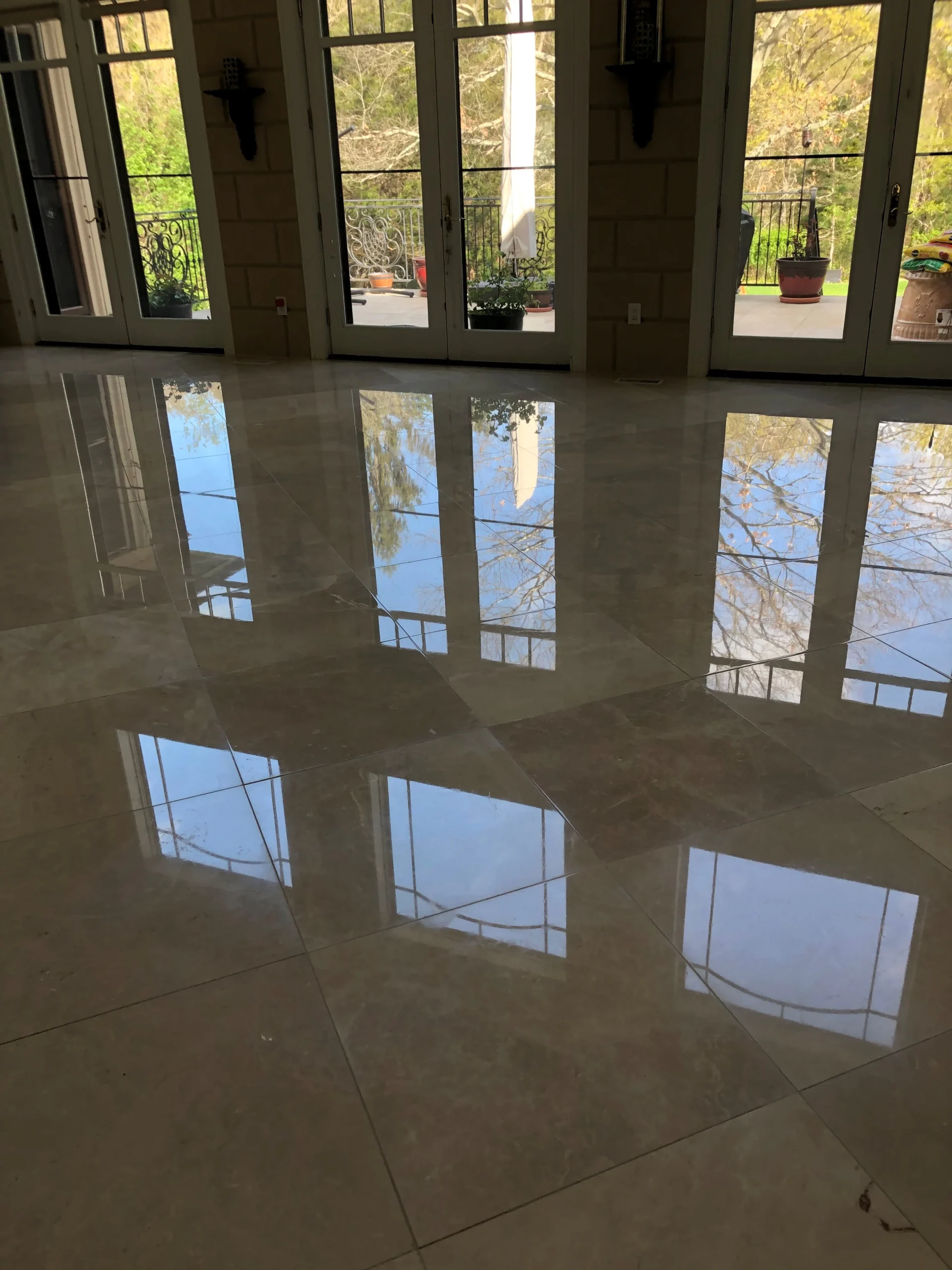
Etching, scratches, dullness, and even some cracks can absolutely be restored. We’ve brought back marble that homeowners were convinced needed replacement—floors that hadn’t looked good in decades.
The key is understanding what’s happening to the marble. Etching occurs when acidic substances react with the calcium carbonate in marble, leaving dull spots. Honing removes that damaged layer and brings you back to undamaged marble underneath. Scratches get addressed the same way—progressively finer abrasives smooth the surface until the scratches are gone.
There are limits. If the marble is severely cracked throughout, structurally unstable, or worn down to almost nothing, replacement might genuinely be necessary. But that’s rare. Most of what homeowners think is “too far gone” is actually very restorable. We’ve handled century-old floors that previous owners had covered with carpet or vinyl because they thought restoration was impossible. Those floors came back beautifully.
Proper marble restoration is not only safe for historic floors—it’s specifically designed for them. The techniques we use have been refined over decades to work with antique marble, including types and installation methods you don’t see in modern construction.
The danger comes from inexperienced contractors using harsh acids or extremely aggressive abrasives that can damage historic marble permanently. You’ll find cleaning companies offering marble services who don’t understand the difference between restoration and destruction. They’ll use chemicals or techniques appropriate for modern materials but completely wrong for century-old marble.
We’ve worked on floors from Long Island’s Gilded Age estates and early 1900s homes throughout Ronkonkoma and Suffolk County. These installations used materials and techniques that aren’t replicated today. Understanding how to work with historic marble—knowing which abrasives to use, how much material to remove, what finishes are appropriate—that’s what 25+ years of specialized experience gives you. Your floors are irreplaceable. The approach needs to match that reality.
Cleaning removes surface dirt and buildup. Restoration removes damage from the marble itself—scratches, etching, dullness, stains that have penetrated below the surface.
If your marble just needs a deep clean, that’s a $0.50-1.50 per square foot job. If it has years of wear, scratches from furniture, etching from acidic spills, or dullness from improper cleaning products, you need actual restoration. That’s the $5-15 per square foot range because it involves honing and polishing, not just cleaning.
Many cleaning companies offer “marble restoration” but only provide surface cleaning and maybe a topical sealer. That might make your floors look slightly better temporarily, but it doesn’t address the actual damage. Within months, you’re back where you started. Real restoration involves removing damaged material and re-polishing the marble. The results last 10-15 years, not 6 months. You can tell the difference immediately—restored marble has depth and clarity that cleaned marble doesn’t.