


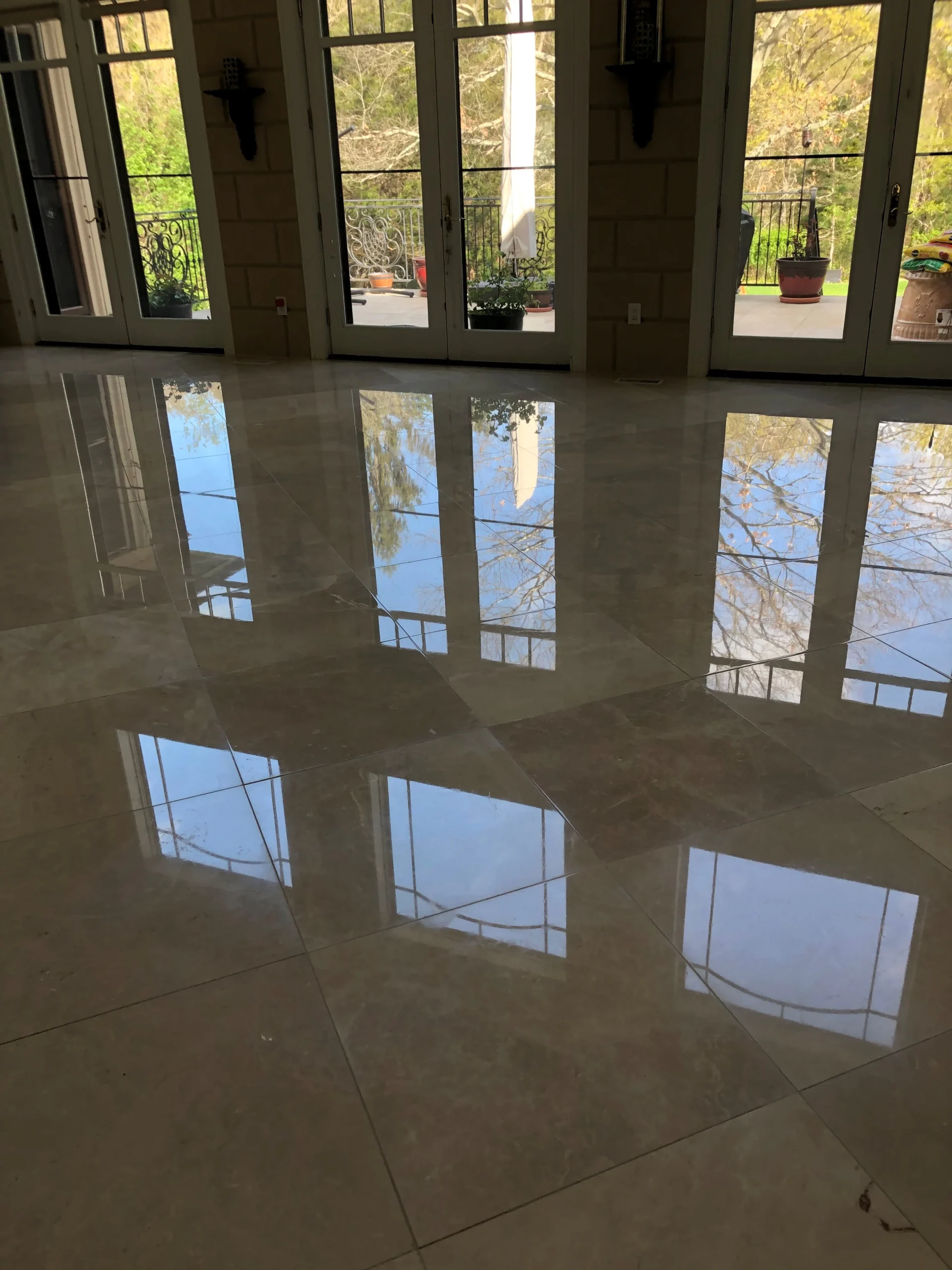
You’ll see the difference immediately. That dull, lifeless surface transforms into a reflective, mirror-like finish that looks brand new. The etching from years of improper cleaning disappears. The scratches that made your floors look tired vanish completely.
Chips and cracks that seemed permanent become virtually invisible—you won’t feel them when you run your hand across the surface. Stains that penetrated deep into the stone get pulled out, not just covered up.
Your marble looks the way it did when it was first installed. Maybe better, because now it’s properly sealed against future damage. You’re not just getting a cosmetic fix—you’re getting floors that will stay beautiful with basic maintenance instead of deteriorating year after year.
This matters in Rockville Centre, where 90% of historic facades remain in excellent condition because homeowners understand the value of proper restoration. Your marble deserves that same level of care.
We specialize in the kind of challenging restoration work that makes other companies nervous. The worse your floor looks, the better we like it—because we know exactly how to bring it back.
We’re owner-operated, which means you’re getting decades of hands-on expertise, not a rotating crew. The New York Times featured our work back in 2001, and our first client—the Garden City Hotel—has trusted us exclusively for over 16 years. That’s the kind of loyalty you earn by consistently delivering results.
Rockville Centre has more than 870 historic structures, many with original marble installations from the 1880s through 1920s. We understand these materials. We know the techniques used in different periods. We’ve worked on Tudor developments and Victorian-era homes where the marble is over a century old and requires specialized knowledge most companies simply don’t have.
First, we assess the damage. Surface dullness, etching, scratches, stains, cracks—each issue requires a specific approach. You get a transparent quote upfront, so you know exactly what you’re paying before any work starts.
The restoration itself starts with diamond grinding pads that remove the damaged surface layer and expose fresh stone underneath. This isn’t a topical coating that wears off—we’re actually removing microscopic amounts of stone to reveal undamaged material. For deeper scratches or etching, we use progressively finer grits until the surface is completely smooth.
Chips and cracks get filled with professional-grade compounds that match your marble’s exact color and pattern. Once cured, these repairs are virtually invisible. You won’t see them, and you won’t feel them.
Then comes polishing. We use specialized equipment and techniques to create that mirror-like shine marble is known for. This isn’t wax or coating—it’s the stone’s natural finish brought out through mechanical polishing.
Finally, we seal everything. This creates a barrier against stains, etching, and daily wear. Your space stays protected during the entire process—we’re disciplined about masking and cleanup because we know you’re living here.

Ready to get started?
You’re getting comprehensive marble floor care that addresses every issue your floors have. We handle basic cleaning and polishing for surfaces that just need their shine back. We repair chips, cracks, and missing sections with seamless color matching. We remove stains that have penetrated deep into the stone. We eliminate etching from acidic cleaners or spills.
For Rockville Centre’s historic homes—where median property values hit $814,833—this work directly protects your investment. Professional marble restoration can add up to 25% to your home’s value. More importantly, it preserves the authentic period details that modern replacement materials can’t replicate.
The cost difference is substantial. Full marble replacement typically runs $8,000 to $15,000 and requires structural modifications. Restoration usually costs $1,500 to $3,000 and preserves your original installation. You’re saving 70-80% while keeping the irreplaceable historic character that makes your home special.
This matters in a village where developers are increasingly trying to knock down historic structures. Proper restoration proves these materials are worth saving—and worth maintaining correctly.
Most residential marble restoration projects take one to three days, depending on the floor’s size and condition. A standard entryway or bathroom might be done in a day. Larger spaces like a full first floor typically need two to three days.
The timeline depends on what we’re fixing. Basic polishing to restore shine goes faster than extensive repair work involving multiple cracks or deep staining. We’re not rushing—we’re making sure each step is done right so the results last.
You can usually walk on the floors within a few hours after we finish, though we recommend waiting 24 hours before moving furniture back. The sealer needs time to cure fully, which takes about 48 hours. During that period, stick to water for cleaning—no products yet.
Yes. Etching from acidic cleaners is one of the most common problems we fix. Those dull spots and watermarks aren’t permanent damage—they’re just surface-level issues that professional marble polishing removes completely.
Here’s what’s actually happening: acidic products dissolve a microscopic layer of the marble’s surface, creating a rough texture that looks dull. We use diamond pads to remove that damaged layer and expose fresh, undamaged stone underneath. Then we polish it back to a mirror finish.
The key is stopping the cycle. Generic household cleaners are too caustic for marble. After restoration, we seal your floors and recommend pH-neutral products specifically formulated for natural stone. This prevents future etching so your floors stay beautiful instead of deteriorating again.
For historic homes, restoration is almost always the better choice. You’re preserving original materials that can’t be replicated with modern stone. The marble in 1920s Tudor homes or Victorian-era properties often came from quarries that no longer exist—once it’s gone, it’s gone.
Restoration costs 70-80% less than replacement. You’re typically looking at $1,500 to $3,000 for professional restoration versus $8,000 to $15,000 or more for full replacement. Replacement also requires structural work, disposal of old materials, and installation of new stone—all of which adds time, cost, and disruption.
From a property value standpoint, authentic period details matter in Rockville Centre’s market. Buyers looking at homes in this price range recognize and value original historic features. Restored marble showcases that authenticity while proving the home has been properly maintained.
Polishing is what we do when your marble just needs its shine back. The stone is structurally sound, but years of foot traffic have created microscopic scratches that make it look dull. We use progressively finer diamond pads to smooth the surface and bring out that natural gloss.
Refinishing is more comprehensive. This is what you need when there’s etching, staining, or surface damage beyond simple dullness. We’re grinding down to remove the damaged layer, then honing and polishing to rebuild the finish from scratch. It’s more involved but necessary for floors that have been neglected or improperly maintained.
Both processes result in that mirror-like finish marble is known for. The difference is how much correction the stone needs before we can achieve it. During your free quote, we’ll assess exactly what your floors need and explain why we’re recommending a specific approach.
We use professional-grade compounds that can be custom-tinted to match your specific marble. This isn’t guesswork—we’re mixing colors on-site until we get an exact match to your stone’s base color, veining, and pattern.
The compounds themselves are engineered to have the same hardness and porosity as natural marble. Once cured and polished, they blend seamlessly with the surrounding stone. You won’t see a color difference, and you won’t feel a texture difference when you run your hand over the repair.
This matters especially for historic marble, which often has unique coloring and veining patterns. We’ve worked on century-old installations where the marble has developed a patina over time. Our repairs respect that character instead of standing out as obvious fixes. The goal is invisible restoration—you see beautiful marble, not evidence of repair work.
No. Professional sealing is invisible—it doesn’t create a coating or film on the surface. Your marble looks and feels exactly the same, just protected.
The sealer penetrates into the stone’s pores and creates a barrier below the surface. This prevents staining agents from soaking in while still allowing the stone to breathe. Water beads up instead of absorbing. Spills wipe away instead of leaving marks.
You’re not getting a glossy topical coating that wears off in high-traffic areas. The shine you see after restoration comes from mechanical polishing of the stone itself, not from any product sitting on top. Sealing just protects that finish so it lasts longer. You’ll need to reseal periodically—usually every one to three years depending on traffic—but that’s simple maintenance, not a full restoration.