

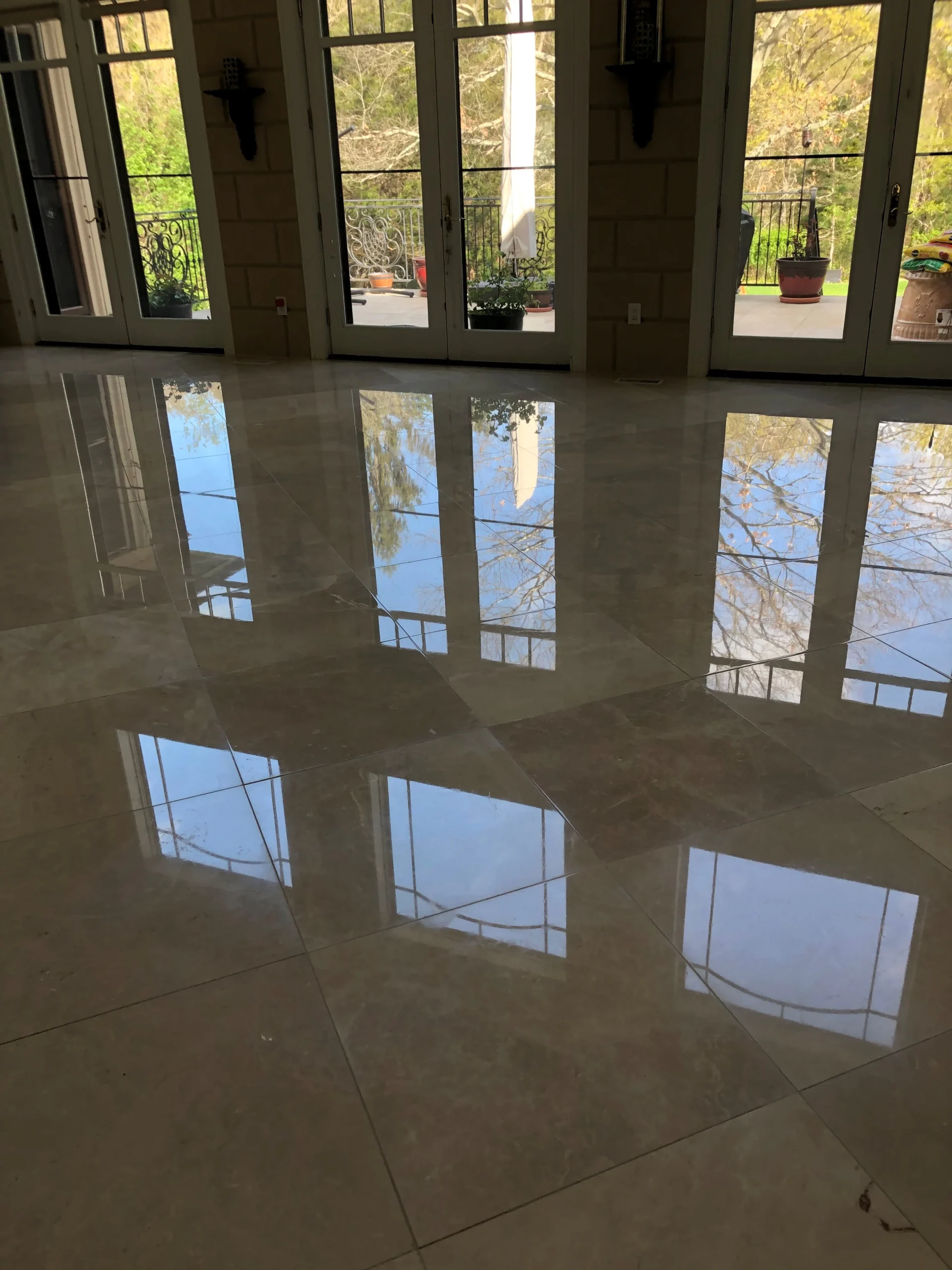
Your marble stops looking tired. The scratches disappear. The dullness is gone. What you’re left with is a floor that reflects light the way it did decades ago—or the way it should have from day one.
You’re not just getting a cosmetic fix. Proper marble floor polishing seals the surface, protects it from future staining, and makes daily maintenance easier. No more worrying about every spill or scuff.
And if your home has any age to it—especially here in Riverhead and across Suffolk County where older homes are common—you’re preserving something that can’t be replicated. Original marble floors add character and value. Ripping them out means losing both. Restoring them means keeping what makes your home yours, while bringing it back to a condition most people assume requires full replacement.
Most jobs take less than two days. You’re not living in a construction zone for weeks. The work gets done, the space gets cleaned, and you move on with floors that actually look the way they’re supposed to.
High Definition Marble Restoration Inc isn’t new to this. We’ve been restoring marble and natural stone floors since 1998, and we were featured in the New York Times back in 2001 for the work we do. That’s not something you get by cutting corners.
We’re owner-operated, which means the person running your job actually cares about the outcome. You’re not dealing with a crew that shows up, does the minimum, and leaves. Every project gets direct oversight, transparent pricing before we start, and the kind of attention you’d expect if it were your own home.
Riverhead and the surrounding Suffolk County area have plenty of older homes—many with original marble that’s seen decades of wear. We specialize in those jobs. The ones other contractors walk away from because the floor looks too far gone. That’s where we do our best work. If your marble is in rough shape, that’s not a dealbreaker for us. It’s exactly what we’re set up to handle.

First, we assess the condition of your marble. Not every floor needs the same level of work. Some just need polishing. Others need grinding, honing, and then polishing. We’ll tell you exactly what’s required and why—no upselling, no guessing.
Once we start, we protect everything around the work area. Masking and cleanup aren’t afterthoughts here. Your walls, baseboards, and furniture stay covered and protected throughout the process.
The actual restoration involves removing the damaged surface layer using professional-grade equipment and techniques. We’re not talking about a mop and some cleaner. This is precision work—grinding down scratches and etching, then honing the surface smooth, and finally polishing it to the finish level you want. Matte, satin, or high-gloss. Your call.
After the polish, we apply a sealer that helps protect against future staining and makes regular cleaning easier. Then we clean up completely. You’re not left with dust or residue. The job’s done when the space looks like we were never there—except for the floors, which look like they’re new.
Most residential jobs wrap up in under two days. You get a free quote upfront, and the price doesn’t change unless the scope does. No surprises.

Ready to get started?
Marble floor restoration covers more than just polishing. If there are cracks, chips, or broken sections, we handle marble repair as part of the process. Small damage gets filled and blended so it’s nearly invisible. Larger issues get assessed honestly—we’ll tell you if a section needs replacement or if restoration will get you where you need to be.
Bathroom floor restoration is another common request here in Riverhead. Bathrooms take a beating—water, soap, cleaning products that aren’t marble-safe. Over time, that adds up to dull, stained, or etched floors. We restore those surfaces back to a sealed, polished finish that holds up better going forward.
We also do concrete restoration and polishing, which is growing fast as a flooring option. If you’ve got old concrete that you want to turn into something polished and clean, that’s part of what we offer now too.
One thing we don’t do: porcelain. If that’s what you’ve got, we’re not the right fit. But for marble, natural stone, terrazzo, and concrete, we’ve handled just about every scenario you can think of. Riverhead’s housing stock ranges from historic to modern, and we’ve worked on floors in both. Whatever your marble floor care needs are, chances are we’ve seen it before and know how to fix it right.
Restoration typically costs between $5 and $15 per square foot. Replacement runs $70 to $190 per square foot on Long Island, and that’s before you factor in demolition, disposal, and downtime.
If your marble is restorable—and most of it is—you’re looking at a fraction of the cost and a fraction of the time. A 200-square-foot entryway might cost $1,000 to $3,000 to restore. Replacing it could easily hit $15,000 or more, depending on the material you choose and the complexity of the install.
The other thing people don’t always consider: original marble, especially in older Riverhead homes, has character and quality you can’t buy new at any price. Restoration keeps that intact. Replacement means starting over with something that might look nice, but won’t have the same depth or authenticity. If property value matters to you, buyers notice that difference.
Yes. In fact, the worse the condition, the better the transformation. We’ve restored century-old marble floors that looked completely unsalvageable—deep scratches, heavy staining, dull and worn from decades of foot traffic.
What looks like permanent damage to most people is usually surface-level. Marble can be ground down and re-polished to remove that damaged layer and expose fresh stone underneath. Stains that have been there for years often come out during the restoration process, especially once we’re working at the level where the stain actually lives.
There are limits. If the marble is cracked all the way through, structurally unstable, or missing large sections, replacement might make more sense. But we’ll tell you that upfront. We’re not in the business of selling you a restoration that won’t hold up. Most of the time, though, what seems too far gone is exactly the kind of project we’re built for. We’ve been doing this since 1998, and the jobs other contractors turn down are usually the ones we’re most interested in.
Most residential jobs take less than two days. Smaller areas like a bathroom or entryway might be done in a single day. Larger spaces—like a full first floor—might stretch into a second day depending on square footage and the condition of the marble.
The timeline depends on what the floor needs. If it just needs polishing, that’s faster. If it needs grinding, honing, and polishing, that takes longer. We’ll give you an accurate estimate once we see the space.
You’re not dealing with weeks of disruption. The work is contained, the cleanup is thorough, and you’re back to normal quickly. We protect the surrounding areas during the job, so you’re not dealing with dust or damage to walls and furniture. When we’re done, the space is clean and the floors are ready to use. No curing time, no waiting around. You can walk on them as soon as we finish.
Restored marble holds up as well as new marble—sometimes better, depending on the quality of the original stone. Once the surface is polished and sealed, it’s protected against staining and easier to maintain going forward.
That said, marble is a natural stone. It’s not indestructible. Acidic liquids like wine, vinegar, or certain cleaners can etch the surface if left sitting. Heavy furniture dragged across it can scratch. But those are issues you’d have with any marble floor, restored or brand new.
The difference is in how you care for it. We’ll walk you through proper marble floor care when the job’s done—what to clean it with, what to avoid, and how to keep it looking good for years. Most of our clients are surprised at how low-maintenance it actually is once it’s sealed and polished correctly. Regular sweeping and damp mopping with a pH-neutral cleaner is usually all it takes. You’re not scrubbing or stressing over every spill. And if minor damage does happen down the line, it can be spot-treated or re-polished. You’re not starting from scratch.
We work on floors primarily, but we also handle marble countertops, vanities, fireplace surrounds, and other natural stone surfaces. If it’s marble or natural stone and it needs restoration, we can take care of it.
Countertops are common requests, especially in kitchens and bathrooms where etching and staining happen frequently. The process is similar to floor restoration—grinding, honing, polishing, sealing—but adapted to a horizontal surface that sees different kinds of wear.
We’ve also restored historic marble features in older Riverhead homes—mantels, thresholds, windowsills. Those details are often original to the house and worth preserving. If you’ve got marble or stone anywhere in your home that’s looking worn, dull, or damaged, it’s worth asking if we can restore it. Most of the time, the answer is yes. And like with floors, restoration costs a fraction of replacement while keeping the original material and character intact.
If the marble is structurally sound—meaning it’s not cracked all the way through, crumbling, or separating from the subfloor—it can almost always be restored. Surface damage like scratches, dullness, etching, and most stains are fixable.
The easiest way to know for sure is to have us look at it. We offer free quotes, and part of that process is assessing whether restoration makes sense or if replacement is the better move. We’re not going to sell you a restoration if the marble won’t hold up. That doesn’t help you, and it doesn’t help us.
In general, if you can run your hand over the marble and it feels solid, it’s probably restorable. If there are cracks, we’ll evaluate whether they’re repairable or structural. If sections are missing or the stone is severely compromised, we’ll tell you. But in 25+ years of doing this work, the majority of marble floors we see—even the ones that look terrible—are absolutely worth restoring. You’d be surprised what’s possible once the surface layer is removed and the stone underneath is revealed.