
You bought a historic Port Jefferson home because of its character. Those marble floors are part of that story—original craftsmanship from an era when materials and installation methods were completely different from today.
Now they’re dull, scratched, stained, or etched from decades of wear. You’re weighing restoration against replacement, and the numbers don’t make sense. New marble installation runs $70-190 per square foot on Long Island. Ripping out irreplaceable historic materials means losing authenticity that buyers specifically seek in Nassau and Suffolk County properties.
Professional marble floor restoration costs a fraction of replacement. Most jobs take less than two days. You keep the original floors, preserve property value, and restore the elegance that drew you to the house in the first place. The alternative is spending five times more to install something that will never match the character of what you already have.
We specialize in historic floor restoration throughout Port Jefferson, Nassau County, and Suffolk County. We’re owner-operated, which means you work directly with someone who has 25+ years of hands-on experience with century-old marble.
The New York Times featured our work in 2001 because of our approach: the worse the condition, the better we are at bringing it back. Port Jefferson’s historic homes and Gold Coast estates require specialized knowledge of period installation methods and materials that modern cleaning companies simply don’t have.
You’re not getting a crew with a floor buffer. You’re getting expertise in antique marble restoration that understands how water damage, settling, and age affect floors installed before modern moisture barriers existed. That matters when you’re dealing with irreplaceable materials.
First, we assess the floor’s condition and the type of marble you have. Different minerals require different approaches, and historic installations have quirks that modern floors don’t. We identify damage sources—water intrusion, settling, improper cleaning products—so we’re fixing the problem, not just the symptoms.
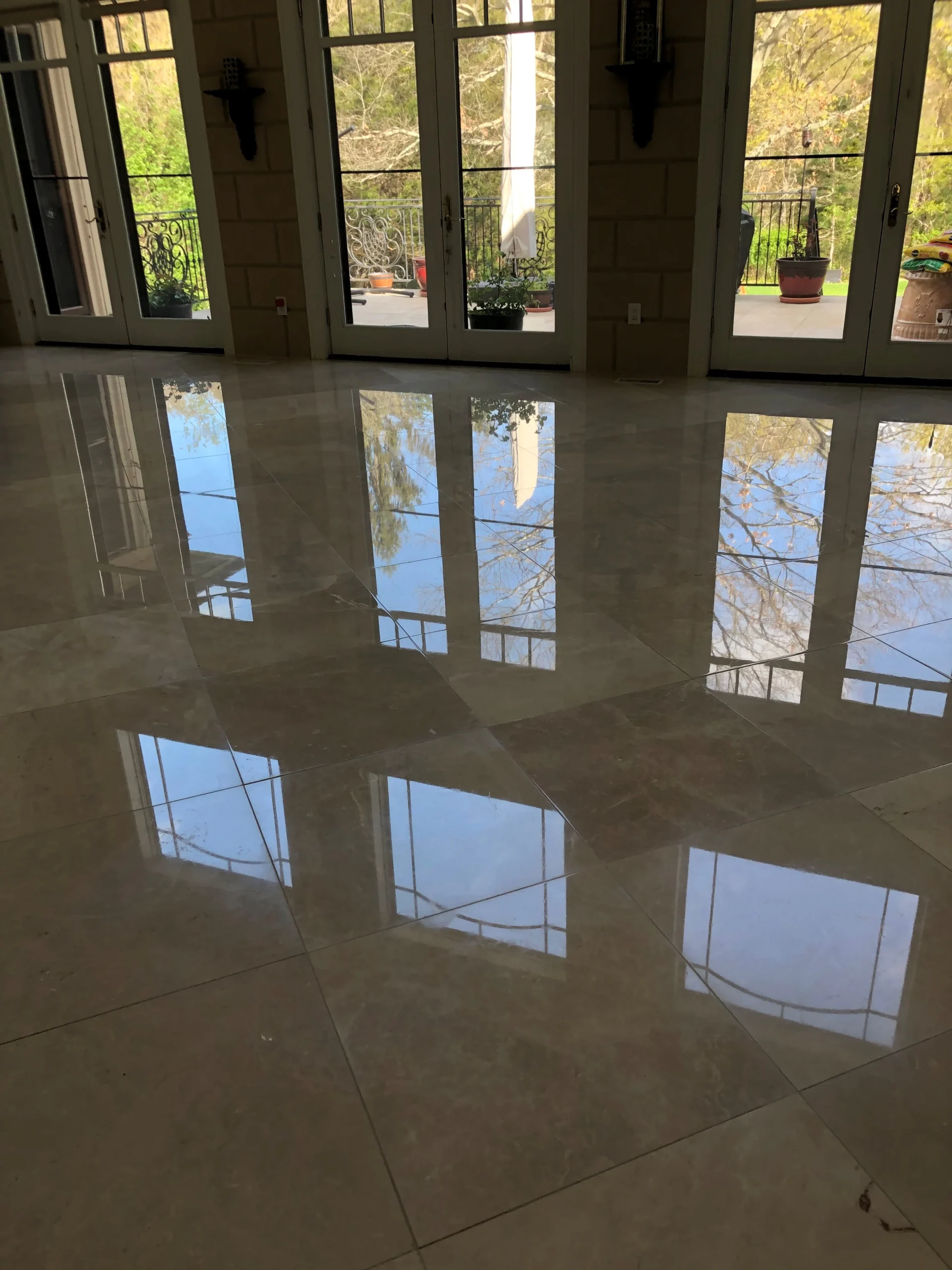
Next comes the actual restoration work. We remove scratches, etching, and stains using techniques specific to your marble’s age and composition. This isn’t aggressive buffing or harsh chemicals that damage the stone. It’s controlled polishing that brings back the original finish without removing more material than necessary.
Finally, we seal and protect the restored surface. You get transparent pricing before we start, most jobs finish in under two days, and you’re left with floors that look like they did when your house was built. No construction mess, no replacement costs, no loss of historic character.

Ready to get started?
You get floors restored using methods designed for historic materials. That includes addressing water damage common in older Port Jefferson homes near the water, where humidity affects basement and ground-level marble. We handle settling issues, lippage between tiles, and grout problems that come with age.
The work includes marble floor polishing that removes dull spots, water marks, and scratches without destroying the stone. You also get proper sealing that protects against future staining and etching—something many historic floors never had when originally installed.
Most importantly, you get an owner-operated service where the person quoting the job is the same person doing the work. No surprises, no subcontractors, no miscommunication. Just direct expertise on every project, backed by nearly three decades of experience with Long Island’s oldest homes.
Port Jefferson’s historic properties often feature marble that hasn’t been manufactured in over a century. When that’s damaged beyond repair, replacement isn’t just expensive—it’s sometimes impossible. Restoration preserves what you can’t recreate.
Marble restoration typically costs $3-8 per square foot in the Port Jefferson area. Full replacement with new marble runs $70-190 per square foot when you factor in demolition, disposal, new material, and installation. For a 200-square-foot entryway, you’re looking at $600-1,600 for restoration versus $14,000-38,000 for replacement.
The math gets more compelling when you’re dealing with historic homes. Restored original floors can increase property value by 3-5% because buyers in Nassau and Suffolk Counties specifically seek authentic period features. You’re not just saving money on the immediate project—you’re protecting an asset that makes your home more valuable.
Most restoration projects in Port Jefferson take 1-2 days for straightforward work. Complex historic projects with water damage or structural issues may need more time, but you’re still finishing faster and cheaper than the weeks-long process of tearing out and replacing floors.
Yes. Deep scratches, etching, and water damage are exactly what we specialize in. The worse the condition, the more dramatic the transformation—that’s been our approach since 1998 and what earned us recognition in the New York Times.
Water damage is particularly common in older Port Jefferson homes where moisture barriers weren’t standard during original construction. We’ve restored basement and ground-level marble affected by humidity, occasional flooding, and decades of exposure. The key is identifying whether the damage is surface-level or if there’s underlying structural movement causing cracks or lippage.
Surface damage—scratches, dullness, staining, etching from acidic cleaners—comes out during the restoration process. Deeper issues like settling or water intrusion require addressing the source before we restore the surface. We assess everything upfront so you know exactly what’s needed and what’s possible before any work begins.
If the marble itself is intact—not crumbled, shattered, or missing large sections—it can almost always be restored. Age and surface damage don’t disqualify floors from restoration. We’ve brought back century-old marble that looked completely ruined.
The decision point is usually structural, not cosmetic. If your home has settled significantly and caused major cracking, or if water damage has compromised the substrate beneath the marble, you might need more extensive work. But even then, you’re often looking at repairs plus restoration, not full replacement.
Here’s what matters: historic marble was installed using different methods and materials than modern floors. Someone who only works on new construction won’t understand how to handle those differences. You need expertise specific to antique marble restoration in Nassau County homes. That’s not every contractor, and it’s definitely not cleaning companies offering stone services as a side business.
Marble polishing is one step in the restoration process. Polishing brings back shine and removes minor surface scratches. Restoration addresses deeper damage—etching, stains, significant scratching, dullness, and underlying issues affecting the floor’s condition.
Think of it this way: if your floors just need a refresh and they’re in decent shape, polishing might be enough. If they’re dull throughout, have water marks that won’t come out, show etching from years of wrong cleaning products, or have areas where the finish is completely gone, you need full restoration.
Many cleaning companies offer “marble polishing” using aggressive methods that can actually damage historic stone. Real restoration requires understanding the specific type of marble, how it was installed, what’s causing the damage, and which techniques will fix the problem without creating new ones. That’s specialized knowledge, not something you get from a general cleaning service.
Properly restored and sealed marble can last decades before needing attention again. Your floors have already survived 50, 75, or 100+ years—they’re proven durable. Restoration brings them back to original condition, and proper sealing protects against future damage.
Longevity depends on maintenance and traffic. High-traffic entryways in Port Jefferson homes near the waterfront might need resealing every few years due to humidity and sand exposure. Low-traffic areas like formal dining rooms might go 10-15 years before needing any work.
The advantage of historic marble is that it was installed during an era of superior craftsmanship with materials that often exceed modern equivalents in quality. You’re not dealing with thin tiles over cement board—you’re dealing with thick stone set in traditional methods. Once restored, these floors outlast most modern installations because the underlying quality is simply better.
We specialize in marble floor restoration, but we also work with other natural stone common in historic Port Jefferson properties—terrazzo, limestone, and travertine. We’ve recently expanded into concrete restoration and polishing, which is relevant for historic basements and industrial-style spaces.
What we don’t do is porcelain or ceramic tile. Our focus is natural stone, particularly in older homes where the material and installation methods require specialized expertise. Different stones have different mineral compositions, which means they respond differently to restoration techniques.
This specialization matters because stone can be ruined easily by inexperienced contractors. You’ll find plenty of cleaning companies offering stone restoration as an add-on service, often using harsh abrasives and acids that destroy historic materials. We’ve built 25+ years of reputation specifically on understanding how to work with antique stone surfaces throughout Nassau and Suffolk Counties. That’s not a side service for us—it’s what we do.