


The dull spots from wine spills and lemon juice? Gone. The haze from years of foot traffic? Polished out. The etching from cleaners you didn’t know were too harsh? Restored to a mirror finish.
You’re not covering up damage or living with floors that look tired. You’re getting the original stone back, the way it looked when your home was built. That’s what marble floor polishing actually does when it’s done right.
Most jobs finish in one to two days. You can walk on your floors the same day. No dust coating your furniture, no weeks of disruption. Just restored marble that reflects light the way it should, with a finish that lasts because we’re not cutting corners to get to the next job.
This matters in Point Lookout because over half the homes here were built before 1940. Your floors have survived decades. They don’t need replacement. They need someone who knows how to work with historic stone and actually cares about the result.
High Definition Marble Restoration Inc isn’t a franchise or a crew of subcontractors. We’re owner-operated, which means the person who quotes your job is the same person doing the work. That’s been true since 1998, and it’s still true today.
We were featured in the New York Times back in 2001 for our restoration work. Not because we paid for it, but because what we do is worth writing about. When you’re working on 100-year-old marble in homes that have seen generations of families, you don’t get a second chance to do it right.
Point Lookout has the kind of historic homes we built this business around. The coastal humidity, the hard water, the age of the stone—these aren’t problems for us. They’re exactly what we’ve been handling for over two decades across Nassau and Suffolk County. You’re not explaining your floors to us. We already know what they’ve been through.
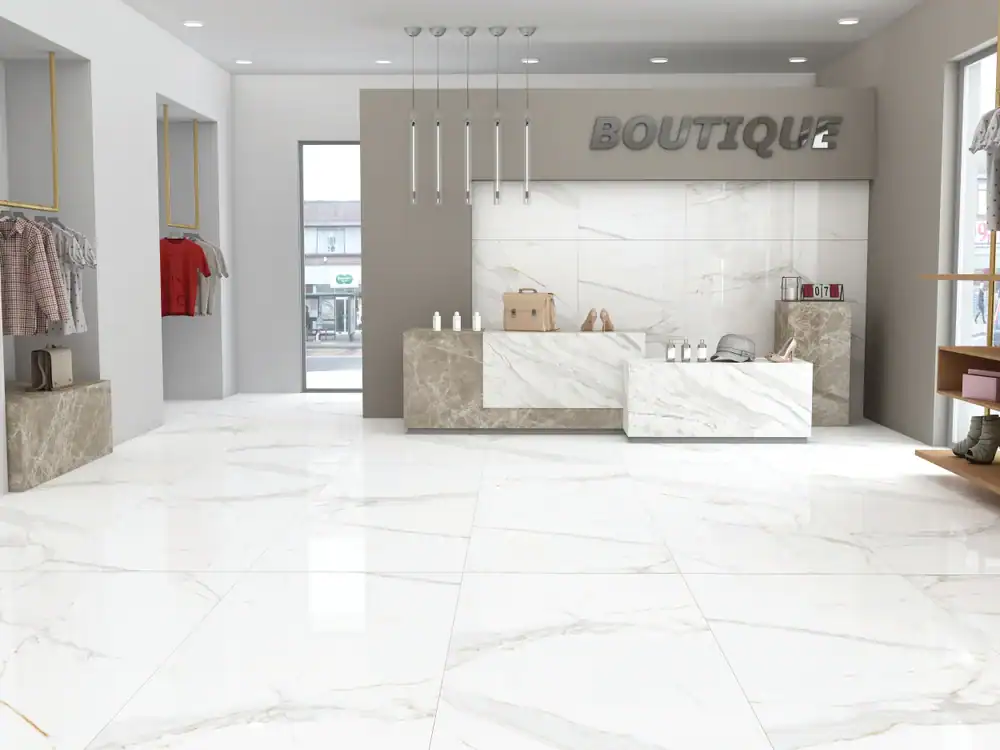
First, we assess the damage. Not every floor needs the same level of work, and we’re not going to sell you services you don’t need. Some marble just needs honing and polishing. Others need full diamond restoration to remove deep etching and scratches. We’ll tell you exactly what yours needs and why.
Next comes the actual restoration. We use diamond abrasives to remove the damaged layer of stone—usually just a fraction of a millimeter. This isn’t a topical fix. We’re removing the scratches, the etching, the dullness at the source. Then we hone the surface to the right level of smoothness and polish it to the finish you want. Most of this work happens on-site, and our techniques keep 99% of the dust contained. You’re not cleaning marble powder off your counters for weeks.
The final step is protection and guidance. We’ll explain what’s actually damaging your marble and what isn’t, because most of the advice online is wrong or incomplete. You’ll know which cleaners to avoid, how to handle spills, and what kind of maintenance schedule makes sense for your specific floors. Then we back the work with a comprehensive warranty, because we’re not interested in redoing jobs we should have done right the first time.

Ready to get started?
You’re getting a full assessment of your marble’s condition before we start. That includes identifying the type of stone, the extent of damage, and the best approach for restoration. Not all marble responds the same way to refinishing, and we’ve worked with enough historic floors in Point Lookout to know the difference.
The restoration itself includes diamond honing to remove surface damage, polishing to your preferred finish level, and sealing if your stone needs it. Some marble shouldn’t be sealed. Some should. We’ll tell you which category yours falls into and why. You’re also getting dustless techniques that keep the mess contained, which matters when you’re working in a home that’s fully furnished and occupied.
After the work, you get direct guidance on marble floor care that actually applies to your specific situation. The generic advice about pH-neutral cleaners isn’t enough if you’ve got hard water issues or specific staining problems. We’ve seen what damages marble in coastal Long Island homes, and we’ll tell you exactly what to watch for. Plus, you’re getting a comprehensive warranty and the ability to reach the owner directly if something doesn’t look right. No phone trees, no subcontractor excuses. Just direct accountability from the person who did the work.
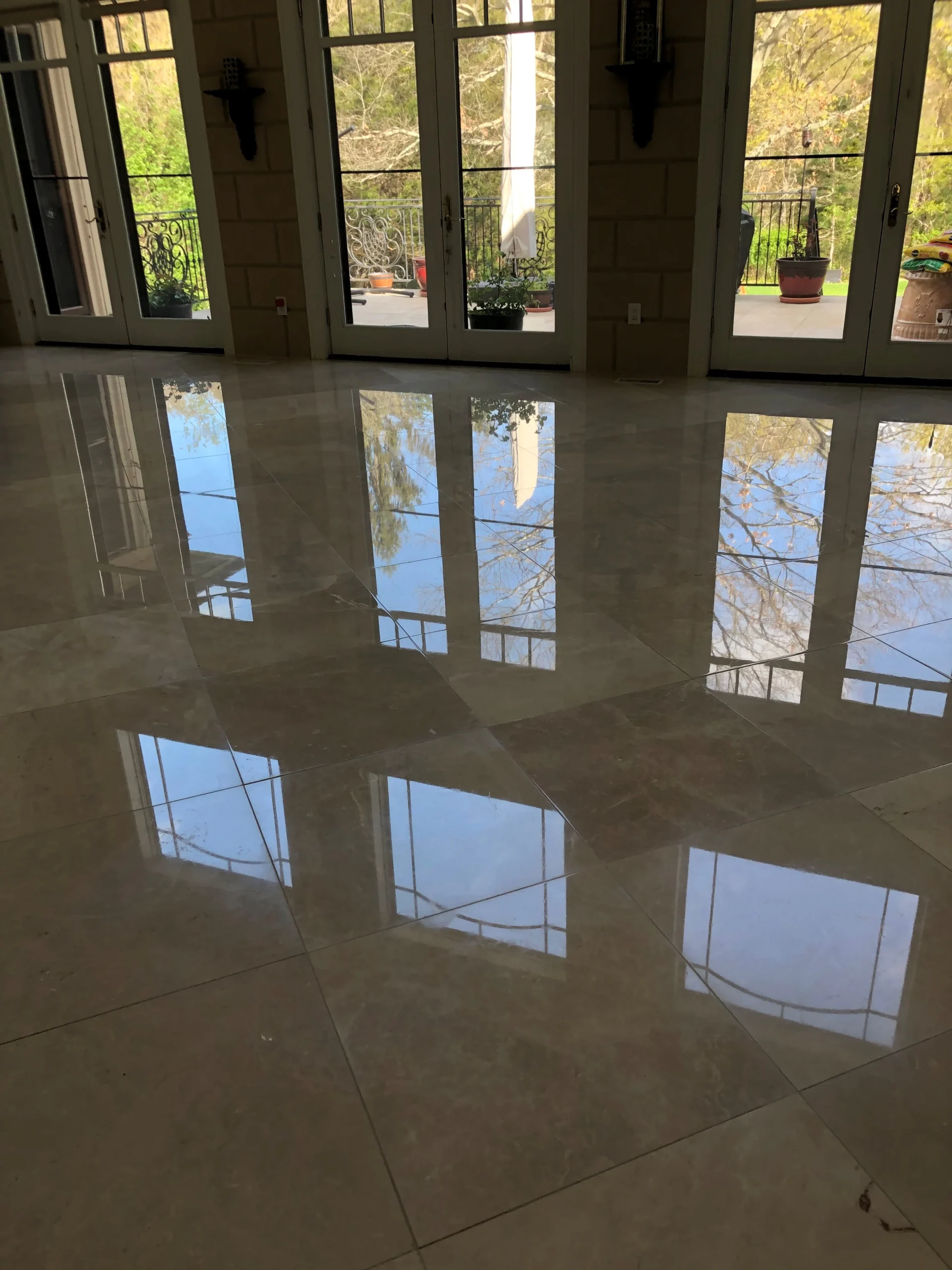
Most marble floor restoration jobs finish in one to two days, depending on the size of the space and the condition of the stone. A typical bathroom floor restoration might take four to six hours. A large foyer or living area could take a full day or two.
You can use the space immediately after we’re done. There’s no curing time, no waiting period. The floor is ready to walk on as soon as the final polish is complete.
The timeline matters because you’re not moving out or living around a construction zone for weeks. We show up, we do the work, and you have your space back. That’s possible because we’re not replacing anything or waiting for materials to dry. We’re working with the stone that’s already there, and our process is efficient because we’ve done it hundreds of times on floors just like yours.
Yes. Etching from lemon juice, wine, vinegar, or acidic cleaners is one of the most common problems we fix. The dull spots you see aren’t stains—they’re chemical burns that have roughed up the marble’s surface. Regular cleaning won’t fix them because the damage is in the stone itself, not on top of it.
We remove etching by honing down past the damaged layer with diamond abrasives, then polishing the surface back to a smooth, reflective finish. How deep we need to go depends on how severe the etching is, but most cases only require removing a tiny amount of stone—far less than you’d lose from decades of normal wear.
This is especially common in Point Lookout homes with historic marble, because older stone has been exposed to more spills and more years of improper cleaning products. The good news is that marble is thick enough to handle this kind of restoration multiple times over its lifespan. You’re not compromising the floor by fixing it. You’re just bringing it back to where it should be.
Completely different. Cleaning removes dirt and surface grime. Polishing removes scratches, etching, and dullness by physically reshaping the stone’s surface. If your marble looks hazy or has lost its shine, cleaning won’t bring it back. You need actual marble polishing services that use abrasives to restore the finish.
Most homeowners try cleaning first, which makes sense. But when that doesn’t work, it’s because the problem isn’t dirt—it’s damage. Microscopic scratches accumulate over months and years from foot traffic, grit, and improper cleaning tools. Those scratches scatter light instead of reflecting it, which is why your marble looks dull even when it’s clean.
Polishing removes those scratches and brings the stone back to a smooth, light-reflective surface. It’s a mechanical process, not a chemical one. That’s why it works on damage that cleaning can’t touch, and why it lasts. You’re not applying a coating that wears off. You’re restoring the actual stone surface, which is permanent until it gets damaged again.
That’s specifically what we’re best at. Over half the homes in Point Lookout were built before 1940, and historic marble floors are exactly the kind of work we’ve built our reputation around. The older the floor, the more we want to see it.
Historic floors come with challenges that newer stone doesn’t have. The marble might be a type that’s no longer quarried. The installation methods were different. The stone has been through decades of wear, improper maintenance, and sometimes questionable repair attempts. We’ve seen all of it, and we know how to work with it without causing more damage.
You’re not explaining your 100-year-old floors to someone who usually works on new construction. We’ve restored marble in century-old homes across Nassau County, and we understand what that stone has been through. The techniques we use are designed for restoration, not just maintenance. That’s the difference between getting your floors back to original condition and just making them look a little better for a while.
Honing and polishing are two different finish levels, and which one you want depends on the look you’re going for and where the marble is located. Honing gives you a smooth, matte finish with little to no shine. Polishing gives you a glossy, reflective finish that looks more formal and traditional.
Honed marble hides scratches and etching better because the matte surface doesn’t reflect light the same way. That makes it a good choice for high-traffic areas or homes with kids and pets. Polished marble shows damage more easily, but it also looks more elegant and is easier to clean because the surface is smoother and less porous.
Both finishes require the same diamond abrasive process to get the stone smooth and level. The difference is how far we take the polishing steps. We can also do a semi-polish if you want something in between. Most historic Point Lookout homes originally had polished marble, so that’s usually what we’re restoring it back to. But if you want a different finish, we’ll walk you through what makes sense for your specific floors and how you actually use the space.
Restoration costs a fraction of what replacement does, and you’re keeping the original stone instead of ripping it out and starting over. Exact pricing depends on the size of the area, the condition of the marble, and what level of restoration it needs, but you’re typically looking at a cost that’s 30-50% of full replacement.
Replacement means demoing the old floor, disposing of the marble, buying new stone, and paying for installation. You’re also losing the original character of your home, which matters in historic Point Lookout properties where the marble is part of the home’s identity and value. Restoration keeps that originality intact while giving you a floor that looks brand new.
The other factor is time and disruption. Replacement takes weeks and turns your home into a construction site. Restoration takes one to two days and keeps the mess contained. You’re not living around demolition, and you’re not waiting for materials to arrive or installers to schedule you in. For most homeowners with marble that’s still structurally sound, restoration is the smarter choice financially and practically. We’ll tell you upfront if your floors are too far gone to restore, but that’s rare. Most marble can be brought back, even if it looks terrible right now.