


Those scratches across your foyer aren’t permanent. The dullness from years of wrong cleaning products isn’t either. Most marble damage you’re looking at right now can be reversed without tearing anything out.
Restoration addresses etching from acidic cleaners, water stains from Long Island’s hard water, surface scratches from daily wear, and that overall cloudiness that makes your floors look tired. The marble itself is still intact underneath—it just needs the right process to bring it back.
You’re not looking at weeks of construction chaos or the cost of new materials. Restoration takes days, not weeks. It costs 60-80% less than replacement. And when it’s done right, your floors look the way they did when they were first installed—sometimes better, because we’re using techniques and products that didn’t exist back then.
This matters in Plandome Manor because so many homes here have original marble from the early 1900s. That stone has density and character you literally cannot buy today. Throwing it away because it looks dull makes no sense when restoration can fix it.
We specialize in bringing old marble back to life. Not just cleaning it—actually restoring it. Our owner personally oversees every project, which means you’re getting 25+ years of hands-on experience, not a crew that learned last month.
We’ve worked on countless historic properties throughout Nassau County, including many of Plandome Manor’s Tudor Revivals and Georgian estates. The NY Times featured our work in 2001, but what matters more is that we understand how marble installed 100 years ago differs from modern installations—and why that matters for restoration.
You’re dealing with someone who gets excited about difficult projects. The worse the floor, the better the challenge. That’s not typical, but it’s exactly what you want when your marble needs serious attention.

First, we assess the actual condition of your marble—not just surface dirt, but the real damage underneath. This tells us which restoration process your specific floor needs. Historic marble often requires different techniques than modern installations.
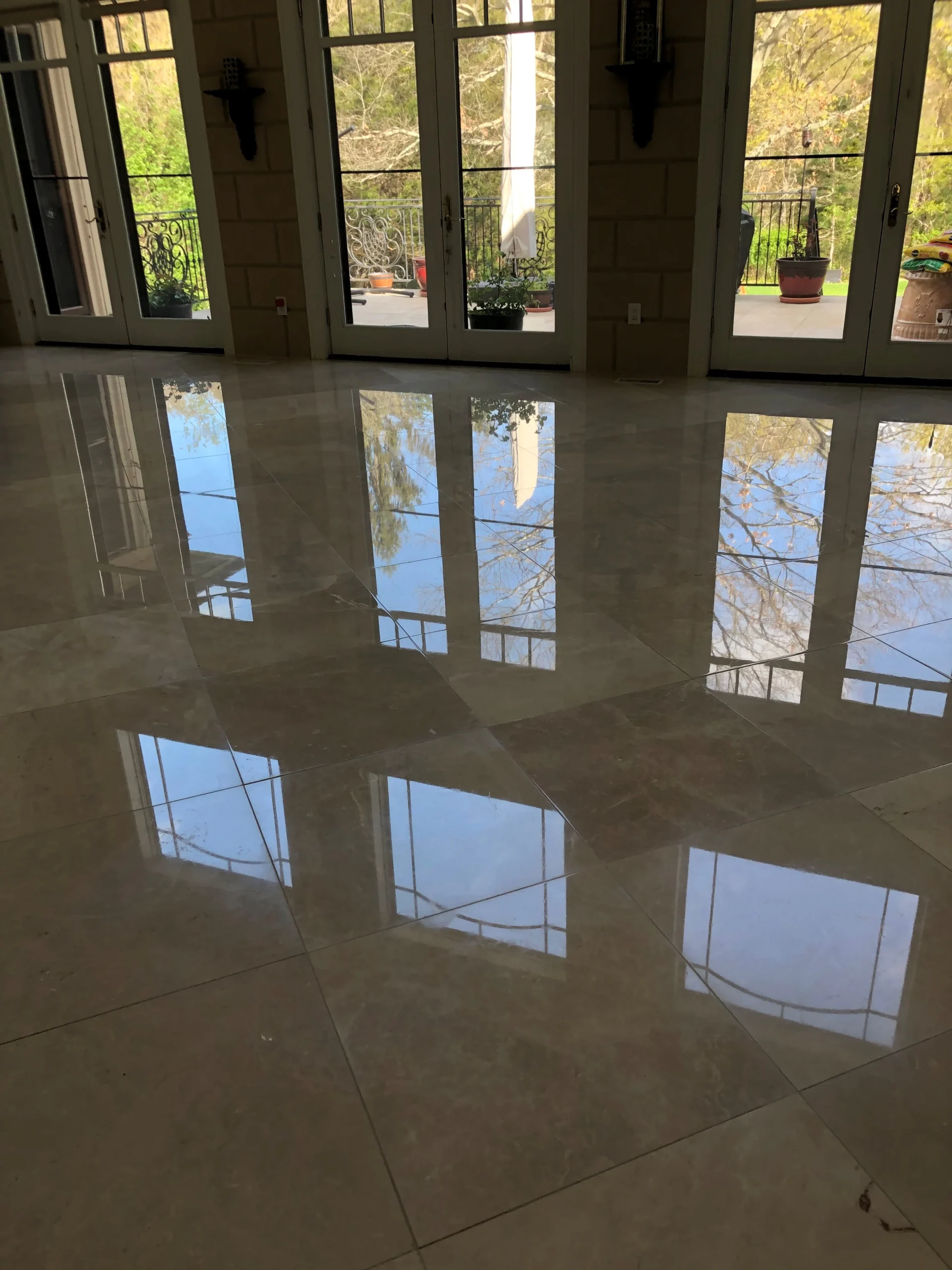
Next comes the restoration itself. For most floors, this involves diamond grinding to remove surface damage and etching, followed by honing to create a smooth surface. Then we polish using progressively finer abrasives until your marble has that deep, reflective finish. Finally, we seal everything with commercial-grade solvent-based sealer—not the water-based products you find at hardware stores.
The whole process typically takes one to three days depending on your floor’s size and condition. We mask and protect everything carefully, so you’re not dealing with dust throughout your house. Cleanup is part of the job, not an afterthought.
What you end up with is marble that looks original again—because it is original. We’re not covering anything up or applying coatings that wear off. We’re bringing the stone itself back to life through mechanical restoration and proper sealing.

Ready to get started?
You get a complete assessment before any work starts. No surprises, no upselling once we’re in your house. We tell you exactly what your floor needs and what it’ll cost—upfront.
The restoration includes all necessary grinding, honing, and polishing steps. We don’t skip stages to save time. Each step matters for the final result. We also handle all the prep work—moving furniture when needed, masking floors and walls, protecting your space throughout the process.
After polishing, we apply professional-grade sealer that actually protects your marble for years. This isn’t the stuff you buy at local stores. It’s solvent-based, which means better protection against staining and etching—the two biggest threats to marble in Plandome Manor homes.
Cleanup is thorough. We don’t leave dust or residue behind. Your floor is ready to use as soon as we’re done, and you’ll know exactly how to maintain it going forward because we’ll tell you what actually works and what damages marble.
This matters because Plandome Manor’s homes—especially the historic properties near Leeds Pond and along the waterfront—often feature original marble that’s been damaged by decades of well-meaning but wrong maintenance. Hard water, acidic cleaners, abrasive products. We fix all of that, then show you how to keep it looking right.
Restoration typically runs $1-3 per square foot depending on your floor’s condition. Replacement costs $15-40 per square foot once you factor in demolition, disposal, new materials, and installation. You’re looking at spending hundreds instead of thousands for most projects.
A 200-square-foot foyer costs $200-600 to restore versus $3,000-8,000 to replace. That’s not even counting the time difference—restoration takes one to three days while replacement can take weeks once you account for demolition, substrate prep, and installation.
The bigger factor for Plandome Manor homeowners is that original marble from historic homes has quality and character you cannot buy today. Older stone often has superior density compared to contemporary marble. Throwing that away because it looks dull makes no financial or practical sense when restoration brings it back for a fraction of replacement cost.
Yes. Etching from acidic cleaners is one of the most common problems we fix. When vinegar, lemon-based products, or harsh bathroom cleaners contact marble, they dissolve the calcium carbonate layer and leave rough, cloudy patches. This looks permanent, but it’s not.
We remove the damaged layer through diamond grinding, then hone and polish the marble back to a smooth, reflective finish. The process takes the floor down to undamaged stone, then builds it back up through progressively finer polishing stages.
Long Island’s homes face this constantly because many common household cleaners are acidic. Even products marketed as “natural” or “eco-friendly” often contain acids that damage marble on contact. Once we restore your floor, we’ll tell you exactly what’s safe to use and what to avoid so you don’t end up with the same damage again.
Most residential projects take one to three days depending on the floor’s size and condition. A standard foyer or bathroom usually takes one full day. Larger spaces like open-concept living areas or multiple rooms take two to three days.
The timeline depends on how much damage we’re fixing. Light restoration—addressing minor scratches and dullness—moves faster than deep restoration for heavily etched or stained marble. We’ll give you an accurate timeframe after assessing your specific floor.
You can stay in your home during the work. We’re not tearing anything out or creating the kind of disruption that comes with replacement. We mask and protect surrounding areas, contain dust, and clean thoroughly at the end of each day. Your floor is ready to use as soon as we finish the final sealing step.
Polishing is the final step in restoration—it’s what creates that glossy, reflective finish. But polishing alone doesn’t fix damaged marble. If your floor has etching, deep scratches, or staining, it needs full restoration first.
Restoration includes grinding away the damaged surface layer, honing the marble smooth, then polishing it to the desired finish level. Think of grinding as removing the problem, honing as creating an even surface, and polishing as bringing out the shine.
Many companies offer “marble polishing” but skip the grinding and honing steps because they take more time and skill. That’s why DIY polishing attempts usually fail—you’re trying to shine a damaged surface instead of fixing the damage first. Real restoration addresses the underlying problems, not just the appearance.
Properly restored and sealed marble stays protected for years, not months. The key is using the right sealer and maintaining your floor correctly afterward.
We seal marble with commercial-grade solvent-based sealer, which penetrates deeper and lasts longer than water-based products sold at hardware stores. This provides real protection against staining and etching—the two main threats to marble in Nassau County homes.
That said, no sealer makes marble indestructible. Acidic spills still need to be wiped up quickly. You still need to use pH-neutral cleaners, not vinegar or harsh chemicals. We’ll show you exactly what to do and what to avoid. Most of our clients go years between professional maintenance visits because they know how to care for their floors after restoration.
We restore marble anywhere in your home—bathrooms, kitchens, foyers, living areas. Bathroom marble actually needs restoration more often because it’s constantly exposed to water, soap residue, and cleaning products.
Bathroom floors and shower walls face unique challenges. Hard water leaves mineral deposits. Soap scum builds up. Many bathroom cleaners are highly acidic. All of this damages marble over time, creating that dull, rough appearance that makes your bathroom look dated.
The restoration process is the same regardless of location—we’re fixing the marble itself, not just cleaning the surface. Bathrooms sometimes need extra attention for water staining and mineral buildup, but the end result is the same: marble that looks original again. We also make sure to seal bathroom marble thoroughly since it faces more moisture exposure than floors in other areas.