
You’re looking at floors that have witnessed decades of family life. Maybe they’re etched from cleaning products, dull from years of foot traffic, or stained from Long Island’s notoriously hard water. The question isn’t whether they can be saved—it’s whether you’ll find someone who actually knows how to do it right.
Restoration brings back the original shine and smoothness without ripping out irreplaceable materials. Most jobs finish in under two days. You can use your stairs again the same evening. And you’re preserving marble that’s often higher quality than anything available today—the kind installed during Long Island’s Gold Coast era that simply isn’t replicated anymore.
The cost runs 60-80% less than replacement. New marble installation on Long Island averages $70-190 per square foot. Restoration costs a fraction of that while maintaining the authentic character that actually adds value to historic properties. Buyers pay premium prices for original, restored features—not modern replacements trying to look old.
High Definition Marble Restoration Inc has been restoring historic floors across Nassau and Suffolk Counties since 1998. The owner oversees every project personally—not because we don’t trust anyone else, but because these floors matter and the work requires specific expertise that most contractors simply don’t have.
We were featured in the New York Times back in 2001 for our restoration work. Our first client, the Garden City Hotel, has used us exclusively for over 16 years. We’ve built our reputation on the jobs other contractors avoid—the 100-year-old floors in rough shape, the complex historic materials, the projects where the stakes are high and the margin for error is zero.
Peconic and the surrounding Long Island communities have unique challenges. The coastal environment means higher humidity year-round. The hard water creates mineral deposits that accelerate staining. And many of these historic homes feature original marble installed with techniques and materials you simply can’t match today. That’s the work we specialize in.
First, we assess the actual condition of your marble. Not all damage is the same. Etching from acidic cleaners requires different treatment than staining from hard water deposits. Surface scratches need different approaches than deep chips or cracks. We identify what’s actually wrong before we start grinding away at century-old material.
The restoration process uses diamond abrasives in progressive grits—starting coarse to remove damage, then moving finer to rebuild the surface smoothness. We’re not buffing or coating. We’re actually reshaping the stone at a microscopic level to eliminate etching, scratches, and dullness. Then we polish to bring back the original shine using the same techniques that would have been used when your floors were first installed.
Most residential jobs finish in one to two days. You’ll need to stay off the floors during the work, but you can use stairs again the same evening after completion. We handle the dust containment and cleanup. What you’re left with is marble that looks like it did decades ago—before the damage accumulated, before someone used the wrong cleaning products, before years of wear dulled the surface.

Ready to get started?
You’re getting complete restoration—not just surface polishing. That means repairing etching damage from acidic cleaners like toilet bowl cleaner or vinegar that dissolved the calcium carbonate layer. It means removing stains that have penetrated below the surface. It means eliminating scratches from abrasive cleaning methods or grit tracked in over the years.
We also address issues specific to Long Island’s environment. The hard water here creates mineral buildup that combines with soap residue and bathroom moisture to accelerate deterioration. Many Peconic homes deal with this constantly. We remove those deposits and restore the surface so it’s less prone to future staining—though you’ll still need to maintain it properly after we’re done.
For historic properties, we’re often working with marble that’s superior to modern materials. The stone quarried and installed during the early 1900s has characteristics you’d pay premium prices to match today. Restoration preserves that authenticity. Replacement with modern marble means losing the original character that actually increases your property value—the National Association of Realtors notes that restored historic features can boost values by up to 25% in the right markets.
We also handle marble countertop repair, bathroom floor restoration, and we’ve recently added concrete restoration and polishing for clients who need that work done with the same level of expertise.
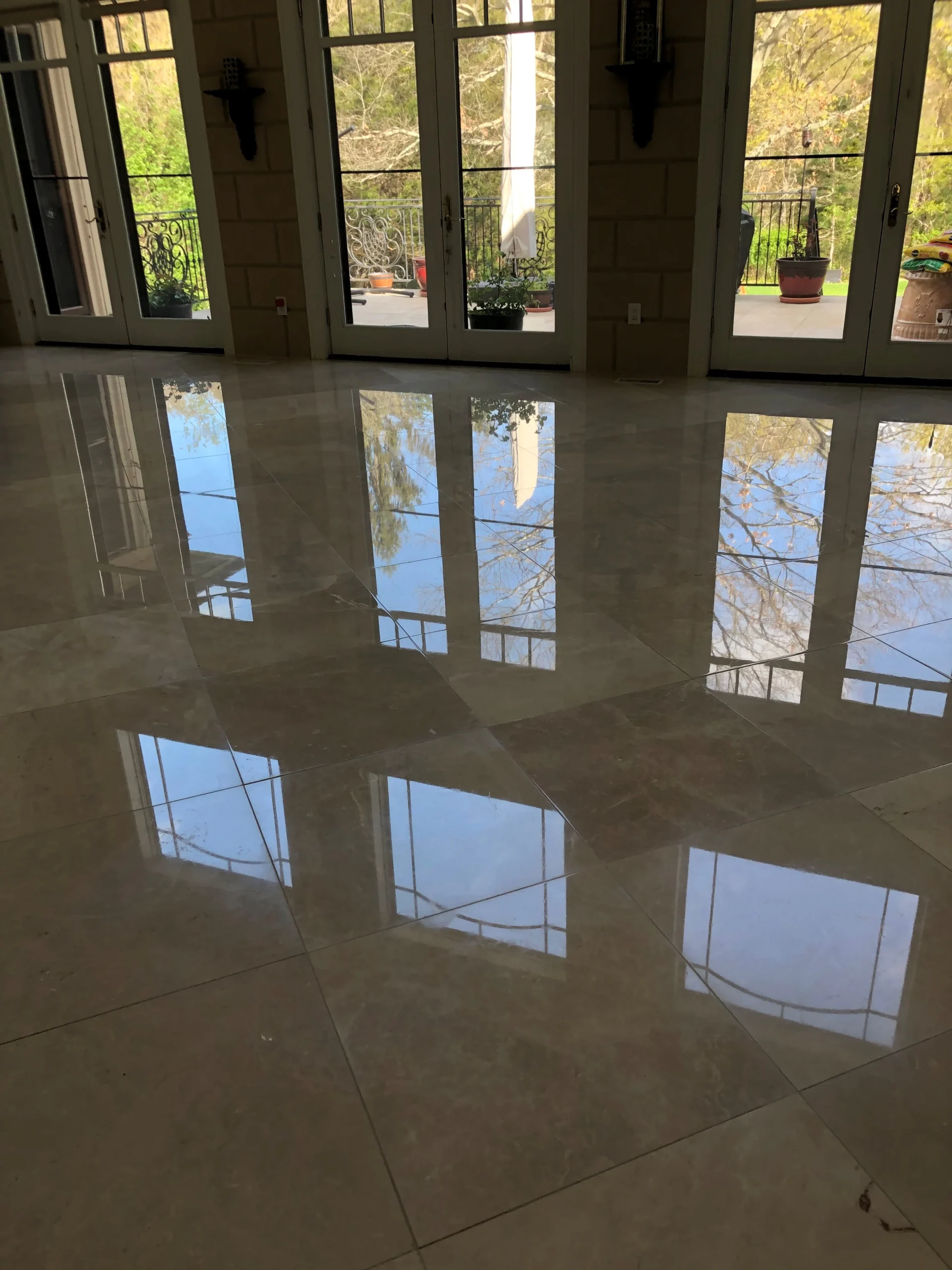
If the marble itself is intact—no major cracks, no pieces missing, no structural damage—restoration almost always makes more sense. What you’re seeing as “damage” is usually surface-level: etching from acidic cleaners, dullness from wear, staining from spills or hard water. All of that can be fixed without ripping out the floor.
Replacement only becomes necessary when the stone is physically compromised or when tiles are broken beyond repair. Even then, you might only need to replace specific damaged sections rather than the entire floor. The reality is that most marble damage is reversible with proper restoration techniques.
Here’s the practical test: if you can run your hand over the floor and it feels rough, cloudy, or dull—but the stone itself isn’t cracked or crumbling—restoration will bring it back. We’ve restored floors that looked completely ruined and brought them back to their original condition. The worse the surface damage, the more dramatic the results tend to be.
Most residential marble restoration jobs finish in one to two days. A small bathroom might take half a day. A large foyer or multiple rooms might stretch to two full days. The timeline depends on square footage, the severity of damage, and how much material we need to remove to get below the etching or staining.
You’ll need to stay off the floors while we’re working—the equipment is heavy and the process requires the space to be clear. But you can typically use stairs again the same evening after we finish. The marble is immediately usable once we’re done, though we’ll give you specific care instructions to protect the restored surface.
Compare that to replacement, which usually requires weeks. You’re looking at demolition, disposal of old materials, substrate prep, new installation, grouting, sealing, and curing time. The disruption is massive. Restoration gets you back to normal in a fraction of the time while preserving the original materials that give your historic home its character.
That’s etching—chemical damage from acidic substances that dissolve the calcium carbonate in marble. The most common culprits are cleaning products: toilet bowl cleaners, vinegar-based solutions, or even some “natural” cleaners marketed as safe. They’re not. They damage marble almost instantly, leaving behind rough, cloudy patches where the surface has been eaten away.
Long Island’s hard water makes this worse. When mineral deposits combine with soap residue and moisture—especially in bathrooms—you get conditions where etching accelerates. Many homeowners don’t realize their regular cleaning routine is actually destroying their floors until the damage becomes obvious.
The other issue is DIY repair attempts. Store-bought marble polishes or abrasive pads usually make etching worse, not better. You’re adding more scratches or spreading the damage across a larger area. Professional restoration removes the damaged layer entirely and rebuilds the surface using progressive diamond abrasives. That’s the only way to actually fix etching—you can’t buff it out with consumer products.
Yes, and those are actually the projects we specialize in. The marble installed in historic Long Island homes during the Gold Coast era is often superior quality compared to modern materials. It was quarried and cut using different methods, and it’s held up for a century because the stone itself is exceptional. Proper restoration preserves that.
The key is understanding how much material to remove. We’re not grinding away randomly—we’re removing just enough to get below the damage while preserving as much of the original stone as possible. That requires experience with historic materials and knowing how they respond to different abrasives and techniques.
We’ve been doing this since 1998, and we’ve worked on floors throughout Nassau and Suffolk Counties that date back to the early 1900s. The worse the condition, the better the opportunity to showcase what proper restoration can do. Other contractors often avoid these jobs because the stakes are high and the work is complex. That’s exactly why we built our reputation on them.
Restoration typically costs 60-80% less than complete replacement. New marble installation on Long Island runs $70-190 per square foot depending on the material quality and complexity of the job. Restoration costs a fraction of that because you’re working with existing materials—no demolition, no disposal fees, no new stone to purchase and install.
The other cost factor people miss is property value. Restored original marble maintains the historic character that buyers pay premium prices for. The National Association of Realtors notes that authentic, well-maintained historic features can increase property values by 3-5%, with some properties seeing up to 25% increases in the right markets. Replacement with modern materials doesn’t carry the same value—it’s just new marble trying to look old.
You’re also avoiding the disruption costs. Replacement takes weeks and often requires you to move out or live around major construction. Restoration finishes in a day or two with minimal disruption. When you factor in time, money, and the preservation of irreplaceable materials, restoration makes sense for almost every historic floor that’s structurally sound.
Stop using that cleaner immediately, and don’t try to fix it yourself with store-bought products. Most DIY marble repair solutions make etching worse by adding more scratches or spreading the damage. The best thing you can do right now is switch to pH-neutral cleaners designed specifically for natural stone and call someone who actually knows how to restore marble properly.
The damage you’re seeing—whether it’s cloudy etching, dull spots, or rough patches—is fixable. We’ve restored marble that’s been damaged by everything from toilet bowl cleaner to vinegar to harsh abrasives. The stone itself is still intact underneath that damaged surface layer. Professional restoration removes the damaged material and rebuilds the finish to its original condition.
Get a free quote before you do anything else. We’ll assess the actual damage and tell you exactly what’s required to fix it. Most etching and staining is reversible with the right techniques. And once it’s restored, we’ll show you how to maintain it properly so you’re not dealing with the same damage again in a few years.