
You’re looking at floors that have been in your home for decades, maybe a century. They’re dull now. Scratched. Stained in spots where water sat too long or someone used the wrong cleaner years ago.
Replacement isn’t just expensive—it’s permanent. You lose the original stone, the craftsmanship, the character that makes your Old Field home what it is.
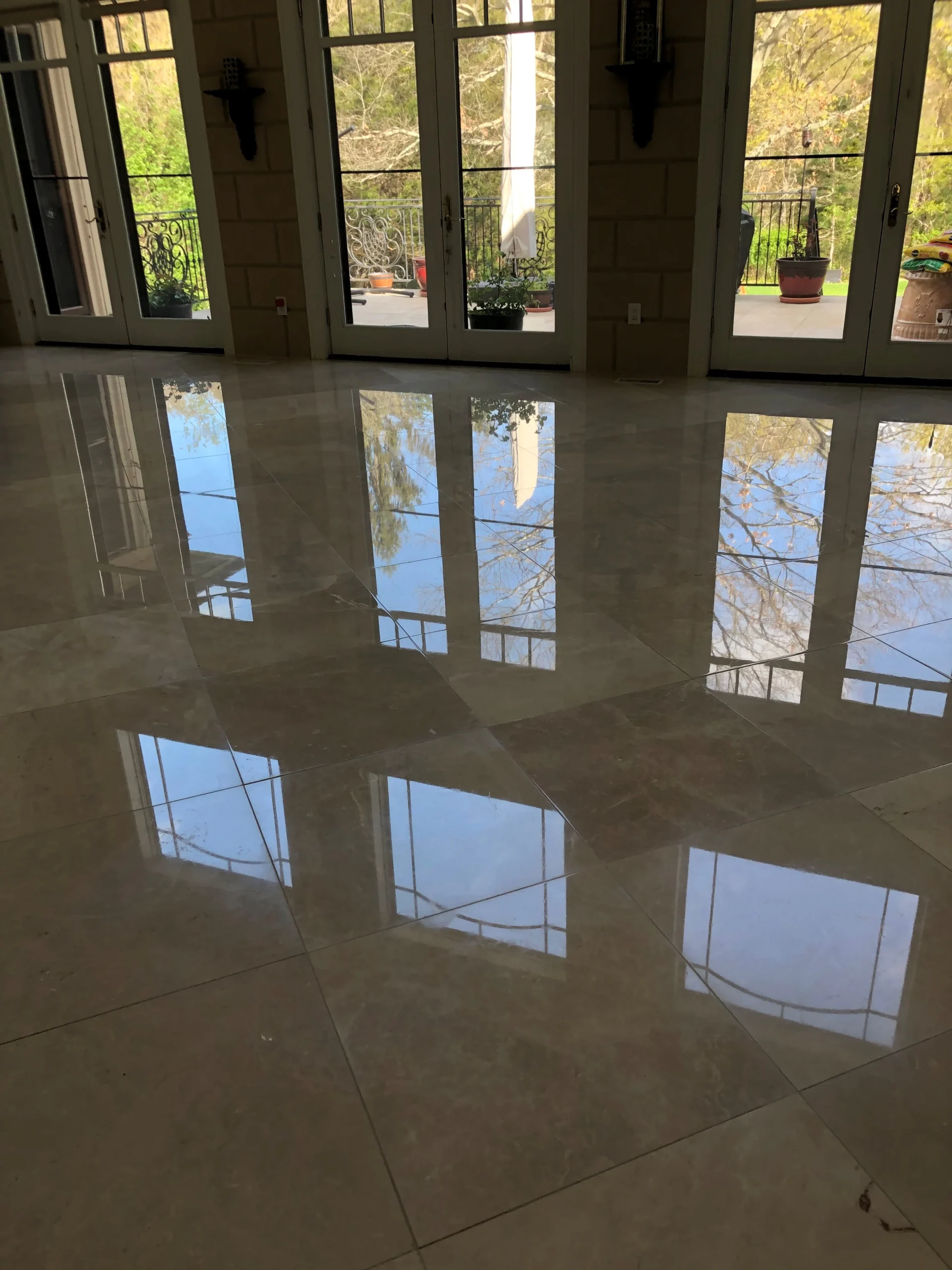
Restoration brings back the finish without tearing anything out. The marble polishing process removes surface damage and rebuilds the shine you remember. Most jobs finish in one to three days. You get floors that look like they did when they were first installed, with protection that makes them easier to maintain going forward. And you keep what’s original—something new marble can’t replicate, no matter what you spend.
High Definition Marble Restoration Inc has worked on historic floors across Nassau and Suffolk Counties for over 25 years. The New York Times featured our work in 2001, and we’ve been the exclusive stone care provider for the Garden City Hotel for more than 16 years.
Old Field homes have the kind of floors we specialize in—century-old marble installed when craftsmanship meant something different. The owner oversees every project personally. You’re not getting a crew that does tile one week and tries marble the next.
We focus on restoration jobs other contractors avoid. The worse the condition, the better we can show you what’s possible when someone actually knows how to work with old stone.
First, we assess the marble. Not all stone is the same, especially when it’s been in place for 100 years. Different minerals, different installation methods, different wear patterns—it all matters when you’re planning the restoration approach.
Next comes the actual marble repair and polishing work. We remove scratches, etching, and dullness using a progression of diamond abrasives. This isn’t buffing or coating the surface. We’re rebuilding the finish from within the stone itself. The process happens on-site and stays dust-free in 99% of cases.
Then we seal and protect. Your floors get treatment that makes daily maintenance simpler and helps prevent the kind of damage that built up over the years. Most marble floor restoration projects in Old Field take one to three days depending on square footage. You’ll know the timeline and the cost before we start—no surprises halfway through.

Ready to get started?
You’re getting marble refinishing that addresses the specific problems old floors develop. Water damage is common in Old Field homes, especially those near the water where humidity affects stone over time. We know how to assess and repair that damage without making it worse.
You’re also getting transparent pricing before work starts. Most estimates go out within 24 hours, itemized so you see exactly what you’re paying for. The owner stays involved throughout, so there’s direct accountability if anything needs adjustment.
And you’re getting knowledge that matters. Historic marble restoration requires understanding how stone was quarried, cut, and installed decades ago. The techniques that work on modern marble can ruin older installations. We’ve spent 25 years learning the difference, working on floors throughout Nassau and Suffolk Counties where Old Field’s architectural history is concentrated. That experience shows up in how your floors look when we’re done—and how long that finish lasts.
Restoration typically costs a fraction of replacement. New marble installation on Long Island runs $70 to $190 per square foot when you factor in removal, disposal, materials, and labor.
Marble floor polishing and restoration usually comes in well below that because you’re keeping the existing stone. The exact cost depends on your floor’s current condition and square footage, but most Old Field projects we quote are 40% to 60% less than replacement estimates.
There’s another cost people forget—time. Replacement means tearing out floors, dealing with dust and debris for days or weeks, and waiting for new stone to arrive and acclimate. Restoration happens faster, usually wrapping up in one to three days with minimal disruption to your home.
Yes, and those are actually the floors we prefer working on. Century-old marble has qualities modern stone doesn’t—denser composition, richer color variation, craftsmanship in the installation that you don’t see anymore.
Age brings challenges, though. Old Field’s historic homes often have moisture issues where barriers weren’t standard during original construction. Water damage shows up as etching, staining, or surface deterioration. We assess all of that before starting work.
The key is understanding what type of marble you have and how it was installed. Different minerals react differently to restoration techniques. Some old marble needs gentler abrasives. Some needs more aggressive correction. We’ve worked on enough historic floors across Nassau and Suffolk Counties to know the difference—and that knowledge is what keeps your irreplaceable floors from getting damaged during restoration.
Most marble restoration projects in Old Field take one to three days depending on the area size. Simple polishing on floors in good condition might finish in a few hours. More involved work—deep scratches, extensive etching, water damage repair—takes longer.
We work on-site, and the process stays dust-free in 99% of cases. You don’t need to leave your home or section off entire floors for weeks. We mask and protect surrounding areas, do the work, and clean up thoroughly.
Timeline matters when you’re planning around your schedule. That’s why we give you the estimate upfront with a realistic completion window. No vague “we’ll see how it goes” answers. You know what to expect before we start, and the owner’s direct involvement means we stay on track.
Polishing brings back shine on marble that’s in decent shape—minor dullness, light wear, surface-level issues. It’s the lighter end of restoration work.
Refinishing goes deeper. That’s what you need when there are scratches you can feel with your fingernail, etching from acidic spills or harsh cleaners, or uneven areas where the stone has worn down over decades. Marble refinishing rebuilds the surface using progressively finer abrasives until we’ve removed damage and restored a uniform finish.
Both processes work from within the stone itself. We’re not applying coatings that wear off in a year. The finish we create is actual marble—just corrected and polished to the level your floors had when they were new. For Old Field’s historic homes, refinishing is usually what’s needed. A century of use leaves more than surface dullness. But we assess your specific floors and recommend only what’s necessary.
Restored marble floors can increase property value by 3% to 5% according to market data, with some estimates reaching up to 25% when the restoration preserves authentic historic character that buyers specifically want.
Old Field has a strong market for historic properties. There are currently over 2,300 vintage homes for sale across Long Island at a median price of $800,000. Buyers looking in that market pay premium prices for original features that have been properly maintained.
Your floors tell a story—decades of craftsmanship and character that new construction can’t replicate. When those floors look damaged or neglected, they hurt your home’s appeal. When they’re restored and protected, they become a selling point. Real estate agents will tell you that original marble in good condition moves homes faster and justifies higher asking prices, especially in areas like Old Field where architectural history matters to buyers.
Daily maintenance is straightforward—dust mop or vacuum to remove grit that can scratch the surface. For wet cleaning, use a pH-neutral cleaner made for natural stone. Avoid anything acidic like vinegar or harsh like bleach.
Wipe up spills quickly, especially anything acidic. Wine, citrus juice, tomato sauce—these can etch marble if they sit. The sealing we apply during restoration gives you some protection time, but fast cleanup is still your best defense.
Reseal every one to three years depending on traffic and use. Bathroom marble might need it more often because of moisture exposure. We can handle resealing when it’s time, or you can do it yourself with the right product. The key is staying ahead of damage rather than waiting until your floors look dull again. Proper marble floor care after restoration keeps that finish looking good for decades—and makes your investment last.