

You stop noticing the scratches. The dullness that crept in over the years disappears. Your marble looks the way it did when it was first installed—or better, if it’s been decades.
That’s what restoration does. It removes the damage, brings back the gloss, and gives you floors you’re not embarrassed to show. No replacement needed. No weeks of construction. Just a floor that finally matches the rest of your home.
Most of our clients in Nissequogue have historic homes with original marble that’s been through a lot. Salt air, hard water, years of foot traffic, and cleaning products that weren’t meant for natural stone. The damage adds up. But it’s almost always reversible. That’s what we do—reverse the damage and bring the stone back.
High Definition Marble Restoration has been working on Long Island since 1998. We’re not a cleaning company that dabbles in stone. We’re a restoration company that specializes in it—especially the complicated jobs on old floors that require real expertise.
The New York Times featured our work in 2001. The Garden City Hotel has used us exclusively for over 16 years. We’ve restored century-old marble in historic estates across Nassau County, including right here in Nissequogue where coastal conditions make stone care more challenging.
This is an owner-operated business. You’ll talk directly to someone who knows the work, not a salesperson. You’ll get a free quote with transparent pricing. And you’ll get the floor done right the first time.
First, we assess the floor. Not every marble floor needs the same approach. Historic marble is different from modern installations. Damage from coastal humidity is different from wear patterns in a bathroom. We figure out what your floor actually needs—not what’s easiest to sell you.
Then we prep and protect the space. We mask off areas, cover furniture, and use dust-free equipment for 99% of the work. Most jobs take less than two days, and you’re not dealing with a construction zone.
The restoration itself involves diamond-impregnated pads that remove scratches, etching, and dullness in stages. We’re not buffing the surface or applying a topical coating that wears off. We’re physically removing damaged stone and re-polishing it to the correct finish level. That’s why it lasts.
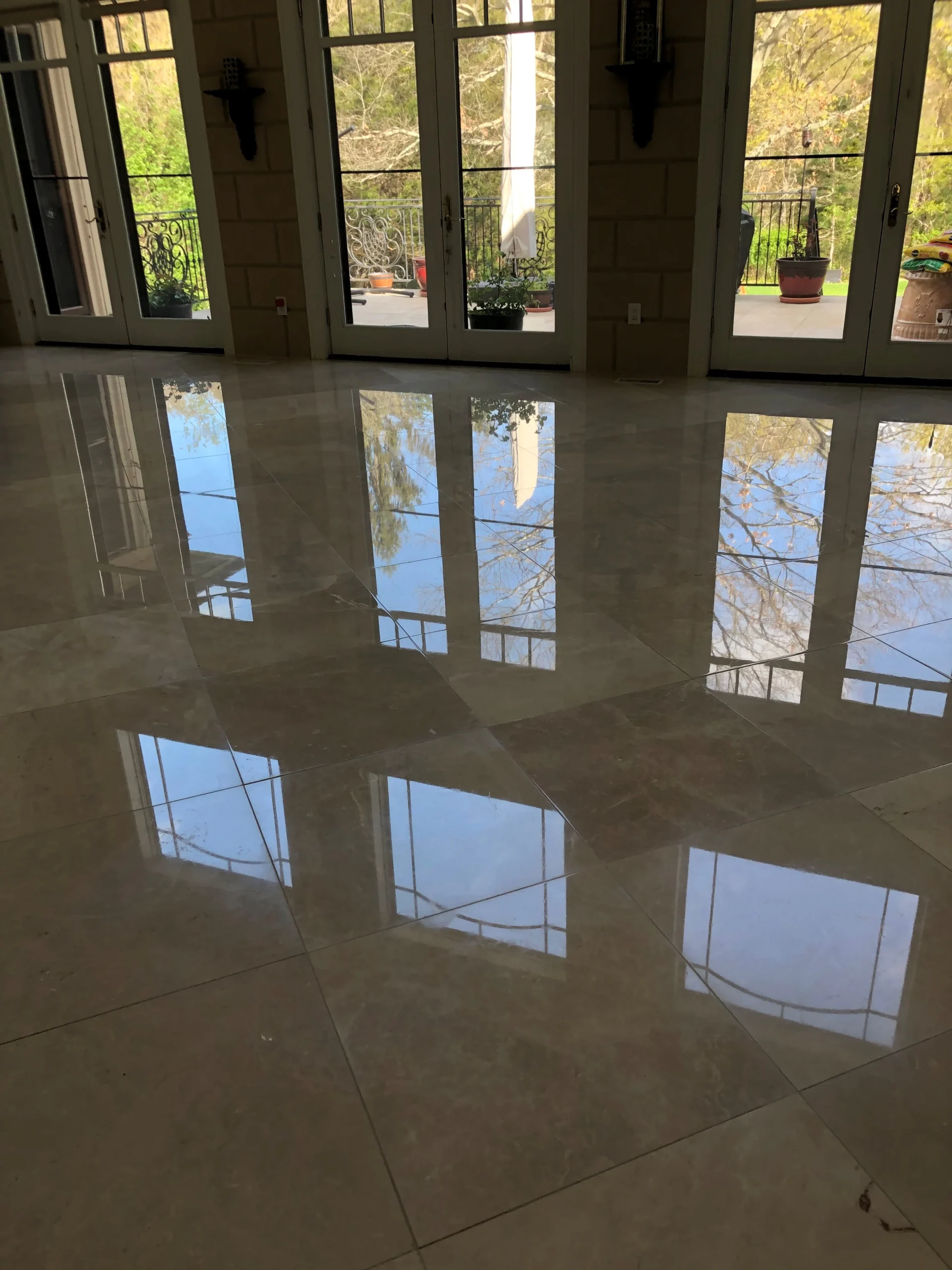
You’ll see the difference immediately. The floor looks clear again. The reflection comes back. And if it’s a historic floor, you’ll see the original character that’s been hiding under years of damage.

Ready to get started?
You get a full assessment of your marble’s condition and a clear explanation of what’s fixable. You get professional-grade equipment that most contractors don’t own—gloss meters, moisture detectors, diamond polishing systems designed specifically for natural stone.
You get someone who understands how Long Island’s coastal environment affects marble. The salt air and humidity in Nissequogue aren’t just background details. They accelerate deterioration, cause mineral deposits, and create problems you won’t find inland. We account for that in how we clean, restore, and seal your floors.
You also get transparency. We’ll tell you upfront what the job costs, how long it takes, and what results you can expect. If your marble is too far gone, we’ll tell you that too. But in 25 years, that’s rare. Most floors—even the ones that look terrible—can be restored.
And if you have concrete floors that need polishing or refinishing, we handle that now too. It’s a newer service we’ve added, but it’s the same approach: restore what’s there instead of ripping it out.
Restoration costs between $5 and $15 per square foot depending on the condition of the marble and the level of damage. Replacement costs between $70 and $190 per square foot for new marble installation on Long Island—and that doesn’t include demolition or disposal of the old floor.
If you have 200 square feet of marble, restoration might cost $1,000 to $3,000. Replacement could easily run $14,000 to $38,000. The math is pretty straightforward.
The other thing to consider: if your marble is original to the home, especially in a historic property, you’re not going to find the same material again. The quarries that produced stone 100 years ago aren’t operating the same way. Replacement means losing that authenticity, and in Nissequogue’s market, that affects resale value.
Yes. This is one of the most common problems we see. Most household cleaners are too acidic for marble and will etch the surface, leaving it dull and rough. Vinegar, bleach, ammonia-based products, and even some “natural” cleaners will damage the stone.
The good news is that etching is surface-level damage. We remove the damaged layer through a process called honing, then re-polish the marble to restore the gloss. It’s not a quick buff or a topical fix. We’re physically removing the etched stone and bringing up fresh material underneath.
How long it takes depends on how deep the damage goes. Light etching can be corrected in a few hours. Severe etching across a large floor might take a full day. But it’s fixable. We’ve restored marble that homeowners thought was ruined.
Most residential marble floor restoration jobs take one to two days. Smaller areas like a bathroom floor might be done in a few hours. Larger spaces or floors with significant damage might take longer.
The timeline depends on the square footage, the condition of the marble, and what finish level you want. A honed (matte) finish is faster than a high-gloss polish. Floors with deep scratches or staining take more time than floors that just need polishing.
We’ll give you a clear timeline during the quote. And because we’re owner-operated, we’re not bouncing between ten jobs at once. When we’re at your home, we’re focused on your floor. Most clients are surprised by how fast the work goes—and how little disruption there is.
No. We use dust-containment equipment that captures 99% of the dust generated during grinding and polishing. It’s not a dusty process the way it used to be.
We also mask off doorways and cover nearby furniture as an extra precaution. The equipment we use has built-in vacuum systems that pull dust directly into a filtration unit. You’re not going to find stone dust on your counters or furniture after we leave.
This matters especially in Nissequogue’s historic homes where you might have original woodwork, antique furniture, or other surfaces you don’t want coated in dust. We treat your space carefully. That’s part of being owner-operated—we’re accountable for how we leave your home.
We restore all marble surfaces—floors, countertops, vanities, showers, and walls. The process is similar across different applications, but each one has its own considerations.
Bathroom marble, for example, deals with constant moisture and soap scum, especially in Long Island’s humid coastal climate. That creates different wear patterns than a floor. Countertops get etching from acidic foods and drinks. Shower walls develop hard water staining.
We adjust our approach based on what the marble has been exposed to and where it’s located. A bathroom floor restoration in Nissequogue often involves dealing with mineral deposits from hard water, which is common throughout Nassau County. We have the equipment and experience to handle that properly.
If you’re restoring one area, it’s worth considering the others at the same time. The setup and equipment are already there, and it’s more efficient to do it all at once.
If the marble is intact—meaning it’s not cracked all the way through or structurally compromised—it can almost always be restored. Surface damage like scratches, etching, dullness, and staining is fixable. That covers about 95% of the floors we see.
The only time replacement makes sense is if the marble is severely cracked, broken, or if the substrate underneath has failed. Even then, sometimes individual tiles can be replaced without redoing the whole floor.
Here’s the reality: marble is expensive to replace, and if your floor is original to a historic home, you’re losing something you can’t get back. Restoration preserves the material, the character, and the value of your home. We’ll assess your floor honestly and tell you what makes sense. If restoration isn’t the right move, we’ll say so. But in 25 years, that’s been rare.