


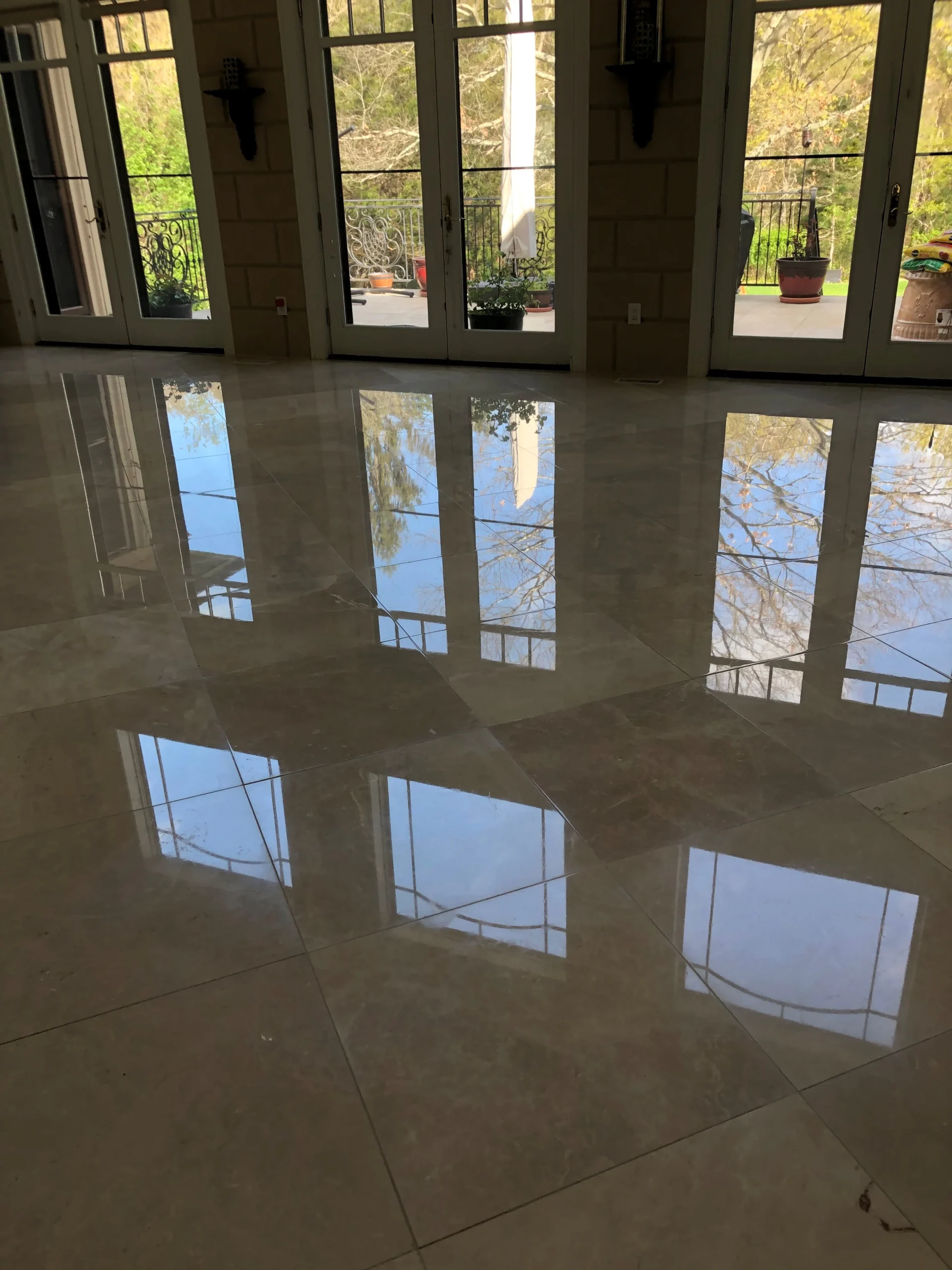
You get floors that look like they did when your home was built. Not close. Not “pretty good for their age.” Actually restored.
That means the dull spots disappear. The etching from decades of cleaners gets corrected. Scratches, stains, cracks—they’re addressed properly, not covered up or made worse by someone who doesn’t know what they’re doing.
And you keep the character of your home intact. No generic tile replacement. No losing the craftsmanship that makes a 100-year-old floor worth saving in the first place. Just the original surface, brought back to life the right way.
Most jobs take less than two days. You’re not living in a construction zone for weeks. You’re getting your space back quickly, with floors that actually feel worth the investment.
We specialize in the kind of work most contractors won’t touch. The worse your floor looks, the better we are at fixing it.
We’re owner-operated, which means the person who quotes your job is the same person overseeing the work. No handoffs. No miscommunication. Just direct accountability from start to finish.
New Suffolk and the surrounding areas are full of historic homes with original marble, terrazzo, and stone floors that deserve proper care. We’ve spent over two decades learning how to restore these surfaces without damaging them further. The New York Times featured our work back in 2001, and we’ve only refined our process since then.

First, we come out and assess your floors in person. No guessing over the phone. We look at the damage, the material, the age of the surface, and give you a transparent quote on the spot.
Once you’re ready to move forward, we schedule the work around your life. Most marble floor restoration projects wrap up in under two days. We mask and protect everything around the work area—your walls, furniture, and adjacent rooms stay clean.
The actual restoration involves carefully removing the damaged layer of stone, then honing and polishing it back to its original finish. We’re not covering anything up or applying coatings that’ll wear off in six months. We’re correcting the surface itself.
When we’re done, you’ll see the difference immediately. The floor looks the way it should. And because we’ve restored the stone properly, it’ll hold up far longer than a quick fix ever could.

Ready to get started?
You’re getting a full assessment of what’s wrong and what it’ll take to fix it. We don’t upsell or add services you don’t need. If your bathroom floor just needs polishing, that’s what we’ll tell you. If it needs crack repair and honing first, we’ll explain why.
The work itself covers everything from minor surface scratches to deep etching, stains, and structural cracks. We handle marble floor care for kitchens, bathrooms, entryways, and full-room installations. If you’ve got terrazzo or other natural stone, we work with those too.
New Suffolk’s housing stock includes plenty of older homes where original floors have been neglected or improperly maintained. That’s exactly the kind of project we’re built for. Suffolk County has a median home construction year of 1970, with nearly 10% of homes built before 1940. Those properties often have marble or stone floors that just need someone who knows how to bring them back.
We also handle concrete restoration and polishing now—another service that pairs well with historic property work. If you’ve got old concrete that’s been painted over or damaged, we can grind, polish, and seal it into something worth keeping.
Restoration is almost always cheaper than replacement, and it’s faster too. Tearing out old marble and installing new material means demo costs, disposal fees, new stone, labor for installation, and weeks of disruption.
Restoring what’s already there skips all of that. You’re paying for skilled labor and materials to correct the surface, not rebuild the entire floor. Most jobs cost a fraction of replacement and finish in under two days.
And here’s the part people don’t always think about: you can’t replace the character of a 100-year-old floor. Once it’s gone, it’s gone. Restoration keeps that intact while giving you a surface that looks and performs like new.
Yes. Deep scratches and etching are some of the most common problems we see, and they’re fixable.
Etching happens when acidic substances—cleaners, wine, citrus—eat into the stone’s surface. It leaves dull spots that don’t come out with regular cleaning. We remove that damaged layer through honing, then polish the marble back to its original finish.
Scratches work the same way. We grind down to a level surface, then bring the shine back through progressive polishing. It’s not a quick buff job. It’s actual correction of the stone itself, which is why it lasts.
Most residential marble restoration projects take less than two days. Smaller areas like bathrooms can often be done in a single day.
The timeline depends on the size of the space and the condition of the floor. A lightly worn surface that just needs polishing goes faster than one with cracks, stains, and heavy etching that need repair first.
We’ll give you an accurate time estimate during the initial assessment. And we stick to it. You’re not dealing with a crew that shows up sporadically over two weeks. We schedule the work, show up, and finish it.
Well-maintained original floors can increase property value by 3-5%, especially in historic homes where buyers are specifically looking for authentic features.
Potential buyers pay a premium for homes that have kept their character intact. Original marble floors in good condition signal quality and proper upkeep. They’re a selling point, not something you have to apologize for or promise to replace.
Even if you’re not selling anytime soon, restoration protects your investment. Letting marble deteriorate costs more in the long run. Fixing it now means you’re not dealing with bigger problems later, and you get to actually enjoy the floors while you’re living there.
Polishing brings back shine to a surface that’s in decent shape but has lost its luster. It’s the final step in the restoration process, and it’s what makes marble look glossy and new.
Refinishing is more involved. It includes honing (grinding down the surface to remove damage), repairing cracks or chips, removing stains, and then polishing. If your floor has scratches, etching, or dull spots that won’t buff out, you need refinishing, not just polishing.
We assess your floor and tell you exactly what it needs. If polishing alone will get you the result you want, that’s what we’ll recommend. If it won’t, we’ll explain why refinishing is necessary and what that process involves.
Absolutely. Stone gets ruined very easily by the wrong products or techniques. Vinegar, bleach, and abrasive scrubbers are some of the worst offenders. People use them thinking they’ll remove stains, but they just etch the surface further.
DIY polishing kits and rental equipment can also do more harm than good. Marble restoration requires specific grits, speeds, and techniques. Using the wrong approach can leave the floor worse than when you started—with uneven patches, new scratches, or a hazy finish that won’t come out.
If you’ve already tried something and it didn’t work, don’t keep going. The deeper the damage gets, the more correction it takes to fix. Calling someone who actually knows how to handle marble saves you time, money, and the frustration of making things worse.