

You’ll see the original depth and clarity your marble had a century ago. Not a surface-level shine that fades in six months, but restored stone that looks like it was just installed in 1920.
The cloudiness from Long Island’s hard water disappears. The etching from years of wrong cleaners gets ground out. The dull, lifeless surface you’ve been staring at transforms back into the floor your home was built around.
This isn’t about making old marble “good enough.” It’s about bringing it back to the condition it deserves, using techniques that respect how it was originally installed. You’re not covering up damage or applying a temporary fix. You’re restoring the actual material, which means the results last.
And you don’t have to rip anything out, deal with weeks of construction dust, or spend $70-$190 per square foot on new stone. Most Mill Neck homeowners are shocked when they realize restoration costs a fraction of replacement and delivers better results because you’re keeping the original craftsmanship intact.
High Definition Marble Restoration Inc specializes in the exact type of work Mill Neck homes require. Historic Carrara marble. Gilded Age estates. Floors that have been walked on for over a century and need someone who understands how they were built.
We’re owner-operated, which means the person who quotes your job is the same person overseeing the work. No subcontractors. No surprises. No crew showing up that’s never seen your floor before.
Mill Neck’s historic homes aren’t cookie-cutter projects, and we don’t treat them that way. Whether your marble came from Italy in 1910 or your Tudor Revival estate needs bathroom floor restoration that matches the original installation, we know how to handle it. We’ve been doing this for over 25 years, and we were featured in the New York Times back in 2001 because this level of work gets noticed.

We start with a free assessment of your marble’s condition. You’ll get transparent pricing upfront, no vague estimates that change later.
Once we begin, we use diamond grinding techniques to remove etching, stains, and surface damage without compromising the integrity of your historic installation. This isn’t a topical treatment. We’re actually restoring the stone itself, layer by layer, until we reach clean, undamaged marble.
The process is 99% dust-free because we work on-site with advanced equipment. You’re not living in a construction zone. We mask and protect everything around the work area, and our cleanup process is disciplined enough that you’d barely know we were there.
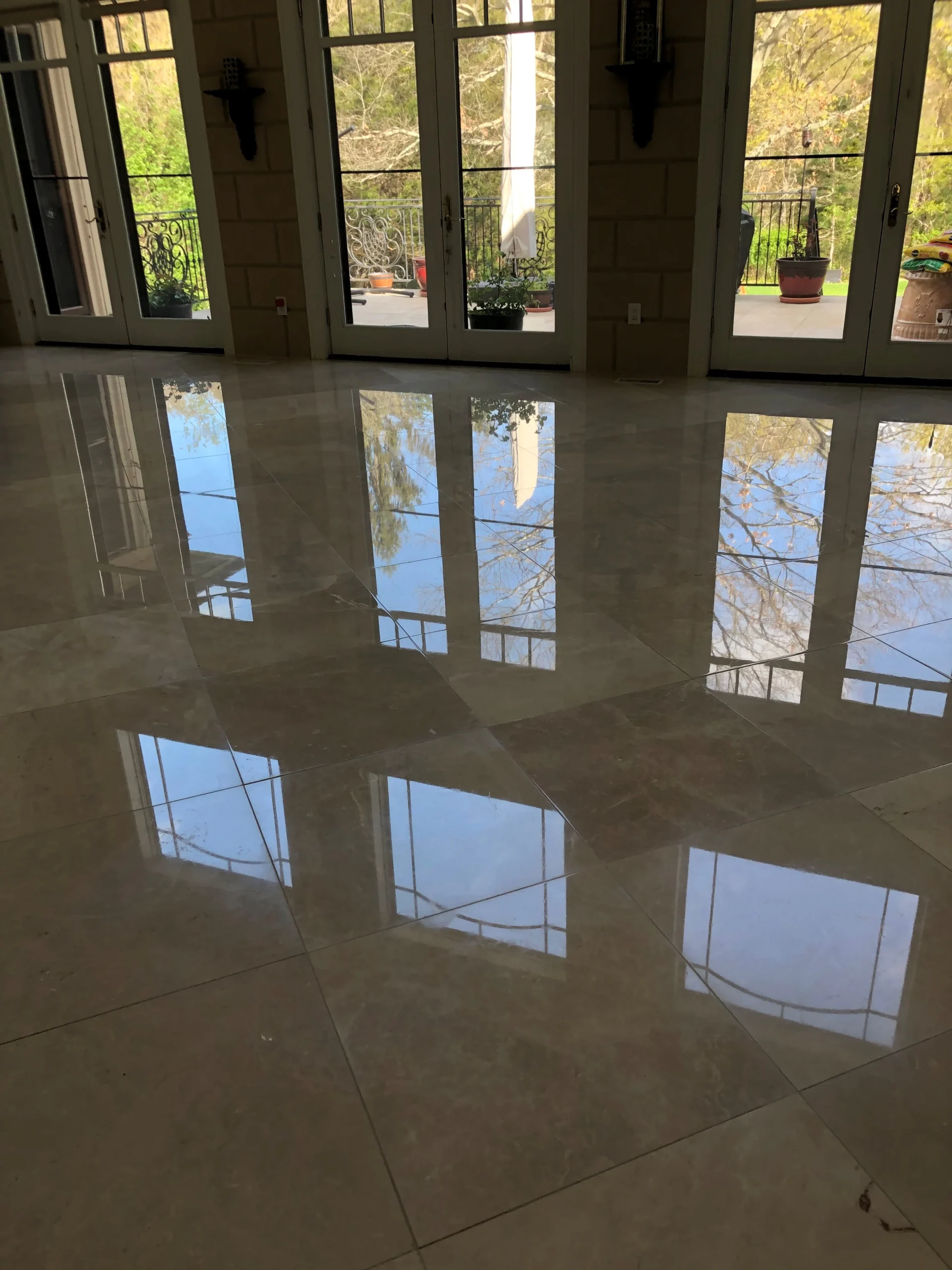
After grinding, we move into marble polishing services that bring out the original finish. This is where you see the transformation: from dull and cloudy to the deep, reflective surface your floors had when they were new. We’re talking about professional marble floor care that lasts for years, not months.
You’ll also get a comprehensive warranty that protects your investment long-term. And because we’re licensed and insured professionals who’ve been doing this since 1998, you’re not taking a risk on someone who “does marble sometimes.”

Ready to get started?
You’re getting a full restoration, not a quick polish. That means we assess the specific challenges your floors face—whether it’s calcium deposits from Nassau County’s mineral-rich water, damage from DIY attempts, or just a century of wear.
We handle marble repair for cracks, chips, and gouges that other contractors leave behind or make worse. If your floor has uneven areas from previous bad work, we fix that too. The goal is to make your marble look like it’s been maintained perfectly since day one, even if it hasn’t.
Mill Neck homes often have unique marble installations that require custom approaches. International Style estates from the 1930s have different needs than Tudor Revival homes from 1910. We adjust our process based on your floor’s age, material, and original installation method.
You’ll also get guidance on proper marble floor care moving forward. Long Island’s hard water is tough on natural stone, and most homeowners don’t realize their daily cleaning routine is causing more damage. We’ll show you what actually works so your restored floors stay in great condition.
And if you’re dealing with concrete floors that need restoration or polishing, we handle that now too. It’s a newer service we’ve added because the demand is there, and we’ve refined the process to the same standard as our marble work.
Restoration typically costs $1-$3 per square foot, while new marble installation in luxury markets like Mill Neck runs $70-$190 per square foot. You’re looking at 60-80% savings, and that’s before you factor in the cost of demolition, disposal, and downtime.
But the bigger point isn’t just cost. Replacement means losing your original marble, which you can’t get back. If your home was built during the Gold Coast era with Carrara marble imported from Italy, that’s not something you can replicate with modern materials. Restoration keeps the authenticity and character intact while delivering results that often look better than new installations because the craftsmanship from that era was superior.
Most Mill Neck homeowners are also concerned about property value. The National Association of Realtors reports that restored original features can increase home values by up to 25%, especially in historic estates where buyers are specifically looking for preserved details.
Yes. Deep scratches, etching, and even gouges from previous bad work can be ground out using diamond abrasives. We’re not covering up damage with coatings or fillers—we’re removing the damaged layer of stone to reveal clean marble underneath.
Etching happens when acidic cleaners react with the calcium carbonate in marble, leaving dull spots or marks that look permanent. They’re not. We grind down past the etched surface and then polish the marble back to its original finish. The same process works for scratches, whether they’re from furniture, foot traffic, or contractors who didn’t know what they were doing.
The key is having someone who understands how much material can safely be removed without compromising the floor’s integrity. Historic marble installations are thicker than modern ones, which gives us more room to work with, but it still requires precision. This is why experience matters—you can’t learn this on YouTube.
Most residential projects take 2-4 days depending on square footage and condition. The process is 99% dust-free, so you’re not dealing with the mess that comes with demolition or heavy construction.
We mask and protect surrounding areas before we start, and our cleanup process is thorough enough that you won’t find marble dust on your furniture or in other rooms. You can stay in your home during the work, though you’ll need to avoid walking on the floors while they’re being processed.
The timeline also depends on what we’re fixing. If your marble just needs polishing, that’s faster than a full restoration that includes grinding out deep damage. We’ll give you an accurate timeframe during the initial assessment so you know exactly what to expect. No scope creep, no surprises, no “we’ll need an extra week” conversations halfway through.
Yes, but only if the restoration is done correctly and you’re using the right maintenance approach afterward. Long Island’s mineral-rich water is tough on marble because calcium and magnesium deposits bond to the surface and create that cloudy appearance you’re probably familiar with.
Professional restoration removes those deposits and restores the marble’s natural resistance to staining and etching. But you’ll need to avoid acidic or abrasive cleaners going forward—most products marketed for “stone cleaning” are too harsh and cause more damage over time.
We’ll walk you through proper marble floor care when we finish your project. It’s not complicated, but it’s specific. Use the wrong cleaner once and you’re back to square one with etching. Use the right approach and your floors will stay in excellent condition for years. The restoration itself is durable enough to handle daily foot traffic, furniture, and normal wear without issues.
We specialize in marble because that’s what most historic Mill Neck homes have, but we also handle other natural stone and we’ve recently added concrete restoration and polishing. If your home has terrazzo, limestone, or travertine, we can assess whether restoration makes sense.
Concrete is becoming a bigger part of our work because more homeowners are realizing it can be polished to a high-end finish that rivals natural stone. It’s durable, low-maintenance, and cost-effective. The process is similar to marble restoration—grinding, polishing, and sealing—but the equipment and techniques are adjusted for the material.
What we don’t do is porcelain. It’s a completely different material that doesn’t respond to the same restoration methods, and we’d rather refer you to someone who specializes in it than take on a project we’re not set up for. We focus on what we do best, which is restoring natural stone and concrete to a level that most contractors can’t match.
If the marble is still structurally intact—meaning it’s not crumbling, completely delaminated from the subfloor, or missing large sections—it can almost always be restored. Even floors that look terrible usually just need the right process to bring them back.
The exceptions are rare. If water damage has caused the subfloor to rot, or if the marble was installed incorrectly and is now unstable, replacement might be necessary. But in 25+ years of doing this work, we’ve seen very few floors that were truly beyond restoration. Most of the time, what looks like irreversible damage is just surface-level wear that can be ground out.
We’ll give you an honest assessment during the free quote. If your floors genuinely need replacement, we’ll tell you. But if they can be restored—which is usually the case—we’ll explain exactly what’s involved and what the results will look like. You’ll know upfront whether restoration makes sense for your situation, and you’ll have transparent pricing before we start any work.