


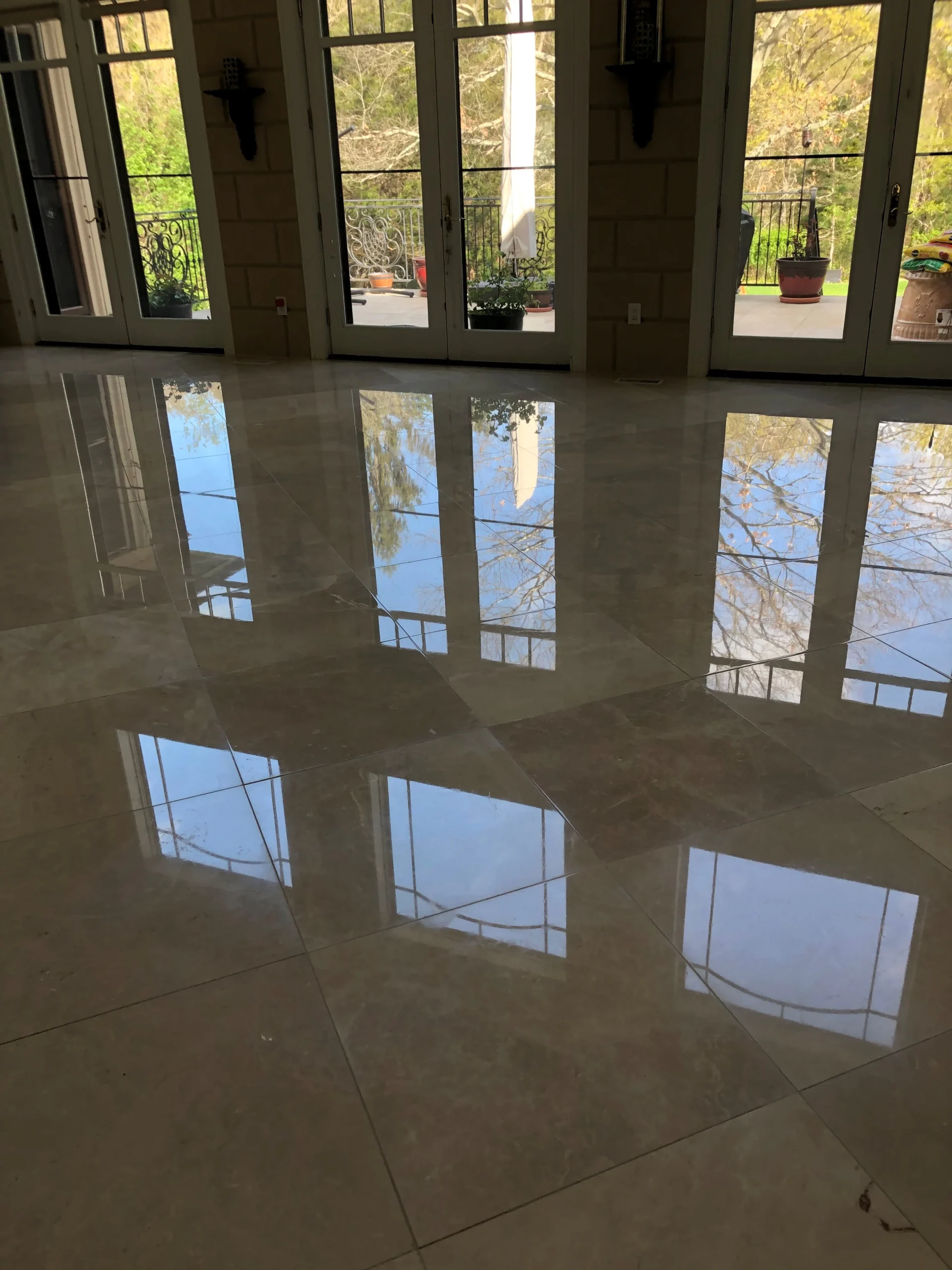
Your marble looks like it did the day it was installed. That’s the standard here.
The dull spots disappear. The etching from years of harsh cleaners gets polished out. The shine comes back—not the fake, slippery coating some companies spray on, but the actual finish your stone is supposed to have.
If your home was built in the early 1900s, your floors were likely installed using techniques that don’t exist anymore. The marble itself has character modern stone can’t replicate. Ripping it out means losing something irreplaceable. Restoring it means keeping what makes your home yours.
Most restoration jobs take two days. The process is nearly dust-free. And when it’s done, your floors don’t just look better—they’re protected, sealed properly, and set up to last another decade or more with basic care.
This isn’t about making old marble “good enough.” It’s about bringing it back to what it was meant to be.
We’ve been restoring historic floors across Long Island since 1998. The owner oversees every job personally. No subcontractors. No rotating crews.
Mattituck has some of the oldest homes on the North Fork—many dating back to the 1700s and 1800s, with marble floors installed during Long Island’s Gilded Age. Those floors weren’t meant to be replaced. They were built to last generations. We work on them the way they were meant to be maintained.
The New York Times featured our work in 2001. The Garden City Hotel has used us exclusively for over 16 years. We’re not the cheapest option, and that’s intentional. You’re paying for someone who knows the difference between Carrara and Calacatta, who understands how historic stone reacts to modern products, and who won’t experiment on your floors.
First, we assess the damage. Not every marble floor needs the same treatment. Some need full restoration with diamond abrasives. Others just need polishing and sealing. We’ll tell you exactly what yours needs before we start.
Next, we prep the area. Masking, floor protection, and containment setup happen first. The actual restoration is done on-site using professional-grade equipment—not the rental machines you’d find at a hardware store. We work through multiple grits to remove etching, scratches, and dullness, then polish the stone back to its original finish.
The final step is sealing. This isn’t optional. Marble is porous. Without a proper sealer, it’ll stain within weeks. We use penetrating sealers that protect the stone without changing its appearance or making it slippery.
Most jobs are done in two days. Larger spaces or heavily damaged floors might take three. You’ll know the timeline upfront. No surprises.

Ready to get started?
Every restoration includes surface evaluation, full prep and masking, diamond abrasive restoration, multi-stage polishing, and penetrating sealer application. You also get a maintenance guide so you know how to keep your floors looking right after we leave.
Mattituck’s historic homes often have marble in entryways, staircases, and bathrooms—spaces that see heavy use and moisture. Staircases are especially important. Worn marble steps aren’t just ugly; they’re a safety hazard. Polishing restores traction and eliminates the slippery, uneven surfaces that develop over time.
Bathroom marble restoration is its own specialty. Years of soap scum, hard water, and acidic cleaners leave stone dull and etched. Most homeowners try DIY fixes that make it worse. We’ve seen it all—vinegar damage, bleach stains, grinding marks from improper buffing. The good news? Almost all of it can be reversed.
If your marble is in a high-traffic area, we’ll talk through realistic expectations for wear and recommend a maintenance schedule. Some floors benefit from annual polishing. Others can go years between services if they’re sealed properly and cleaned correctly.
Restoration typically costs between $5 and $15 per square foot depending on the condition of the stone and the size of the area. Replacement costs between $70 and $190 per square foot when you factor in demo, disposal, new material, and installation.
For a 200-square-foot entryway, you’re looking at around $1,000 to $3,000 for restoration versus $14,000 to $38,000 for replacement. The math is pretty straightforward.
Beyond cost, replacement means losing the original stone. If your home is historic, that marble likely has qualities modern stone doesn’t—unique veining, patina, and craftsmanship. Once it’s gone, it’s gone. Restoration keeps what you have and extends its life by another 10 to 15 years with proper care.
Professional restoration lasts 10 to 15 years in most residential settings, assuming the stone is sealed properly and maintained with pH-neutral cleaners. High-traffic commercial spaces might need re-polishing every 3 to 5 years.
The longevity depends on three things: the quality of the restoration, the sealer used, and how you clean the floors afterward. If you’re using acidic cleaners or abrasive mops, you’ll etch the surface and undo the work within months.
We provide a maintenance guide with every job. It’s not complicated—just specific. Use the right products, wipe up spills quickly, and your floors will hold up. Most of our clients don’t need another full restoration for over a decade. Some go longer.
Yes, in most cases. The most common DIY damage we see comes from acidic cleaners—vinegar, lemon juice, or harsh bathroom sprays. These etch the surface and leave dull spots that can’t be buffed out with regular cleaning.
The fix requires removing a thin layer of the stone using diamond abrasives, then re-polishing it to match the surrounding finish. It’s not a quick process, but it works. The stone underneath is still intact; it just needs to be exposed and refinished properly.
The bigger issue is when someone tries to use a rental floor buffer with the wrong pads or compounds. That can leave swirl marks or uneven spots that take longer to correct. But even that’s fixable. We’ve restored floors that looked beyond saving. If the marble itself isn’t cracked or broken, there’s usually a way to bring it back.
Yes, when it’s done by someone who understands historic materials. Marble installed in the early 1900s is different from modern stone. It’s often softer, more porous, and more reactive to certain products and techniques.
We’ve worked on century-old floors across Long Island’s North Fork, including Mattituck. The key is using the right abrasives, the right polishing compounds, and the right sealers for the specific type of marble. Carrara, for example, needs a different approach than Tennessee or Vermont marble.
The process itself doesn’t harm the structure of your home. We contain dust, protect surrounding surfaces, and work carefully around baseboards and transitions. Most historic homeowners are more concerned about losing original features to replacement than they are about the restoration process—and rightfully so. Restoration preserves what’s there. Replacement erases it.
Polishing is the final step in the refinishing process, but the terms get used interchangeably. Refinishing refers to the full restoration—grinding out damage, honing the surface smooth, and polishing it to a shine. Polishing alone just buffs the existing finish to make it glossier.
If your marble is dull but not scratched or etched, polishing might be enough. If it has visible damage—etching, stains, scratches, or worn-down areas—you need refinishing. That means starting with coarser abrasives to remove the damaged layer, then working up through finer grits until the stone is smooth and ready to polish.
Most floors we see in Mattituck need full refinishing, not just polishing. Decades of foot traffic, improper cleaning, and exposure to moisture take a toll. Polishing alone won’t fix that. But once the stone is refinished and sealed, maintenance polishing every few years can keep it looking sharp without needing another full restoration.
Yes. We’ll come out, assess the condition of your floors, and give you an upfront price before any work starts. No surprises, no upselling once we’re on-site.
The estimate includes what needs to be done, how long it’ll take, and what the finished result will look like. If your marble only needs polishing and sealing, we’ll tell you that. If it needs full restoration, we’ll explain why and what’s involved.
Most estimates take about 20 to 30 minutes. We’ll answer any questions you have about the process, the timeline, and what you can expect afterward. If you decide to move forward, we’ll schedule the work at a time that works for you. If you don’t, no hard feelings. You’ll at least know what your options are and what it would cost to restore your floors the right way.