
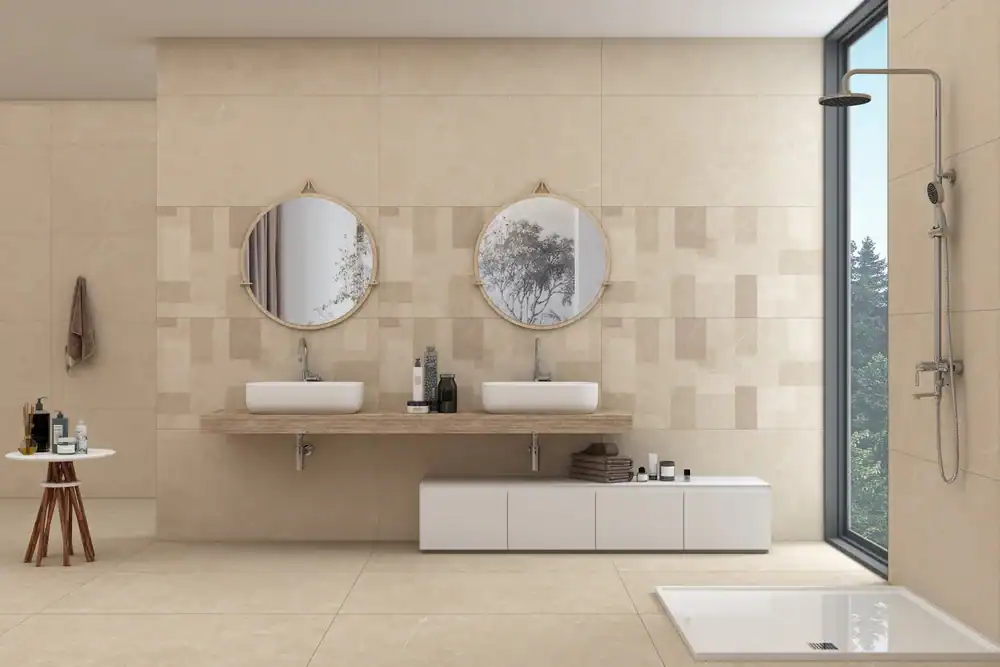
You’re looking at floors that have been in your home for decades, maybe a century. The marble is dull, etched from years of hard water and harsh cleaners. Maybe there are cracks or lippage that make the surface uneven.
Replacement isn’t just expensive at $70 to $190 per square foot. It erases the craftsmanship and authenticity that buyers pay premium prices for in Matinecock’s Gold Coast estates.
Restoration brings back the original finish for $5 to $15 per square foot. You keep the historic character. You avoid the mess and timeline of demolition. And you protect an investment that can increase your property value by 3 to 5 percent when maintained properly.
The floors that came with your home were installed by craftsmen who understood marble in ways modern installers don’t. That’s worth preserving.
We specialize in the work other contractors avoid. The 100-year-old floors with damage that looks impossible to fix. The complex materials that require specific knowledge about how marble behaves over time.
We’re owner-operated, which means you’re working directly with someone who has been doing this since 1998. No subcontractors. No surprises. The New York Times featured our restoration work in 2001, and the Garden City Hotel has used our services exclusively for over 16 years.
Matinecock’s historic estates present unique challenges. Hard water from Long Island aquifers. Coastal humidity. Floors that have survived generations but now show their age. We understand how these factors affect marble and what it takes to reverse decades of wear without compromising the original stone.
First, we assess the marble type and damage level. Different marbles respond differently to restoration techniques, and century-old installations have quirks that modern floors don’t.
We start with grinding to remove deep scratches, etching, and lippage. This levels the surface and removes damaged material. Then we move through progressively finer honing stages to smooth the stone and prepare it for polishing.
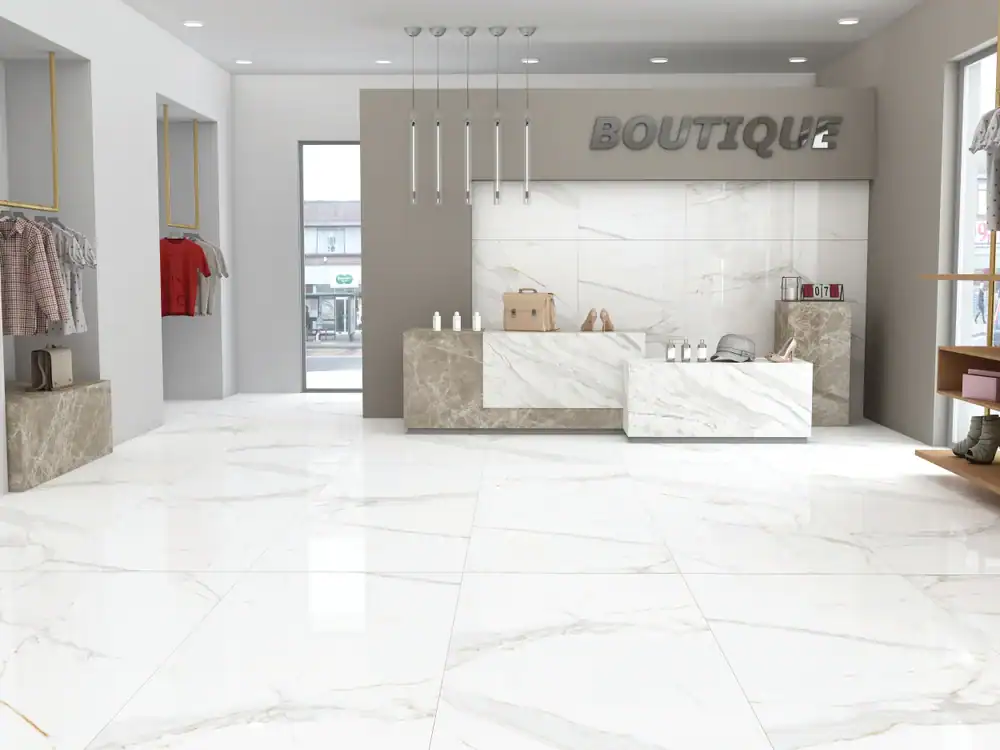
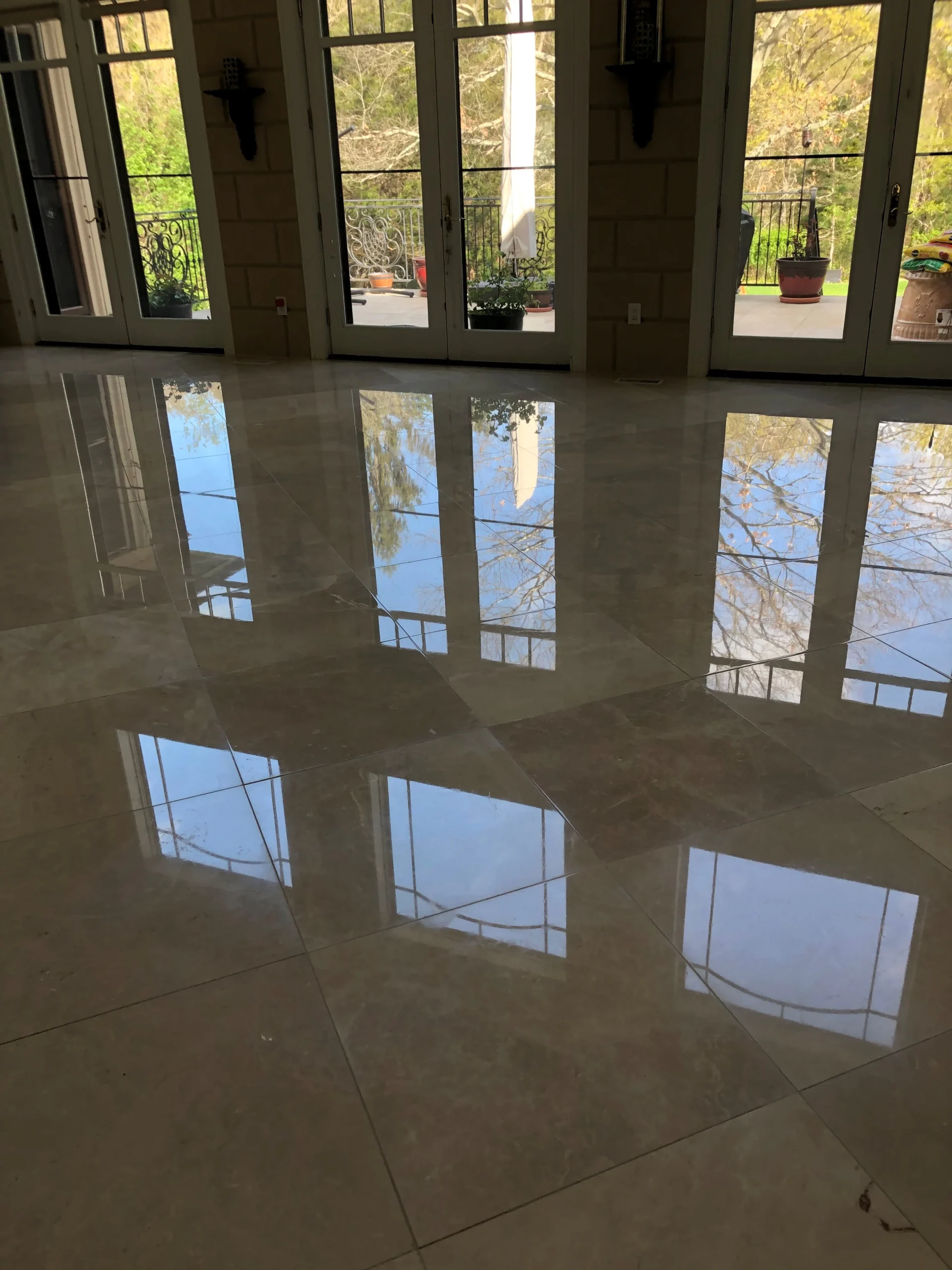
Polishing brings back the original shine using diamond abrasives and specialized compounds. For historic floors, we match the finish to what the marble would have looked like when first installed. Finally, we seal the surface to protect against future damage from moisture and household products.
Most jobs finish in under two days. We mask and protect surrounding areas carefully because cleanup matters as much as the restoration itself. You’ll see the difference immediately, but the real value shows up years later when the floors still look exceptional.

Ready to get started?
You’re getting expertise that comes from 25 years of working exclusively on natural stone. That includes understanding how Matinecock’s specific conditions affect marble over time.
The restoration process addresses etching from acidic cleaners, scratches from decades of foot traffic, dullness from wear, and structural issues like cracks or loose tiles. We also handle lippage correction when tiles have shifted and created uneven surfaces.
Matinecock homes often feature Carrara, Calacatta, or other Italian marbles installed during the Gold Coast era. These materials require different approaches than modern marble. The stone is often softer, more porous, and more reactive to chemicals. We adjust techniques based on what your specific floors need.
You also get transparent pricing with free quotes, direct communication throughout the project, and the peace of mind that comes from working with someone who has restored floors in some of Long Island’s most prestigious properties. The goal isn’t just to make your floors look better. It’s to preserve something irreplaceable while making it functional for daily life.
Professional marble restoration typically runs $5 to $15 per square foot depending on the damage level and marble type. Replacement costs $70 to $190 per square foot for new marble installation in Nassau County.
For a 500 square foot floor, you’re looking at $2,500 to $7,500 for restoration versus $35,000 to $95,000 for replacement. The price difference is significant, but the real value is in what you keep. Original marble floors in Matinecock estates are part of the home’s historic character. Once you remove them, that authenticity is gone forever.
Restoration also avoids the timeline and disruption of demolition. Most restoration projects finish in under two days. Replacement can take weeks when you factor in demolition, subfloor prep, material sourcing, and installation.
Yes. Century-old marble is actually ideal for restoration because the stone itself is often higher quality than modern alternatives. The craftsmanship in historic installations is also superior in most cases.
The challenge with old marble isn’t the age. It’s the accumulated damage from decades of improper cleaning, hard water exposure, and wear. Harsh acidic cleaners etch the surface. Grit from foot traffic creates scratches. Long Island’s hard water leaves mineral deposits that dull the shine.
We’ve been specializing in historic floor restoration since 1998. That includes floors in Gold Coast estates with marble installed in the early 1900s. The process removes damaged material, levels the surface, and brings back the original polish. What you end up with is marble that looks like it did when first installed, but with modern sealing to protect against future damage.
Most marble restoration projects finish in less than two days for average-sized residential floors. The timeline depends on square footage, damage severity, and the specific marble type.
The process starts with grinding using coarse diamond abrasives to remove deep damage and level the surface. This is the most aggressive stage and addresses scratches, etching, and lippage. Then we move through progressively finer honing stages, each one smoothing the stone further and preparing it for the final polish.
Polishing uses very fine diamond abrasives and specialized compounds to bring out the marble’s natural shine. For historic floors, we match the finish level to what the stone would have originally looked like. Finally, we apply a penetrating sealer that soaks into the marble and protects against moisture and staining. You can walk on the floors immediately after we finish, though we recommend waiting 24 hours before placing furniture back.
Proper restoration preserves the floor’s character while removing damage. The goal is to make the marble look like it did originally, not to change its appearance or remove patina that adds historic value.
The risk comes from inexperienced contractors who use harsh acids or aggressive techniques that can permanently damage marble. Acid-based cleaners etch the surface. Over-grinding removes too much material and can create waves or dips. Using the wrong abrasives can scratch softer marbles.
We adjust our approach based on the specific marble type and its condition. Carrara marble, common in historic Matinecock homes, is softer and more porous than harder marbles like Emperador. It requires gentler techniques and more careful sealing. We also preserve intentional design elements like borders, inlays, or patterns that are part of the original installation. What you end up with is marble that looks restored, not replaced.
Daily maintenance is simple. Dust mop or vacuum regularly to remove grit that causes scratches. Clean spills immediately, especially acidic liquids like wine, citrus juice, or vinegar. Use only pH-neutral cleaners designed specifically for marble.
Long Island’s hard water is tough on marble. Mineral deposits build up over time and dull the surface. If you’re mopping with tap water, you’re actually depositing minerals onto the floor. Use distilled water for wet cleaning, or make sure to dry the floor completely after mopping.
Resealing depends on traffic levels and the specific sealer used, but most residential floors need resealing every 1 to 3 years. You can test if your marble needs resealing by putting a few drops of water on the surface. If the water beads up, the sealer is still working. If it soaks in and darkens the stone, it’s time to reseal. Avoid products that claim to “shine” or “restore” marble. Most contain waxes or polymers that build up on the surface and actually make the marble look worse over time.
Most marble damage is repairable. Scratches, etching, dullness, stains, and even moderate cracks can be addressed through restoration. The stone itself is durable and can handle significant refinishing without compromising its integrity.
Etching from acidic cleaners looks like dull spots or watermarks on the surface. This is actually a chemical reaction that removes the polish, but the marble underneath is fine. Grinding and repolishing removes the damaged layer and brings back the shine. Scratches work the same way. We remove enough material to get below the scratch depth, then refinish the entire surface.
Cracks can be filled and polished to blend with the surrounding marble. Lippage, where tiles have shifted and created uneven surfaces, can be corrected by grinding down the higher tiles to match the lower ones. The only damage that typically requires replacement is structural failure where tiles are completely broken or the subfloor has failed. Even then, we can often replace individual tiles and blend them with the existing floor so you don’t see the repair.