

You’re not looking to cover up history. You want those original marble floors brought back without losing what makes them authentic.
That’s what happens when someone actually understands the stone. The mineral composition. The way it was installed. The difference between calcite marble and red marble with hematite. Most contractors don’t know and don’t care. They’ll grind it down, slap some sealer on it, and call it done.
We handle the floors other companies won’t touch. The ones with decades of improper cleaning. The ones stained, scratched, etched from acidic products. The ones you were told need replacing. Professional diamond pad grinding removes the damage. Industrial honing creates a uniform surface. Then we polish it to the finish it was meant to have. No dust. No mess. Just the floor you remember, or the one you always wanted to see.
High Definition Marble Restoration Inc was built on a simple idea: the worse the floor, the better the opportunity to show what real restoration looks like. That’s why the New York Times featured us in 2001. That’s why the Garden City Hotel has used us exclusively for over 16 years.
Manhasset Hills has some of the most beautiful historic homes on Long Island. Properties built by families like the Dukes in the early 1900s. Grand staircases. Radiant heated marble floors. Materials you can’t replace because they don’t exist anymore. You need someone who’s seen it before and knows how to handle it.
You’re talking directly to the owner. Every time. No sales team. No project manager who disappears after the contract is signed. Just someone who’s been restoring marble floors in Nassau County for over two decades and actually cares about getting it right.
First, we assess the stone. Not all marble is the same. Green marble with limonite needs different treatment than calcite marble. We identify what you have, what’s been done to it, and what it needs.
Then we grind out the damage. Professional diamond pads remove scratches, stains, and etching without taking off more material than necessary. This isn’t a surface buff. We’re correcting years of wear and improper care at the structural level.
Next comes honing. Industrial diamond honing creates a smooth, uniform surface across the entire floor. This is where we eliminate lippage, level out uneven areas, and prepare the stone for its final finish.
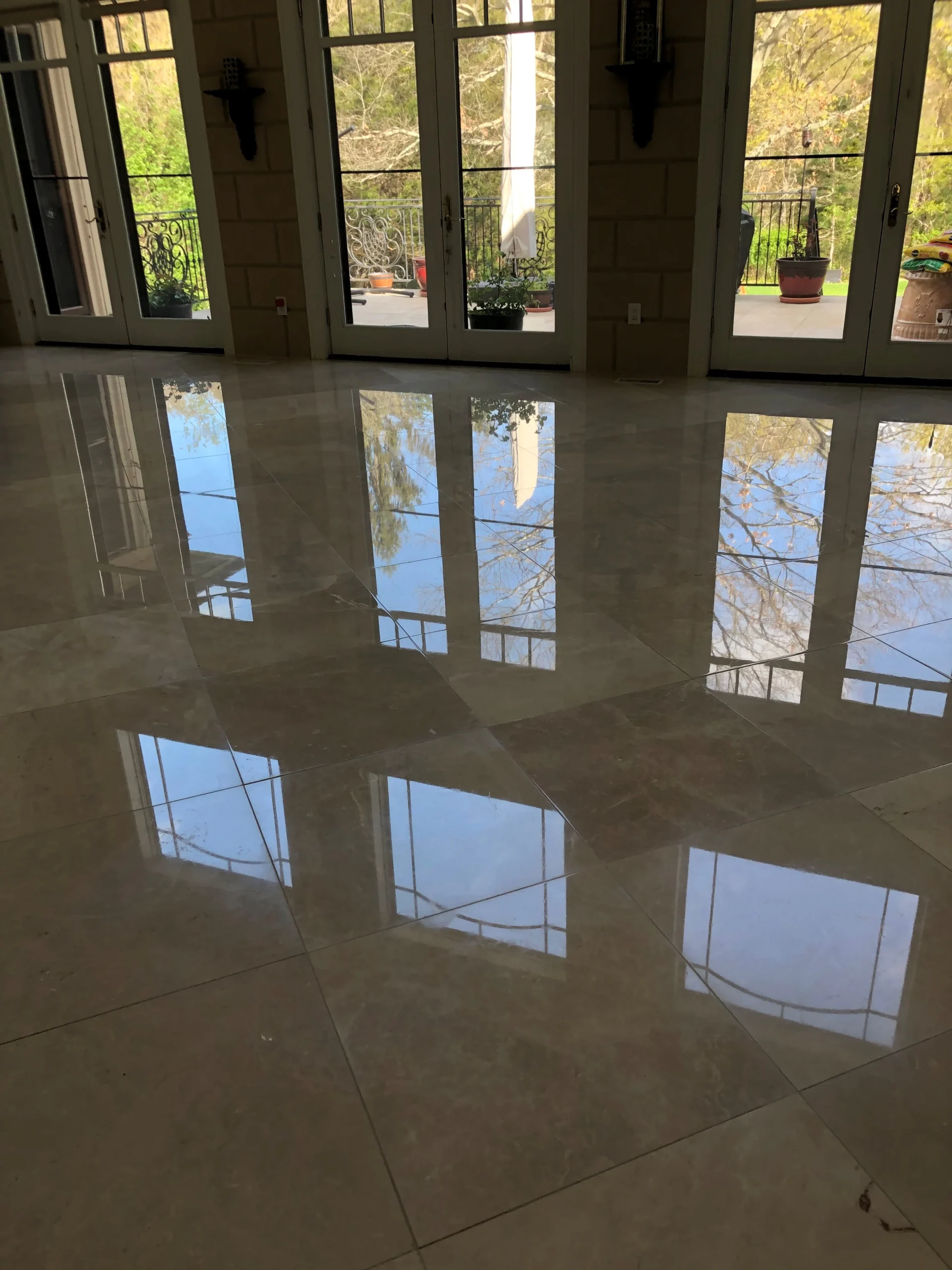
Finally, we polish. The goal isn’t just shine. It’s bringing the floor back to what it looked like when it was first installed. The right finish. The right depth. The right reflection of light. We complete 99% of the work on-site with dustless equipment, so you’re not living in a construction zone. When we’re done, you’ll have the floor you were supposed to have all along.

Ready to get started?
This isn’t a one-size-fits-all service. Every historic floor in Manhasset Hills has a different story. Different stone. Different installation method. Different decades of wear.
You get a full assessment of your marble’s condition and a transparent explanation of what’s needed. No upselling. No scare tactics. Just honest feedback from someone who’s restored floors in homes worth $800,000 to $1.8 million across Nassau County. We handle everything: marble floor polishing, refinishing, repair, and full restoration. We also restore and polish concrete, which most marble companies don’t touch.
The work is done by the owner. Fully licensed and insured. We use advanced diamond restoration techniques that preserve the integrity of historic materials. You’re not getting a cleaning service pretending to know stone. You’re getting a marble restoration company that’s been doing this since 1998. The kind of work that keeps clients like the Garden City Hotel coming back for 16 years. The kind that understands what’s at stake when you’re dealing with irreplaceable floors in a home built during Long Island’s golden age of estate construction.
Cost depends on the floor’s condition, size, and what type of marble you have. A basic polish on well-maintained marble runs less than a full restoration on a century-old floor with deep etching and stains.
Here’s what affects price: the extent of damage, the type of stone, whether there’s lippage that needs correction, and what finish you want. Calcite marble is different from red marble with hematite. Each requires specific techniques and different amounts of labor.
We give free quotes after seeing the floor in person. No pressure. No games. You’ll know exactly what the work costs before we start. Most homeowners find that professional restoration costs significantly less than replacement while keeping the authentic character of their historic home intact.
Yes. This is one of the most common problems we see in Manhasset Hills. Years of acidic cleaners create chemical reactions that dissolve marble and leave etch marks everywhere.
The damage isn’t just cosmetic. Acidic substances actually eat away at the stone’s surface. You’ll see dull spots, rough texture, and areas where the shine is completely gone. Some homeowners try to buff it out themselves and make it worse.
We remove the damaged layer through diamond grinding, then hone and polish the floor back to its original finish. The key is knowing how much material to remove and how to do it without creating new problems. That’s where 25 years of experience matters. We’ve restored floors that other contractors said were beyond saving.
Most residential floors take one to three days depending on size and condition. A small bathroom might be done in a day. A large foyer with significant damage could take longer.
The process can’t be rushed. Grinding, honing, and polishing each require time for the stone to be treated properly. We work efficiently, but we don’t cut corners to finish faster. You’re getting a floor that will last decades, not a quick fix that fails in a year.
We complete 99% of the work on-site with dustless equipment. You won’t have construction dust all over your house. We mask and protect surrounding areas carefully. Cleanup is part of the job, not an afterthought. When we leave, the only thing different is your floor.
Restore. Unless the marble is structurally compromised with cracks through the entire slab, restoration is almost always the better choice.
Here’s why: the marble in historic Manhasset Hills homes was installed using techniques and materials that don’t exist today. Old-growth stone. Hand-cut pieces. Installation methods that modern contractors don’t know. Once you rip it out, it’s gone forever. You can’t get it back.
Replacement costs more, takes longer, and you lose the authentic character that makes your home valuable. Buyers of historic properties expect original materials. “Maintenance-free” alternatives actually hurt resale value. Professional restoration preserves what you have while making it look new again. That’s not just our opinion—it’s what the market shows in Nassau County’s historic home sales.
Yes. Bathroom floor restoration is a big part of what we do. Marble in bathrooms takes more abuse than anywhere else in the house. Water. Soap. Shampoo. Cleaning products. All of it etches and dulls the stone over time.
Kitchen marble gets similar treatment. Spills. Acidic foods. Constant foot traffic. The wear shows up fast, especially around islands and high-use areas.
We restore marble in any room. The process is the same: assess the stone, grind out damage, hone to create a uniform surface, and polish to the right finish. Bathrooms and kitchens just require extra attention to detail around fixtures, drains, and tight corners. We’ve done hundreds of them across Long Island. The results are the same as larger floors—just scaled to the space.
Polishing is the final step. Restoration is the full process. Most people use the terms interchangeably, but they’re not the same thing.
Marble polishing services typically just buff the surface to add shine. That works if your floor is in good condition and only needs a refresh. It doesn’t fix scratches, etching, stains, or uneven areas. It’s surface-level work.
Marble restoration goes deeper. We grind out damage, correct structural issues like lippage, hone the entire surface to create uniformity, and then polish to finish. It’s a complete renewal of the stone. If your floor has years of wear, improper cleaning damage, or deep scratches, you need restoration—not just polishing. We do both, but we’ll tell you honestly which one your floor actually needs.