

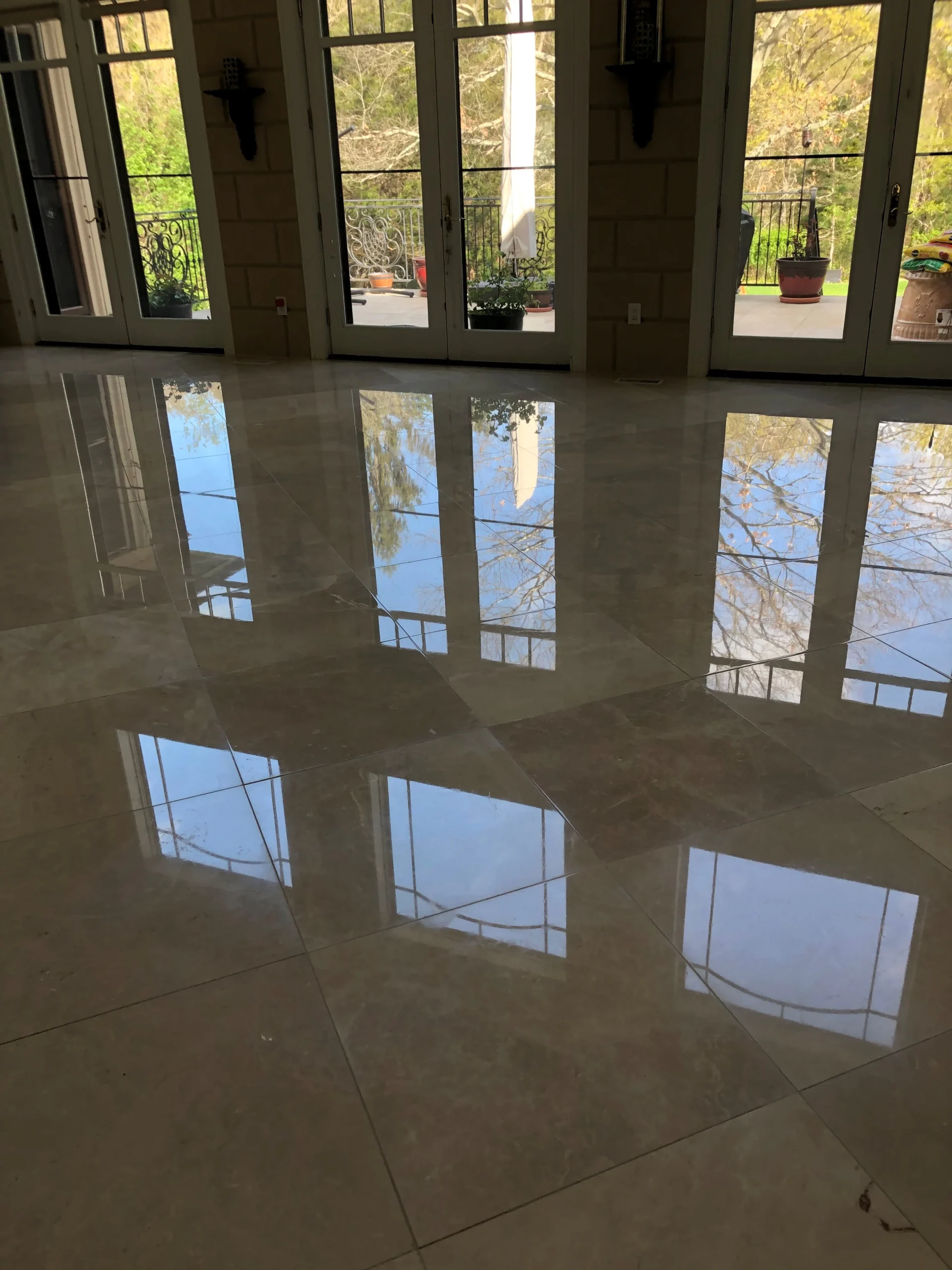
Your marble floors stop being a source of embarrassment when guests visit. The dull, scratched surface that made you consider expensive replacement transforms back into the gleaming focal point it was meant to be. You’re not covering up damage or applying temporary fixes that wear off in months.
Most restoration jobs finish in under two days. You get your space back quickly, and the results last for years when done correctly. No dust lingering for weeks, no subcontractors tracking through your home, no wondering if the person doing the work actually knows what they’re doing.
The best part? Well-maintained original marble floors in Lido Beach’s historic homes often increase property value by 3-5%. Buyers pay premium prices for authentic, restored features—especially when those features literally can’t be replicated with today’s materials. You’re protecting an investment, not just making things look nicer.
High Definition Marble Restoration Inc has worked on Lido Beach’s luxury properties since 1998. We’re the marble restoration specialists that other contractors call when they won’t touch a job. The New York Times recognized our craftsmanship in 2001, but what matters more is that we’re still here, still owner-operated, still taking on the challenging historic restoration work that matches this area’s standards.
You get our founder’s direct expertise on every project. Not a subcontractor rushing to the next job, not a crew that learned marble restoration from YouTube videos last month. When you’re dealing with century-old floors that can’t be replaced, that difference matters.
Lido Beach’s coastal environment creates specific challenges for marble. The salt air, hard water, and humidity damage surfaces differently than in other areas. We’ve spent over 25 years learning exactly how these local conditions affect different types of marble and stone—and more importantly, how to restore and protect against future damage.
We start with a thorough assessment of your marble’s condition. Not every floor needs the same treatment, and older marble—especially in Nassau County’s historic homes—often requires different approaches than contemporary stone. We identify the root causes of damage: moisture issues, improper sealing, acidic cleaning products, or just decades of wear in a coastal environment.
The restoration process depends on your floor’s specific needs. Simple polishing and sealing often wraps up in a single day. More extensive work involving crack repair, chip restoration, or complete refinishing might need an additional day for proper curing. We’re transparent about timelines upfront—you know exactly what to expect before we start.
During the work, we take extraordinary care with masking and cleanup. Your space stays protected throughout the process. We’re not just restoring marble; we’re working in your home, and we treat it accordingly. The disciplined approach to protecting surrounding areas isn’t just professional courtesy—it’s how we’ve operated for over two decades.
After restoration, we explain exactly how to maintain your floors. Proper sealing protects against Lido Beach’s hard water and prevents the mineral buildup that creates problems. You get straightforward guidance on what products to use and what to avoid, so your restored marble stays beautiful.

Ready to get started?
Our marble floor restoration service addresses everything from minor surface dullness to severe damage that other companies won’t touch. We handle crack repair, chip restoration, stain removal, and complete refinishing. Each project gets a customized approach based on your marble’s specific type and condition.
Lido Beach’s proximity to the Atlantic Ocean means higher humidity year-round. This constant moisture affects marble differently than in drier climates. We use restoration techniques specifically designed for coastal conditions, protecting your investment against the environmental factors that caused damage in the first place.
Historic marble often has superior density and character compared to contemporary stone. The craftsmanship in century-old installations—intricate patterns, unique mineral compositions, hand-set details—simply doesn’t exist in today’s market. Our restoration work preserves these irreplaceable elements while bringing surfaces back to their original condition.
We also offer bathroom floor restoration, where marble faces additional challenges from standing water, soap residue, and cleaning products. Bathrooms require specialized sealing approaches to prevent moisture penetration and maintain that polished finish despite daily exposure to water and humidity.
Every restoration includes proper sealing with products designed for your specific marble type. Because stone varies due to different minerals—calcite marble is white, hematite makes it red, limonite creates green or yellowish tones—the sealing approach needs to match the stone’s composition. This isn’t one-size-fits-all work.
Professional marble restoration typically costs 60-80% less than replacement. In Lido Beach, marble floor restoration generally ranges from $5 to $25 per square foot, depending on damage extent and the restoration methods needed. Minor polishing for dullness runs $1 to $7 per square foot, while comprehensive restoration involving grinding, repair, and sealing costs more.
Replacement costs significantly more when you factor in removal of existing marble, disposal, new material, and installation. You’re also losing the character and quality of historic marble that literally can’t be purchased today. Older marble, particularly in Nassau County’s historic homes, often has superior density compared to contemporary stone.
The real cost comparison goes beyond immediate dollars. Restored original floors increase property value, especially in historic Lido Beach properties where buyers specifically seek authentic materials. You’re making an investment that pays back, not just spending money to fix a problem.
Yes, and this is exactly the type of damage we see constantly in Lido Beach. Salt air corrosion and hard water mineral deposits are among the most common problems for coastal marble. Salt particles carried by ocean winds settle on surfaces and penetrate the stone. When salt absorbs moisture, it causes deterioration that shows up as dullness, etching, or surface degradation.
Hard water creates its own set of issues. The mineral content in Lido Beach’s water leaves deposits that build up over time, creating cloudy spots and dull patches that don’t respond to regular cleaning. These minerals actually bond with the marble surface, so scrubbing harder or using harsh cleaners only makes things worse.
We use restoration techniques specifically designed for coastal marble damage. The process removes salt deposits and mineral buildup, then repairs any etching or surface damage they’ve caused. Proper sealing afterward protects against future exposure, though no sealant is permanent—regular maintenance keeps your marble protected against Lido Beach’s unique environmental challenges.
Most marble floor polishing and restoration projects finish in less than two days. Simple polishing and sealing often completes in a single day, depending on square footage. More extensive restoration involving crack repair, chip restoration, or complete refinishing typically requires an additional day for proper curing and multiple finishing passes.
The timeline depends on your floor’s condition and size. A small bathroom floor with minor dullness might take just a few hours. A large historic foyer with significant damage, intricate patterns, or multiple marble types needs more time. We give you accurate timelines upfront based on our assessment—no surprises halfway through the job.
What matters more than speed is doing the work correctly. Rushing marble restoration creates problems that show up months later: uneven finishes, premature seal failure, or damage from improper grinding techniques. We’ve been doing this since 1998, and we know exactly how long each type of restoration actually takes when done right.
Absolutely, and historic marble is actually our specialty. Century-old floors are often the most rewarding restoration projects because the marble quality and craftsmanship simply can’t be replicated today. We’ve restored countless historic floors throughout Nassau County, and older marble typically responds beautifully to proper restoration techniques.
Historic marble requires different approaches than contemporary stone. Installation methods from a century ago, the specific marble types used during different eras, and how the stone has aged all factor into the restoration process. For example, if your historic floor includes a mosaic or pattern with different marble types—white calcite marble alongside red hematite marble—each type needs unique handling and care.
The alternative to restoration is ripping out irreplaceable materials and losing the character that makes your home special. Previous owners might have attempted DIY fixes or hired unqualified contractors who made things worse. We’ve seen it all, and we know how to undo improper previous work while preserving the authentic elements that give historic marble its value.
Cleaning addresses surface dirt and grime. Marble refinishing actually removes a thin layer of damaged stone to expose fresh, undamaged marble underneath, then polishes it to restore the original finish. If your marble looks dull, scratched, etched, or stained, cleaning won’t fix those problems—you need actual refinishing.
Many homeowners try cleaning products marketed for marble, sometimes making damage worse. Acidic cleaners etch the surface, abrasive products scratch it, and harsh chemicals strip protective sealing. By the time we see floors that have been “cleaned” repeatedly with wrong products, there’s often more damage than if they’d been left alone.
Marble refinishing involves grinding the surface with progressively finer abrasives, removing scratches, etches, and stains. Then we hone and polish to rebuild that glossy finish. Finally, we seal the marble to protect against future damage. The process is technical and requires specialized equipment plus deep knowledge of how different marble types respond to various techniques. This is why you see so many “cleaning companies” offering marble restoration but delivering poor results—they’re treating it like an aggressive cleaning job instead of actual stone refinishing.
Yes, crack repair and chip restoration are core parts of our marble restoration service. Cracks and chips happen in historic floors from settling, impact damage, or moisture issues that have developed over decades. These aren’t just cosmetic problems—they’re entry points for moisture and dirt that cause further deterioration if left unaddressed.
Our repair process depends on the damage type and location. Small chips often get filled with color-matched epoxy that’s virtually invisible after polishing. Cracks require more involved work: cleaning out the crack, stabilizing it if needed, filling with appropriate materials, and then refinishing the entire area so repairs blend seamlessly with surrounding marble.
The key is addressing why the damage happened in the first place. A crack from structural settling needs different treatment than one caused by impact. We identify root causes during our initial assessment, so you’re not just covering up symptoms. This diagnostic approach comes from 25+ years of experience with challenging restoration projects—we’ve seen every type of marble damage and know how to properly fix it.