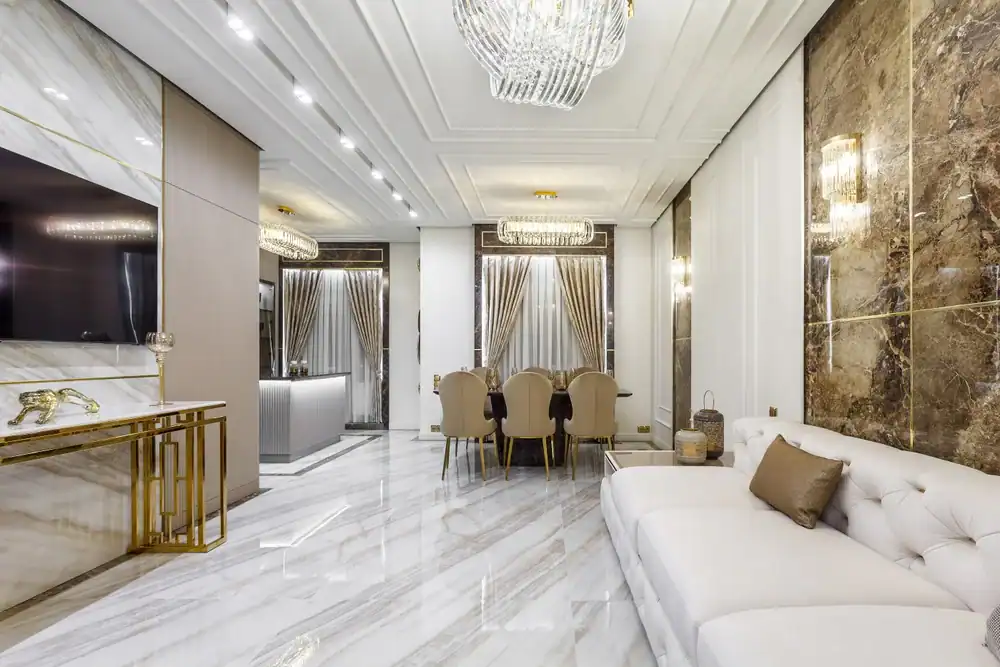
You get your original marble back. Not a replica, not a modern substitute—the actual floor that’s been in your home for decades, restored to the condition it was in when it was first installed.
Most Harbor Isle homeowners don’t realize that dull, etched, or water-stained marble isn’t ruined. It’s just worn at the surface level. Professional marble floor restoration removes that damaged layer and exposes fresh stone underneath, then polishes it back to a mirror finish.
The process takes one to two days for most residential projects. You’re not dealing with weeks of construction chaos, dust everywhere, or contractors tearing out your floors. We work in sections, keep everything masked and protected, and leave your home cleaner than we found it.
Restoration also costs significantly less than replacement—usually 60-80% less. And if your home has historic character, keeping those original floors intact can increase your property value by 3-5% according to local real estate trends. Buyers pay more for authentic, well-maintained period features.
High Definition Marble Restoration Inc has spent over 25 years restoring marble floors throughout Nassau County. We’re owner-operated, which means the person who quotes your job is the same person overseeing the work.
We were featured in the New York Times back in 2001 for our restoration work on historic properties. Since then, we’ve built a reputation around one simple idea: the worse the floor, the better the opportunity to show what real restoration looks like.
Harbor Isle has plenty of homes with original marble—bathrooms, entryways, foyers—that were installed during Long Island’s estate-building era. Those floors were crafted with materials and techniques you don’t see anymore. We understand how to work with them without causing further damage, and we know how Long Island’s coastal humidity affects marble differently than drier climates.
Our first client, the Garden City Hotel, has used our services exclusively for over 16 years. That’s the kind of relationship we build when we do the work right.
First, we assess the damage. Etching, scratches, water stains, and dullness all require different approaches. We’ll walk you through what’s fixable, what’s realistic, and what it’ll cost before we start any work.
Next, we grind down the surface using diamond pads. This removes the damaged layer and exposes fresh marble underneath. It’s not a topical fix—we’re actually removing material to get below the wear.
Then we move through progressively finer diamond pads to smooth and refine the surface. Each pass brings the marble closer to its final polish. This is where skill matters—too aggressive and you create new problems, too cautious and you don’t remove enough damage.
Finally, we polish the marble to a mirror-like finish and apply a penetrating sealer that protects against future staining and etching. The sealer doesn’t sit on top of the stone—it soaks in and bonds at a molecular level.
Throughout the process, we mask off surrounding areas, manage dust with specialized equipment, and keep your space protected. When we’re done, you’re left with restored marble and a clean home.

Ready to get started?
We handle etching caused by acidic cleaners, spills, or Long Island’s hard water. Etching isn’t a stain—it’s a chemical burn that eats into the marble’s surface. You can’t clean it away. You have to grind it out and re-polish.
We also repair scratches, chips, and cracks that accumulate over decades of use. Deep scratches require more aggressive grinding, but we can bring even heavily damaged marble back to a smooth, polished finish.
Water damage is common in Harbor Isle homes, especially in bathrooms and basements where humidity and occasional flooding affect ground-level installations. We remove water stains, address discoloration, and restore the stone’s original color and clarity.
For bathroom floor restoration specifically, we deal with soap scum buildup, hard water deposits, and the dullness that comes from years of improper cleaning. Nassau County’s mineral-rich water makes this particularly challenging—homeowners try every marble cleaning product on the market and still can’t get lasting results. That’s because the damage is physical, not something you can scrub away.
We also offer concrete restoration and polishing for homeowners looking to refinish basement floors, garage floors, or modern concrete surfaces. It’s a growing request, and we’ve added the service to meet that demand.
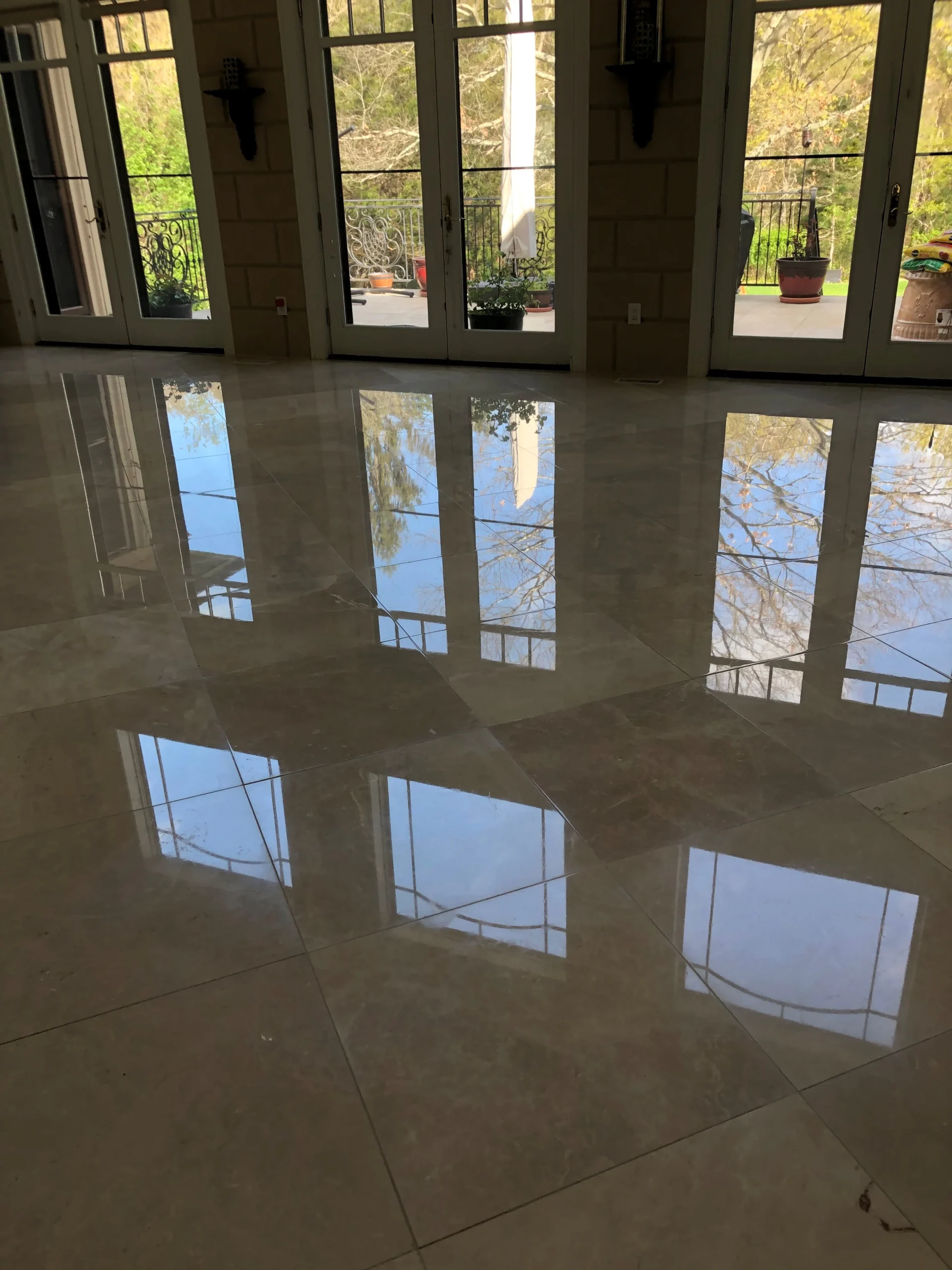
Most residential marble restoration projects take one to two days, depending on the size of the area and the extent of the damage. A typical bathroom floor can be done in a day. Larger entryways or foyers might take two.
We work in sections and don’t need to shut down your entire home. You’ll have access to other areas while we’re working, and we clean up thoroughly at the end of each day.
The timeline also depends on what we’re fixing. Light etching and dullness move faster than deep scratches or water damage that’s penetrated the stone. We’ll give you an accurate estimate after we see the floor in person.
Yes. Etching is one of the most common problems we fix, especially in Harbor Isle bathrooms where Long Island’s hard water creates constant issues.
Etching happens when acidic substances—cleaners, lemon juice, vinegar, or mineral-heavy water—chemically react with the marble and eat away the polished surface. It looks dull or cloudy, and no amount of cleaning will fix it because the damage is physical, not topical.
We remove etching by grinding down the affected layer with diamond pads, then re-polishing the surface to restore the shine. Depending on how deep the etching goes, this can take anywhere from a few passes to more aggressive grinding. Once we’re done, the marble looks like the etching was never there.
Almost always, yes. Professional marble floor restoration typically costs 60-80% less than full replacement, and it’s faster with far less disruption.
Replacement means tearing out your existing marble, disposing of it, prepping the subfloor, and installing new stone. You’re looking at weeks of work, dust, noise, and contractors in your home. You also lose the original character of your floor, which matters if you have a historic home in Harbor Isle.
Restoration takes one to two days, keeps your original marble intact, and brings it back to the condition it was in decades ago. For most homeowners, that’s a better outcome at a fraction of the cost.
The only time replacement makes more sense is if the marble is structurally compromised—cracked through the slab, severely chipped in multiple places, or damaged beyond what grinding can fix. But that’s rare. Most of what looks like “ruined” marble is actually surface-level damage that we can reverse.
Polishing is the final step in restoration, but it’s not the same thing as full restoration.
If your marble is dull but otherwise undamaged—no scratches, no etching, no stains—then polishing might be enough. We use fine diamond pads to bring back the shine without removing much material.
But if your marble has etching, scratches, water damage, or discoloration, you need restoration. That means grinding down the surface to remove the damaged layer, then working through progressively finer pads to smooth and refine the stone before we polish it.
A lot of Harbor Isle homeowners try DIY polishing kits or hire cleaning companies that claim they can “polish” marble. What they’re really doing is applying a topical coating that temporarily masks the damage. It wears off in a few months, and you’re back where you started. Real marble floor polishing requires the right equipment, the right technique, and an understanding of how much material to remove without causing new problems.
Yes. Historic marble restoration is actually our specialty. We’ve worked on century-old floors throughout Nassau County, including protected historic properties where the stakes are high and the margin for error is zero.
Older marble was often installed with materials and techniques that aren’t used anymore. The stone itself might be a variety that’s no longer quarried. The setting bed might be different. The finish might have been hand-polished using methods that modern equipment can’t replicate exactly.
We understand how to assess those floors, how to work with them without causing further damage, and how to restore them in a way that respects the original craftsmanship. That’s why we were featured in the New York Times back in 2001—we take on the complex jobs that other contractors avoid.
If you have original marble in a Harbor Isle home built during Long Island’s Gold Coast era, we’ve likely worked on something similar. We know what we’re looking at, and we know how to bring it back.
Use a pH-neutral cleaner designed for natural stone. Avoid anything acidic—no vinegar, no lemon-based products, no harsh chemicals. Those will etch the surface and undo the restoration work.
Wipe up spills quickly, especially in the bathroom where soap, shampoo, and hard water can sit on the surface. Long Island’s mineral-rich water is particularly tough on marble, so keeping things dry helps prevent new water stains and buildup.
We apply a penetrating sealer during restoration that protects against staining and etching, but it’s not permanent. You’ll want to reseal every one to two years depending on traffic and use. We can handle that for you, or you can do it yourself with the right product.
Beyond that, marble floor care is straightforward. Sweep or vacuum regularly to prevent dirt and grit from scratching the surface. Use mats in high-traffic areas. And if you notice new etching or dullness starting to develop, call us before it gets worse. Early intervention is always easier and cheaper than waiting until the damage is severe.