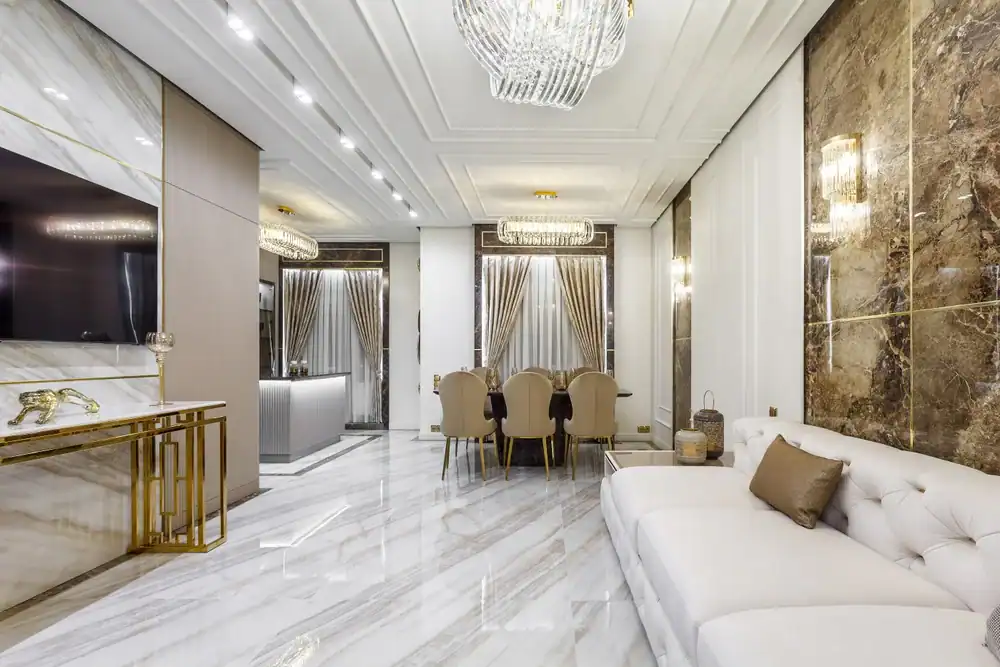
You’ll walk into your entryway and actually stop for a second. That’s what happens when 100-year-old marble goes from dull and etched to the way it looked when your house was built.
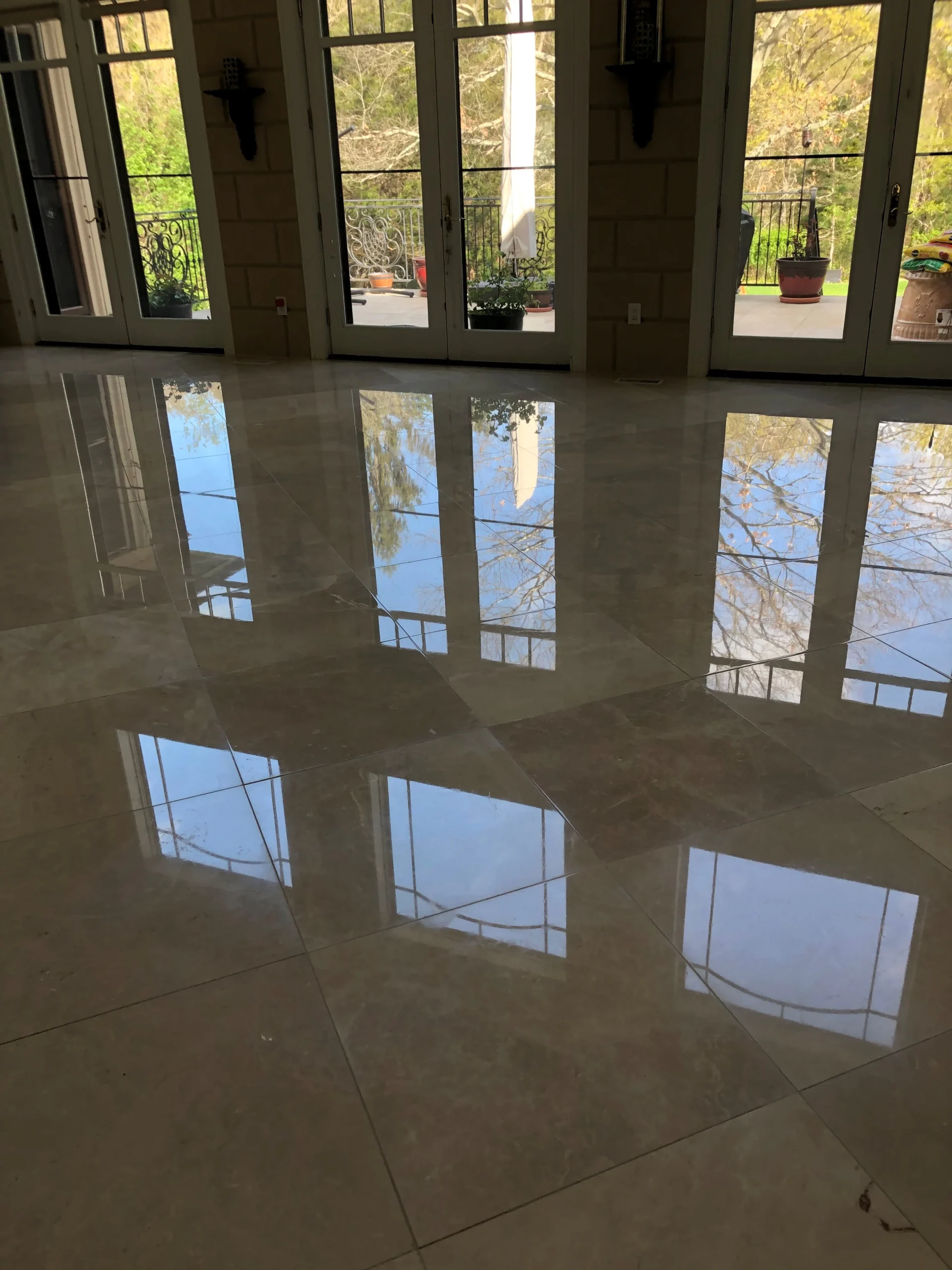
The scratches disappear. The cloudy spots from years of wrong cleaners—gone. What you’re left with is the original stone, with its unique veining and character, but with a finish that reflects light the way it did decades ago.
Most Harbor Hills homes in your neighborhood were built between 1920 and 1960, and many still have their original marble in foyers, bathrooms, and kitchens. When that marble is properly restored, it doesn’t just look better. It increases your property value by 3-5% because buyers pay more for authentic, maintained historic features than they do for new installations trying to replicate old character.
The work typically takes one to three days depending on size and condition. You’re not living in a construction zone for weeks. Most of our clients are back to normal use within 48 hours, with floors that look like they were installed yesterday.
High Definition Marble Restoration Inc specializes in historic floor restoration throughout Nassau County, including Harbor Hills. The New York Times featured our work in 2001, and we’ve spent the decades since then refining techniques that bring century-old marble back to life without damaging it.
This is owner-operated, which means the person who quotes your job is the same person overseeing the work. No crews showing up with generic equipment hoping for the best. Every project gets direct oversight from someone who’s been restoring marble for over 25 years.
Harbor Hills has a higher concentration of historic homes than many surrounding areas, which means there’s more original marble here that needs proper care. We’ve worked on floors in homes throughout your neighborhood—Gold Coast-era estates, vintage colonials, and mid-century properties where the marble has been walked on by three generations of families. The goal is always the same: restore it so it lasts for three more.
First, we assess the damage. Most marble problems fall into a few categories: etching from acidic cleaners, scratches from wear and grit, staining from spills, or dullness from years of buildup. We identify what’s actually wrong before we start grinding away at your floors.
Then comes the restoration process itself. We use diamond abrasives in progressive grits to remove damage and rebuild the surface. This isn’t buffing or coating—we’re actually re-finishing the stone. For light etching, we might start at 400 grit. For deeper scratches or severe damage, we go coarser and work our way up through finer grits until the surface is completely smooth.
The final step is polishing. We bring the marble up to the level of shine appropriate for your stone type and your preference. Some historic marble looks best with a honed (matte) finish. Most looks stunning with a high-gloss polish that makes the veining pop.
Throughout the process, we mask and protect everything around the work area. Marble dust is fine and gets everywhere if you’re not careful, so we contain it. Cleanup is part of the job, not an afterthought. When we leave, your floors look new, but nothing else in your house looks like a construction site.
Ready to get started?
You get a full assessment before any work starts. We tell you exactly what condition your marble is in, what’s causing the damage, and what results you can realistically expect. No surprises, no upselling mid-project.
The restoration itself covers everything needed to bring your floors back: grinding out scratches and etching, removing stains where possible, honing the surface smooth, and polishing to your preferred finish level. We also handle edge work, corners, and detail areas that some companies skip because they’re time-consuming.
Harbor Hills’ proximity to the coast means higher humidity year-round, which affects how marble ages and what kind of damage accumulates. We adjust our approach based on whether your marble has been dealing with coastal moisture, hard water deposits common throughout Nassau County, or damage from cleaning products. Different problems need different solutions.
After the work is done, you get maintenance guidance. We’ll tell you exactly what products to use (and which ones to avoid), how to clean your restored marble without damaging it again, and what to watch for as the floors age. The goal is to make this restoration last decades, not years.
Restoration typically costs less than half what replacement does. New marble installation on Long Island runs $70 to $190 per square foot when you factor in materials, labor, and disposal of old flooring. Most marble restoration projects cost between $5 and $15 per square foot depending on the condition and size.
For a 200-square-foot foyer, you’re looking at $1,000 to $3,000 for restoration versus $14,000 to $38,000 for replacement. The math gets even more dramatic on larger areas like hallways or open-concept spaces with marble throughout.
The other cost factor people don’t always consider: replacement means you lose the original stone. In Harbor Hills’ historic homes, original marble often has characteristics you can’t replicate with modern materials—unique veining, color variations, and craftsmanship that adds value to your property. Buyers pay a premium for authentic historic features that have been maintained, not replaced.
Yes. Etching from acidic cleaners is one of the most common problems we fix, and it’s completely reversible with proper restoration.
When you use cleaners containing vinegar, lemon, or harsh chemicals on marble, the acid eats away at the calcium carbonate in the stone. This creates dull, white, cloudy spots that look like stains but are actually surface damage. Scrubbing makes it worse because you’re just adding scratches on top of etching.
The fix is to remove the damaged layer and re-polish the surface. We use diamond abrasives to grind away the etched areas, then progressively finer grits to smooth and polish the stone back to its original finish. The process removes the damage without removing significant stone depth—usually just a fraction of a millimeter. Your marble ends up looking the way it did before the damage occurred, and we’ll tell you exactly which products to avoid so it doesn’t happen again.
Most projects take one to three days depending on square footage and damage severity. A small bathroom might be done in a day. A large foyer, hallway, and connecting rooms might take three days.
The timeline depends on how much correction the marble needs. Light etching and dullness can be addressed relatively quickly. Deep scratches, severe staining, or floors that have been neglected for decades take longer because we need to start with coarser abrasives and work through more steps to rebuild the surface.
We don’t rush the work to hit an arbitrary timeline. Each grit level needs to fully remove the scratches from the previous grit, or you’ll see those scratches telegraph through the final polish. That said, we also understand that you don’t want your bathroom or entryway out of commission longer than necessary. We’re efficient without cutting corners, and most clients are surprised the work is finished faster than they expected.
Restoration fixes surface damage—scratches, etching, dullness, and most staining. Cracks and broken tiles are structural issues that need repair before restoration can happen.
Small cracks can sometimes be filled and then polished over so they’re less visible, but this depends on the crack’s location and size. Large cracks or broken tiles usually mean the marble needs to be replaced in those specific areas, then the entire floor restored so the new pieces blend with the old.
If your marble has structural damage, we’ll tell you upfront during the assessment. Sometimes repair and restoration together still cost less than full replacement. Sometimes the damage is extensive enough that replacement makes more sense. We’ll give you an honest evaluation either way.
The good news is that most marble problems in Harbor Hills homes are surface-level. Years of foot traffic, acidic cleaners, and environmental wear create damage that looks terrible but doesn’t compromise the structural integrity of the stone. That’s the kind of damage restoration handles beautifully.
Yes. Harbor Hills’ proximity to the Atlantic means higher humidity year-round, which affects marble differently than it would in drier climates.
Constant moisture exposure can lead to more water spotting, especially in bathrooms where steam and humidity are regular occurrences. Hard water is common throughout Nassau County, and when that water sits on marble, it leaves mineral deposits that etch the surface over time. You’ll see this as white rings or cloudy areas, particularly around sinks, showers, and anywhere water pools.
Coastal air also carries more salt, which can interact with certain types of marble and accelerate deterioration if the stone isn’t properly sealed and maintained. This doesn’t mean your marble is doomed—it just means the maintenance approach needs to account for local conditions.
When we restore marble in Harbor Hills, we adjust our process based on the type of environmental damage we’re seeing. After restoration, we provide specific guidance on how to maintain your floors given the local climate. This usually includes recommendations on sealing frequency, which cleaning products work in high-humidity environments, and how to prevent the kind of damage that accumulates faster here than it would inland.
That’s specifically what we do. Historic marble restoration means bringing the stone back to its original condition while preserving everything that makes it authentic.
We’re not coating your floors with topical sealers that wear off in a year. We’re not using harsh acids that eat away at the stone. The process involves mechanically removing damage and re-polishing the marble using the same principles that were used when your floors were originally finished—just with modern diamond abrasives that give us more control.
The veining, color variations, and unique characteristics of your marble stay exactly the same. What changes is the surface condition. Scratches disappear, etching is removed, and the stone is polished back to the finish level it had when it was first installed.
Many Harbor Hills homes date back to the early-to-mid 1900s, and the marble in these properties was often sourced from quarries that no longer exist or installed using techniques that aren’t common anymore. That makes the stone irreplaceable in a literal sense. Our job is to restore it so it lasts another century, not to change it into something it’s not. The goal is always to make the marble look the way the original craftsmen intended—just without the decades of damage on top of it.