

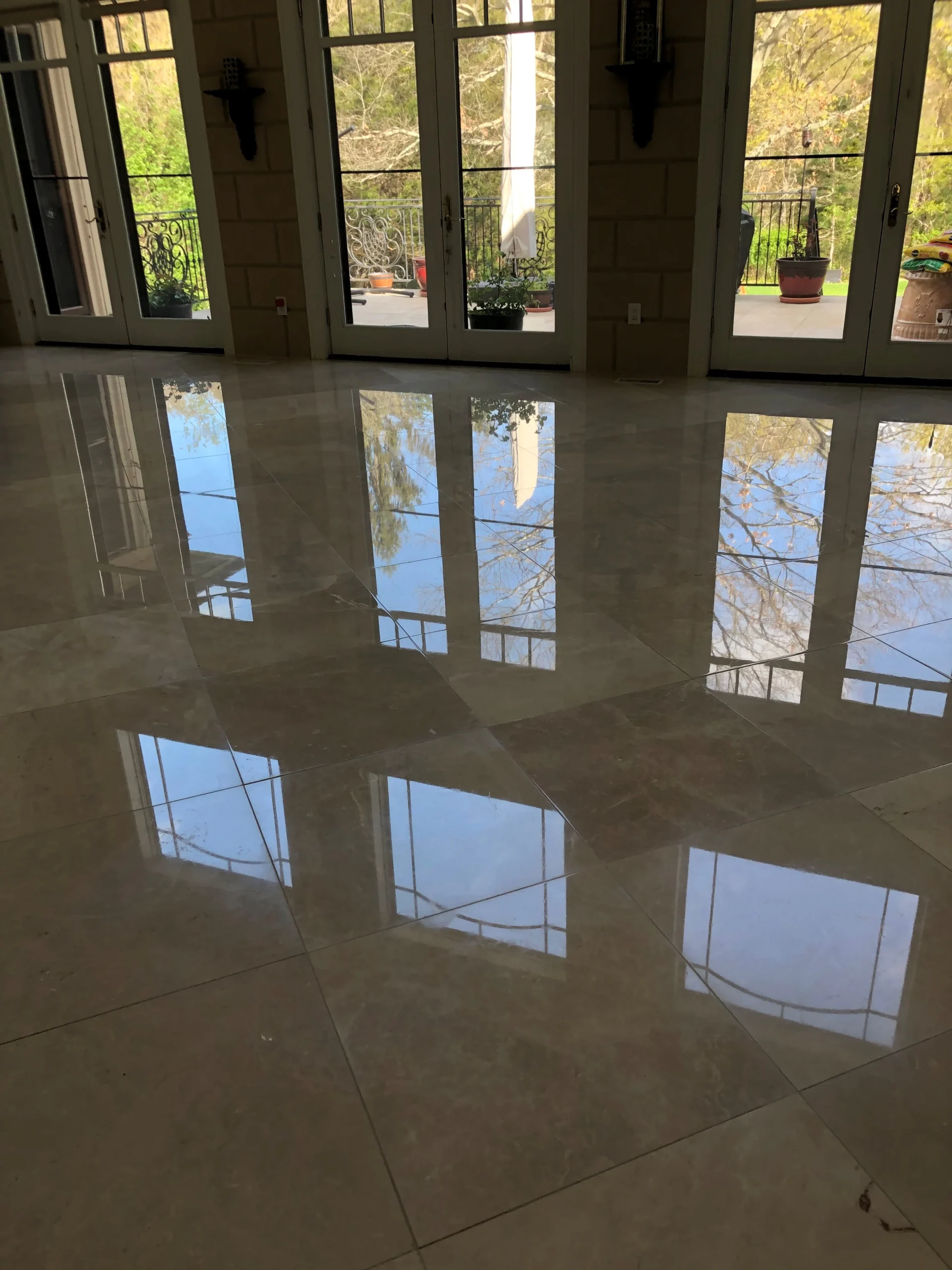
Your marble stops looking dull and lifeless. The shine comes back—not the fake, waxy coating some companies spray on, but the actual polish that makes people stop and look twice.
You’re not dealing with etching from years of wrong cleaners anymore. The cloudy spots disappear. The water stains from Long Island’s hard water are gone.
And here’s what matters most: you didn’t have to rip everything out. Most restoration projects in Great Neck Gardens wrap up in one to three days depending on square footage and condition. You’re back to normal life fast, and your floors look better than they have in years. That’s the difference between actual restoration and a basic cleaning service that just pushes dirt around.
We’ve been restoring marble floors across Nassau County since 1998. We’re owner-operated, which means you’re getting the person who actually knows what they’re doing on your job—not a subcontractor with a buffer and a prayer.
Great Neck Gardens has some of the most beautiful historic homes on Long Island. Many were built before the 1940s with original marble that’s seen decades of foot traffic, improper cleaning, and Long Island’s mineral-heavy water. We specialize in bringing those floors back without compromising their character or authenticity.
The New York Times featured our work in 2001, and we’ve been the exclusive marble restoration provider for the Garden City Hotel for over 16 years. That’s not luck—that’s what happens when you do the work right and show up consistently.
First, we assess your floors in person. Not over the phone, not from photos—we need to see the actual condition, test the stone, and understand what’s causing the damage. Great Neck Gardens homes often deal with etching from acidic cleaners or mineral deposits from hard water, and each situation needs a different approach.
Once we know what we’re working with, we start with a deep clean to remove any buildup or contaminants. Then comes the restoration process itself: honing away scratches, etching, and surface damage using progressively finer abrasives. This isn’t a quick buff job—we’re actually removing a thin layer of damaged stone to reveal the clean marble underneath.
After honing, we polish the surface to bring back that natural shine. This is where most marble floor polishing companies stop, but we go further. We seal the stone properly so it’s protected against future staining and etching. The whole process typically takes one to three days for most residential projects, and you can walk on the floors immediately after we’re done. No curing time, no waiting around.

Ready to get started?
You’re getting a complete restoration, not just a surface cleaning. That means repairing chips and cracks, removing deep scratches, eliminating etching from acidic cleaners, and polishing the stone back to its original finish.
In Great Neck Gardens specifically, we’re dealing with Long Island’s hard water constantly. The calcium and magnesium in Nassau County water leaves white, chalky deposits that actually react with marble and cause permanent discoloration if not addressed correctly. We remove those deposits and treat the stone so they don’t come back as quickly.
Historic floors get special attention. If your home was built before the 1940s—and about 34% of Great Neck Gardens homes were—your marble likely needs techniques that preserve its age and character. We don’t use harsh acids or aggressive abrasives that some cleaning companies rely on. We restore the floor without destroying the patina that makes it valuable.
You also get a free estimate upfront with transparent pricing. Most homeowners save 60-80% compared to replacement costs, which run $70 to $190 per square foot on Long Island. Restoration typically costs $5 to $15 per square foot, and the results last 10 to 15 years in residential settings when you maintain them properly.
Most residential marble restoration projects take one to three days depending on the size of the area and the condition of your floors. A typical bathroom might be done in a day. A large foyer or kitchen floor could take two to three days if there’s significant damage or etching.
The timeline also depends on what we’re fixing. If you’ve got light dullness and minor scratches, that’s faster than dealing with deep etching from years of acidic cleaners or heavy staining from hard water. We’ll give you an accurate timeframe during the estimate once we see the actual condition.
You can use the floors immediately after we finish. There’s no curing time or waiting period. We’re not applying coatings that need to dry—we’re restoring the actual stone surface and sealing it properly.
Yes. This is one of the most common problems we fix in Great Neck Gardens. A lot of homeowners use standard household cleaners without realizing they contain acids that etch marble. That creates the cloudy, dull appearance that won’t go away no matter how much you clean.
Etching isn’t dirt—it’s actual damage to the stone’s surface. The acid reacts with the marble and dissolves it slightly. You can’t clean that away. You have to hone the surface to remove the damaged layer, then re-polish it.
We’ve restored floors where people used vinegar, lemon-based cleaners, or even bathroom tile cleaners on marble for years. The damage looks permanent, but it’s not. Once we hone away the etched layer and bring the stone back to a proper polish, those floors look new again. It just takes someone who knows what they’re doing and has the right equipment.
Marble restoration typically costs $5 to $15 per square foot in Nassau County. Replacement runs $70 to $190 per square foot when you factor in demolition, disposal, new material, and installation. You’re saving 60-80% by restoring instead of replacing.
Let’s say you have a 200-square-foot foyer. Restoration might cost $1,000 to $3,000 depending on condition. Replacement could run $14,000 to $38,000 for the same space. That’s a massive difference, and restoration gives you results that last 10 to 15 years in a residential setting.
There’s also the disruption factor. Replacement tears up your floors, creates dust and noise for days or weeks, and forces you to stay off the area during installation and curing. Restoration is done in one to three days, and you can walk on the floors immediately. For historic homes in Great Neck Gardens where original marble adds property value, restoration makes even more sense—you’re preserving authentic materials that buyers pay premium prices for.
It depends on what you mean by polishing. If you’re talking about what we do—actual marble restoration and polishing—then yes, we fix scratches and dull spots by honing the surface and re-polishing it properly.
But if you’re talking about what some cleaning companies call “polishing,” which is just buffing the surface or applying a topical coating, then no. That doesn’t fix anything. It might make the floor look shinier temporarily, but the scratches are still there under the coating, and the dullness comes back as soon as the coating wears off.
Real marble polishing removes a thin layer of stone to get past the damage, then uses progressively finer abrasives to bring the surface to a high shine. We’re not adding anything—we’re revealing the clean marble underneath. That’s why the results last years instead of months. In Great Neck Gardens, where many homes have original floors with decades of wear, this process brings back the shine and clarity those floors had when they were first installed.
Yes. Historic floor restoration is actually what we’re best at. The worse the floor, the better the job is for us. We’ve worked on 100-year-old marble floors across Nassau County, and Great Neck Gardens has plenty of homes from that era with original stone that needs specialized care.
Older marble requires different techniques than newer installations. The stone has aged, the finish has worn down in specific patterns, and there’s often damage from decades of improper maintenance. A lot of contractors won’t touch these jobs because they’re complicated and time-consuming. We specifically look for them.
We don’t use harsh chemicals or aggressive methods that compromise the stone’s character. The goal is to restore the floor without making it look brand new in a way that clashes with the home’s age. You want it clean, polished, and protected—but still authentic. That’s a balance most companies don’t understand, and it’s what we’ve been doing since 1998. If your home was built before the 1940s and still has original marble, we can bring it back.
Use pH-neutral cleaners only. That’s the most important thing. No vinegar, no lemon-based products, no bathroom cleaners, nothing acidic. Those products etch marble and create the dull, cloudy damage you just paid to fix.
For daily cleaning, a damp microfiber mop with plain water works fine. For deeper cleaning, use a cleaner specifically made for natural stone. You can find these at most home improvement stores—just check the label to make sure it says pH-neutral and safe for marble.
Wipe up spills quickly, especially anything acidic like wine, coffee, or juice. Long Island’s hard water will leave mineral deposits if you let water sit and evaporate on the surface, so dry the floors after mopping. And put mats at entryways to catch dirt and grit before it gets tracked across your marble—that prevents scratching. If you do those things consistently, your restored floors should stay in great shape for 10 to 15 years before needing another professional restoration.