You’re looking at marble floors that once defined your home’s character. Now they’re scratched, etched, or dull. The question isn’t whether they can be saved—it’s whether you’ll find someone who actually knows how to do it right.
Marble floor restoration brings back the original shine and smoothness without tearing anything out. Most residential jobs finish in under two days. You’re not living in a construction zone for weeks, and you’re not throwing away craftsmanship that can’t be replicated today.
The difference between restoration and replacement isn’t just cost. It’s about keeping the authentic character that makes Freeport’s historic homes worth owning in the first place. Restoration typically runs $2-6 per square foot. Replacement means demolition, disposal, new materials, installation, and weeks of disruption—often costing 10 times more.
When restoration is done correctly, you get 10-15 years of results in a residential setting. That’s not a patch job. That’s bringing your floors back to how they looked when they were first installed, using techniques that respect the original materials and methods.
We’ve been restoring marble floors throughout Nassau County since 1998. The owner personally oversees every project in Freeport and surrounding areas—no subcontractors, no handoffs, no surprises.
We specialize in historic floor restoration, particularly the century-old marble found in Freeport’s older homes. The New York Times featured our work in 2001, but what matters more is that we’ve spent over 25 years refining techniques that bring damaged marble back without destroying what makes it valuable.
Freeport’s proximity to water means many homes deal with humidity and occasional moisture issues that affect ground-level marble. We understand how Long Island’s environment impacts these floors, and we know how to address damage that comes from decades of exposure, not just surface wear.
First, we assess the damage. Scratches, etching, stains, and dullness all require different approaches. You get a transparent quote upfront—no hidden costs, no surprises after we start.
The restoration process uses diamond abrasives in progressively finer grits to remove damage and smooth the surface. We’re not using harsh acids or aggressive chemicals that cleaning companies rely on. This is precision work that removes just enough material to eliminate imperfections while preserving the floor’s integrity.
Polishing brings back the shine. Depending on your floor’s condition and your preference, we can achieve anything from a soft haze to a high-gloss mirror finish. The process is efficient—most residential projects in Freeport wrap up in less than two days.
After restoration, your marble needs basic maintenance. Regular dust mopping and occasional damp cleaning with pH-neutral cleaner keeps it looking right. We’ll walk you through exactly what to do and what to avoid so your floors stay beautiful for years.

Ready to get started?
Marble floor restoration covers the full process: assessment, surface preparation, grinding, honing, polishing, and sealing when appropriate. We handle bathroom floor restoration, entryways, foyers, and large open spaces throughout Freeport homes.
Historic properties often have marble with intricate patterns or inlays that require extra care. We preserve these details while restoring the surrounding surface. If your home was built during Freeport’s early development, chances are your marble was installed using materials and methods that aren’t standard anymore—we know how to work with these older installations.
We also offer concrete restoration and polishing for homeowners updating basements, garages, or modern spaces. It’s a different material, but the same principle applies: restore and refine what’s already there instead of ripping everything out.
Freeport’s coastal location means salt air and humidity affect natural stone differently than inland areas. We account for these factors when recommending finishes and maintenance approaches. Your floors aren’t just getting a generic treatment—they’re getting restoration that makes sense for where you live.
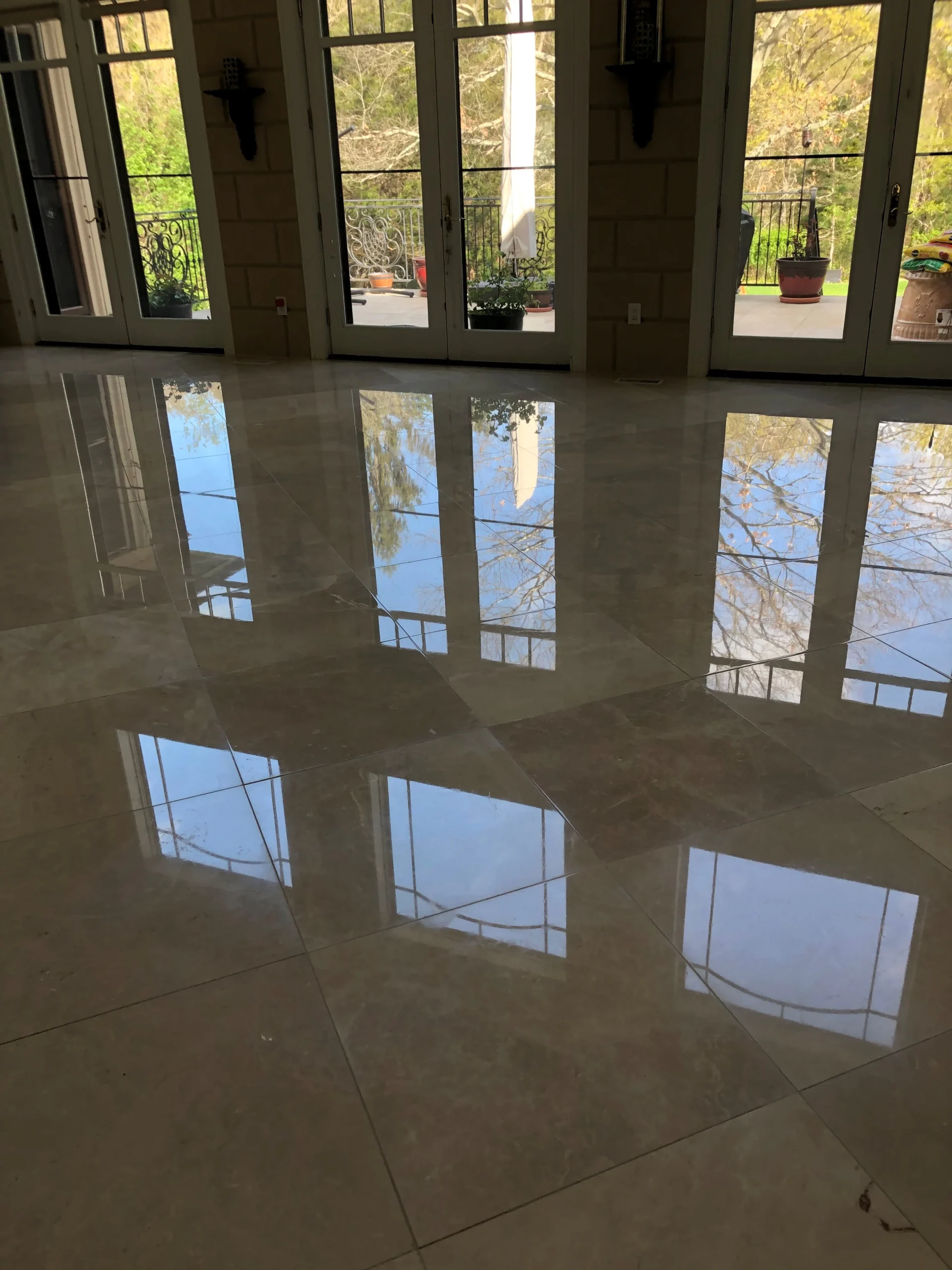
Marble floor restoration in Freeport typically costs between $2 and $6 per square foot, depending on the condition of your floors and the level of damage. Deep scratches, severe etching, or staining from years of neglect will be on the higher end. Light surface wear or dullness falls on the lower end.
Compare that to replacement, which runs $15-30 per square foot just for materials and installation—before you factor in demolition, disposal, potential subfloor repairs, and the weeks of disruption. Restoration gives you back the original beauty of your marble without the cost or chaos of starting over.
Most residential projects in Freeport finish in one to two days. You’re not dealing with extended construction timelines, and you’re keeping the authentic character that makes your home valuable. The investment makes sense when you consider that properly restored marble lasts 10-15 years in normal residential use.
Yes. Actually, the older and more damaged the floor, the better the restoration result tends to be. Historic marble floors in Freeport’s century-old homes were installed with materials and craftsmanship that aren’t replicated today—that’s exactly what we specialize in preserving.
Marble from the early 1900s often has more depth and character than modern installations, but it also shows decades of wear, improper cleaning, and sometimes water damage from Freeport’s coastal environment. We’ve restored floors that homeowners thought were beyond saving—deep scratches, etching from acidic cleaners, stains that have been there for years.
The key is understanding how these older materials respond to restoration techniques. We’re not using the aggressive methods that cleaning companies rely on, which can actually ruin historic marble. We use precision diamond abrasives and processes refined over 25 years to bring back the original finish without damaging what makes your floors irreplaceable.
Professionally restored marble floors typically last 10-15 years in residential settings before needing another full restoration. That timeline assumes normal foot traffic and proper maintenance—regular dust mopping and pH-neutral cleaning, not harsh chemicals or abrasive scrubbing.
Compare that to basic cleaning services, which might make your floors look better for 2-3 years before the shine fades again. The difference comes down to actually removing damage versus just masking it temporarily. Restoration rebuilds the surface properly.
High-traffic areas like entryways might show wear sooner than a formal dining room that barely gets used. Freeport’s humidity and salt air can also affect longevity if moisture gets trapped under the marble. We assess these factors during the initial inspection and recommend finishes and maintenance that make sense for your specific situation. You’re not getting a one-size-fits-all approach—you’re getting restoration based on how you actually live in your home.
Cleaning removes surface dirt. Restoration removes damage. If your marble is just dusty or has light soil buildup, cleaning works fine. If it’s scratched, etched, stained, or dull, cleaning won’t fix it—and harsh cleaning methods can actually make it worse.
A lot of cleaning companies in Nassau County offer marble services using aggressive acids and abrasives that strip away the surface. You might get temporary shine, but you’re also removing material in an uneven way that causes more problems down the road. Marble is calcium carbonate—it’s vulnerable to acidic cleaners, and it’s easy to ruin if you don’t know what you’re doing.
Restoration uses precision diamond abrasives in controlled grits to remove scratches and etching, then polishes the surface back to its original finish. It’s a skilled process that requires understanding the material, not just throwing chemicals at it. You’re rebuilding the surface properly, which is why restored marble lasts 10-15 years instead of looking dull again in a few months.
Restore if the marble itself is still intact—meaning it’s not cracked through, missing large sections, or structurally compromised. Surface damage like scratches, etching, dullness, and even most stains can be fixed through restoration. Replacement only makes sense if the marble is actually broken beyond repair.
Here’s what replacement really costs: $15-30 per square foot for new marble, plus demolition of the old floor, disposal fees, potential subfloor work, and installation. You’re also losing the character and craftsmanship of original marble, especially in Freeport’s historic homes where that authenticity adds real value. Buyers pay premium prices for well-maintained original features.
Restoration runs $2-6 per square foot and keeps what you have. Most jobs finish in under two days—you’re not living through weeks of construction. If your marble has the depth and quality of older installations, restoration is the smarter move financially and practically. You get your floors back to how they looked originally without the cost, disruption, or loss of character that comes with replacement.
Yes. Bathroom marble floor restoration is one of the most common projects we handle in Freeport. Bathrooms see constant moisture exposure, soap residue, and cleaning product damage—all of which etch and dull marble over time.
The challenge with bathroom floors is that water damage often goes deeper than surface scratches. Freeport’s humidity makes this worse, especially in older homes where moisture barriers weren’t standard. We assess whether the damage is just cosmetic or if there are underlying moisture issues that need addressing before restoration.
The restoration process is the same—diamond abrasives to remove etching and scratches, polishing to bring back the finish, and sealing when appropriate. Bathrooms usually need a more slip-resistant finish than high-gloss, which we factor into the polishing stage. Most bathroom projects complete in one day, and you can use the space again within 24 hours. You’re getting back a clean, smooth, properly finished marble floor without the cost of tearing everything out and starting over.