


You’re not looking at dull, scratched marble anymore. The surface reflects light again. The veining stands out. People notice when they walk in.
That’s what happens when you restore instead of replace. The original character stays intact—the marble that’s been in your home for decades, maybe a century—but it looks like it did when it was first installed.
Most restoration jobs in Elwood take less than two days. You’re not dealing with weeks of demolition, dust, and contractors tracking through your house. The floor gets cleaned, honed, polished, and sealed. Then it’s done. You can walk on it the same day in most cases.
And because we’re sealing it with commercial-grade products—not the stuff you’d find at a hardware store—you’re looking at years of protection. Not months.
We specialize in the floors other contractors won’t touch. The 100-year-old marble in Gold Coast-era homes. The staircases with damage that looks irreversible. The bathroom floors that three other companies said need to be ripped out.
We’re owner-operated, which means you’re talking directly to the person doing the work. No middleman. No miscommunication. The same person who gives you the quote is the one who shows up with the equipment.
Elwood’s historic roots go back to the mid-1800s, and plenty of homes here still have original marble installed using techniques that don’t exist anymore. That’s the kind of work we do best. If your floor has history, we know how to bring it back.
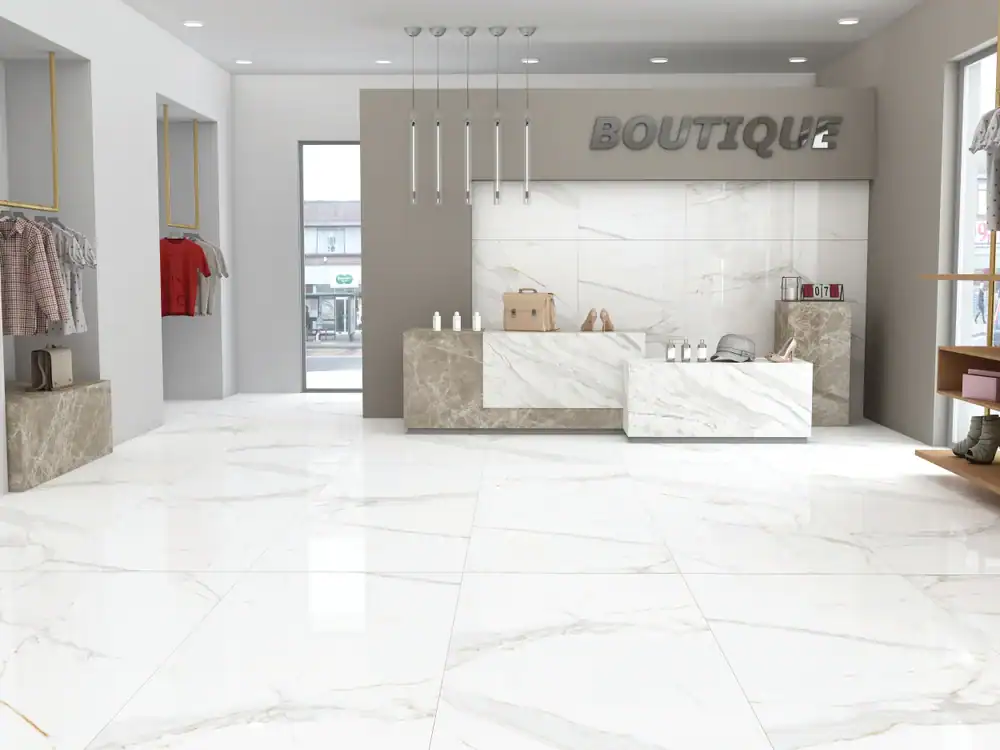
First, we assess the damage. Not every floor needs the same level of work. Some need a full restoration—grinding, honing, polishing. Others just need polishing and sealing. We’ll tell you exactly what yours needs and why.
Then we prep the area and start with the heavy equipment. If there are deep scratches, etching, or lippage (uneven tiles), we grind the surface down to a flat, uniform level. This is where decades of damage get erased.
Next comes honing. This smooths out the surface and removes any remaining imperfections. Then polishing—using progressively finer pads until the marble has that glossy, reflective finish you’re picturing.
Finally, we seal it. We use solvent-based sealers that penetrate deep and last years, not the water-based products that wear off in a few months. Once it’s sealed, your marble is protected against stains, moisture, and daily wear.
You’ll get a walkthrough at the end so you know how to maintain it. Most clients are surprised how easy it is once it’s properly restored and sealed.

Ready to get started?
You’re getting a full restoration—not a surface-level cleaning. That means grinding, honing, polishing, and sealing. We bring commercial-grade equipment that most homeowners and even general contractors don’t have access to.
We also handle bathroom floor restoration, marble staircases, and entryways. If it’s marble and it’s damaged, we can restore it. And if you’ve got old concrete floors you’re thinking about refinishing, that’s something we’ve recently added. Polished concrete has a similar look to marble and terrazzo, and it’s becoming a popular choice for homeowners in Nassau and Suffolk Counties.
Elwood’s location on Long Island means your marble is dealing with coastal humidity and mineral-rich water. Those factors cause specific types of damage—etching, staining, dullness—that need to be addressed with the right products and techniques. We’ve been working in this area long enough to know exactly what your floors are up against.
The goal isn’t just to make your floors look better. It’s to make sure they stay that way. Proper sealing and maintenance guidance are part of every job.
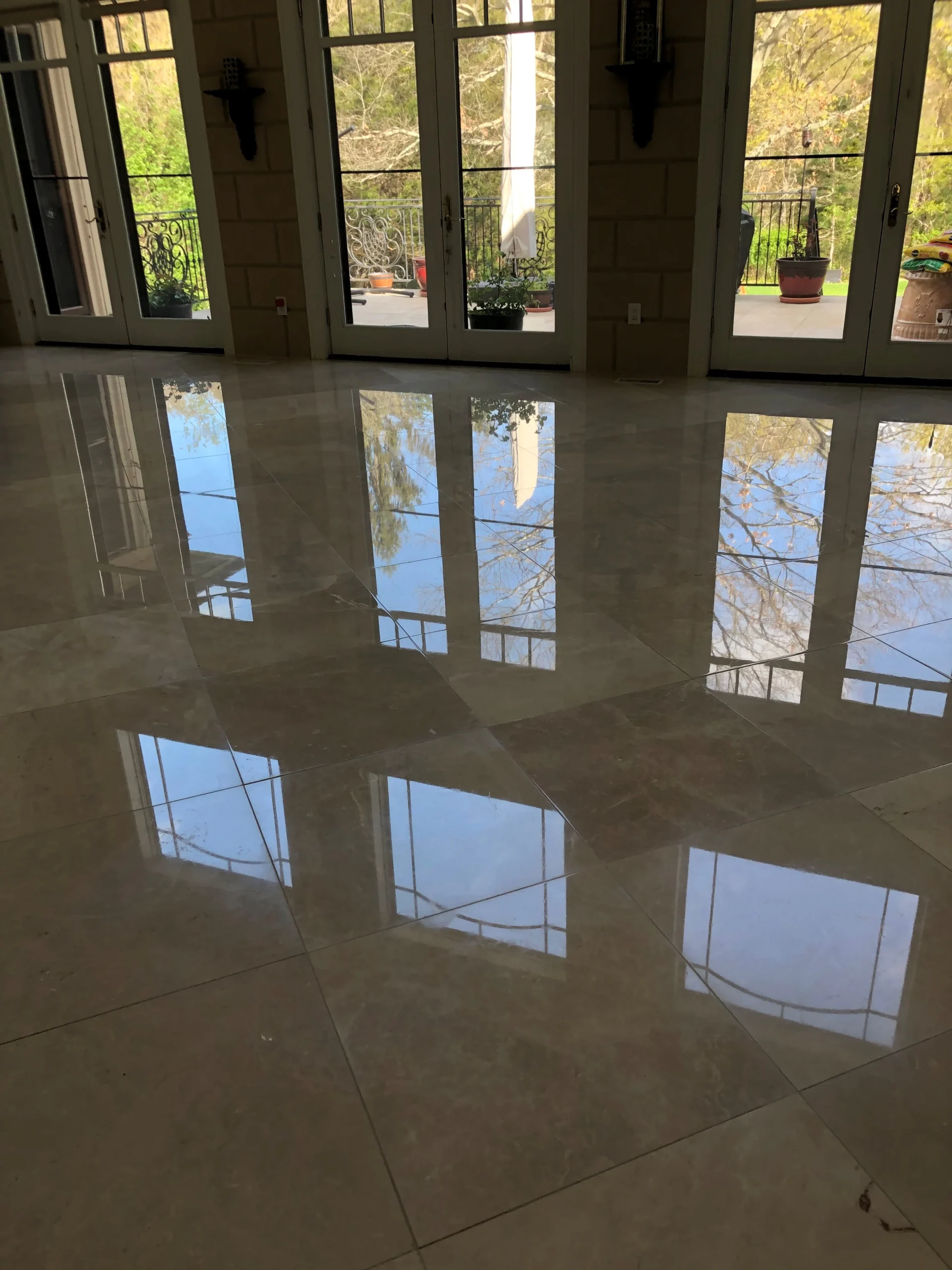
Restoration typically costs between $5 and $15 per square foot. Replacement costs significantly more—not just for the new marble, but for demolition, disposal, subfloor work, and installation. You’re looking at weeks of construction and costs that can easily exceed $25,000 for a typical floor.
We’ve had clients save $18,000 or more by restoring instead of replacing. And they kept their original floors, which matters a lot in historic Elwood homes where authenticity adds value.
The math is straightforward. If your marble can be restored—and most of the time, it can—you’re spending a fraction of what replacement would cost. You’re also avoiding the disruption of a full demolition and reinstall.
Yes. In fact, that’s our specialty. The older and more damaged the floor, the better suited it is for our expertise.
Marble installed a century ago was often set using methods that aren’t replicated today. The material itself is usually higher quality than what you’d find in modern installations. That means it’s absolutely worth restoring—and in many cases, it’s the only way to preserve the character of your home.
We’ve worked on Gold Coast-era estates and historic properties throughout Nassau and Suffolk Counties. If other contractors have told you the floor is too far gone, we’d like to take a look. We’ve restored floors that looked unsalvageable.
Most jobs take less than two days. Smaller areas like bathrooms or entryways can often be completed in a single day. Larger floors or more extensive damage might take a bit longer, but you’re still looking at days—not weeks.
Compare that to replacement, which involves demolition, subfloor prep, installation, grouting, and curing time. You’re living in a construction zone for weeks. With restoration, the disruption is minimal.
You can usually walk on the floor the same day, depending on the sealer we use. We’ll give you a clear timeline before we start so you know exactly what to expect.
No. Restoration brings the marble back to what it originally looked like—it doesn’t change the character or veining. We’re removing damage, not altering the stone.
The grinding and honing process takes off a very thin layer of the surface—just enough to eliminate scratches, etching, and stains. The marble underneath is the same marble that’s been there for decades. We’re just revealing it again.
If anything, restoration makes the original details more visible. Veining becomes sharper. Colors become richer. You’re seeing the floor the way it was meant to be seen, without years of buildup and damage obscuring it.
Polishing is the final step in restoration, but it’s not always enough on its own. If your marble is dull but doesn’t have deep scratches or etching, polishing might be all you need. It brings back the shine and makes the surface reflective again.
Full restoration includes grinding and honing before polishing. That’s necessary when there’s significant damage—deep scratches, uneven tiles, heavy etching from acidic cleaners, or staining that’s penetrated the surface. Grinding levels everything out. Honing smooths it. Polishing finishes it.
We’ll assess your floor and tell you which level of work it actually needs. Some companies will try to sell you a full restoration when polishing would do the job. We don’t operate that way. You’ll get a transparent recommendation based on what your floor requires—not what makes us the most money.
Yes. Concrete polishing is a newer service we’ve added, and it’s growing fast in popularity. Polished concrete has a similar glossy finish to marble and terrazzo, and it’s incredibly durable.
If you have old concrete floors—maybe in a basement, garage, or commercial space—we can grind and polish them into a smooth, reflective surface. It’s a cost-effective option that looks high-end and requires very little maintenance once it’s done.
The process is similar to marble restoration. We grind the concrete to remove imperfections, then polish it using progressively finer grits until it shines. Then we seal it to protect the surface. It’s becoming a popular choice for homeowners in Elwood and throughout Long Island who want a modern, industrial look without the cost of new flooring.