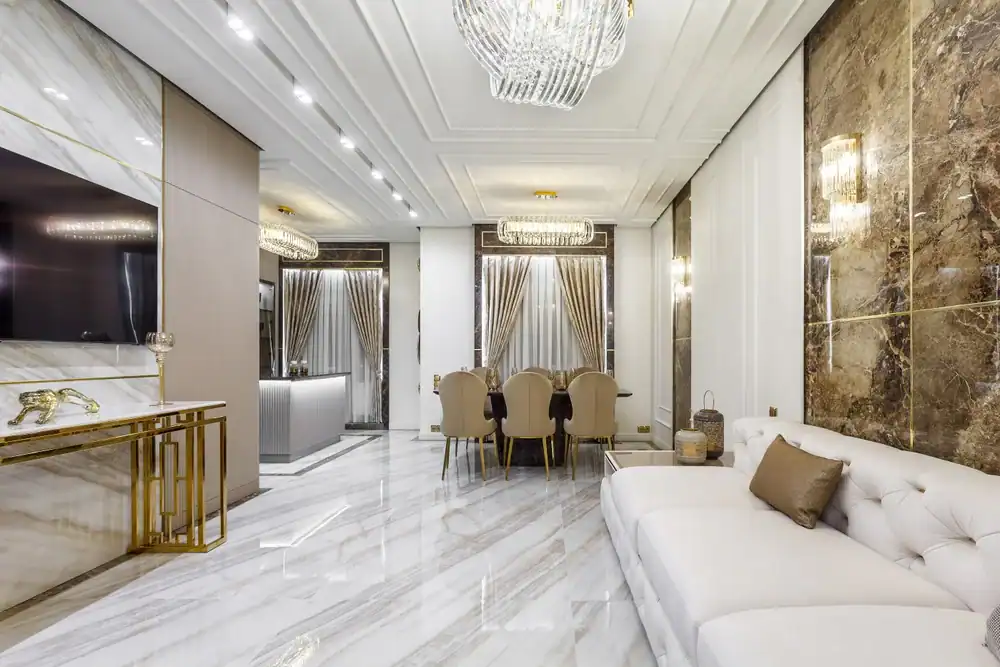
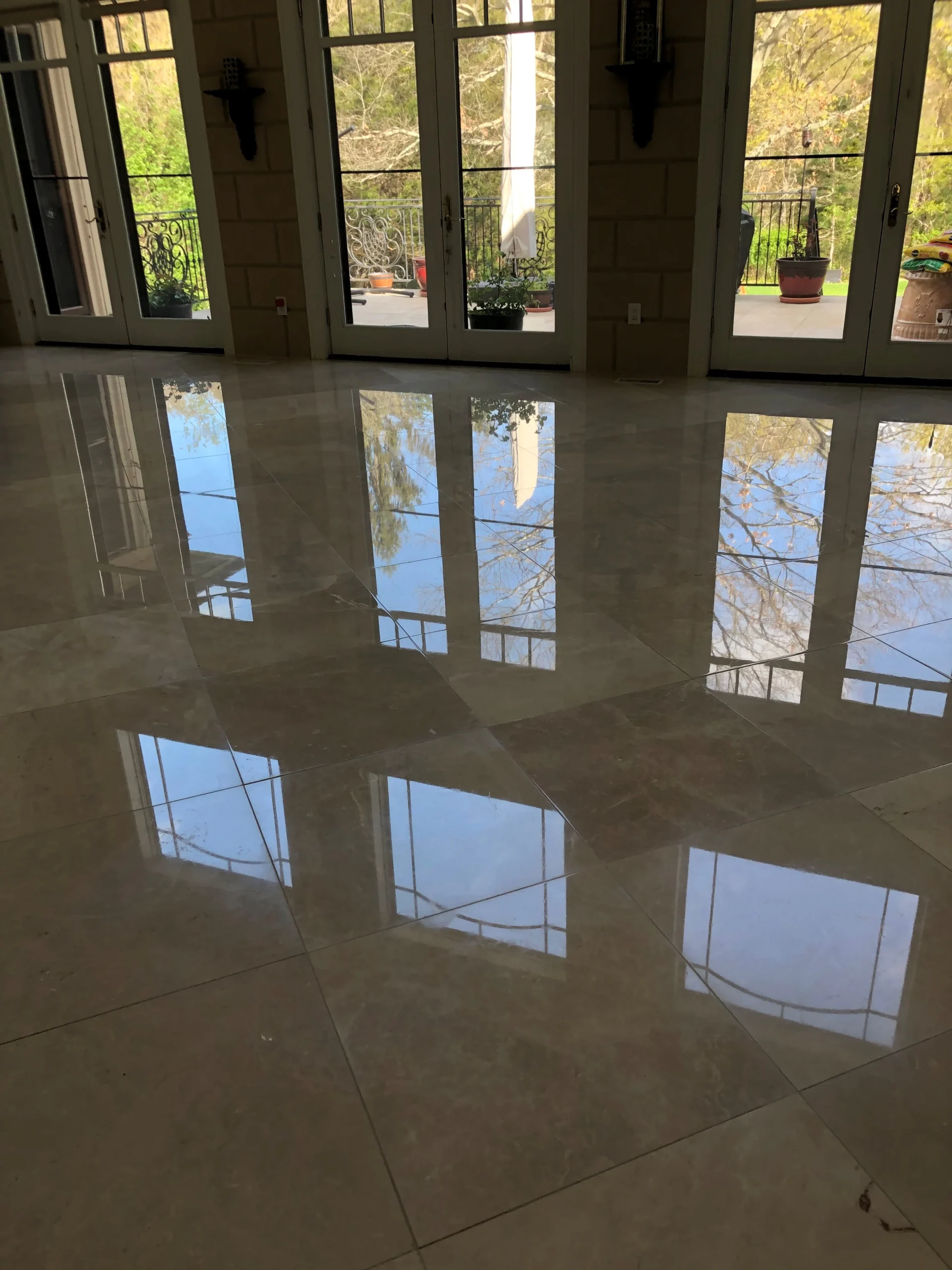
You walk into your entryway and the marble actually reflects light again. No more dull patches where years of wrong cleaners left their mark. No more embarrassment when guests arrive.
The etching from Long Island’s hard water? Gone. Those white spots that made you think replacement was your only option? Polished away. Your floors look the way they did when your house was built—maybe better, because now you know how to maintain them properly.
Most restoration jobs wrap up in under two days. You’re not living in a construction zone for weeks. You’re not ripping out irreplaceable materials and losing the character that makes your Eastport home worth what it is. You’re getting the floors you’ve been missing, at a fraction of replacement cost.
And if you’re preparing to sell, restored marble floors signal quality to buyers. Properties with well-maintained original features consistently command higher prices in Nassau and Suffolk Counties. That’s not marketing talk—it’s what appraisers and realtors see in the comps.
High Definition Marble Restoration Inc has spent over 25 years working on the kinds of floors other contractors walk away from. The New York Times featured our work in 2001, but what matters more is this: our very first client, the Garden City Hotel, has used our services exclusively for more than 16 years.
You’re not getting a crew of subcontractors who learned marble restoration from YouTube. The owner personally oversees every project in Eastport and throughout Nassau and Suffolk Counties. That means the person who quotes your job is the same person accountable for the results.
We work on historic homes throughout Long Island because we understand what’s at stake. These floors were installed during an era of craftsmanship that doesn’t exist anymore. Once you replace them, that’s it. But restoration? That gives you decades more life from surfaces that were built to last centuries.
First, we assess the actual condition of your marble. Not every floor needs the same level of work, and you shouldn’t pay for services you don’t need. We’re looking at the type of marble, the extent of etching or staining, and what previous attempts at cleaning or restoration might have done.
Then comes the restoration itself. We use diamond abrasives—not harsh acids that eat away at your stone. The process involves grinding away damaged surface layers, honing to remove scratches, and polishing to bring back that original shine. Each step is calibrated to your specific marble type, because Carrara marble doesn’t respond the same way as Calacatta or Crema Marfil.
We mask and protect everything that isn’t being restored. Your baseboards, walls, and adjacent rooms stay clean. Most jobs in Eastport homes finish in less than two days, and you can walk on the floors immediately after we’re done.
You’ll also get clear guidance on maintenance. The wrong cleaner can undo restoration work in months, and most homeowners have no idea they’re using products that damage marble. We make sure you know exactly how to keep your floors looking the way they should.

Ready to get started?
You get a complete evaluation before any work starts. We’re transparent about pricing upfront—you know exactly what you’re paying before we begin. No surprises, no upselling once we’re in your home.
The restoration process includes repair of cracks or chips if needed, removal of stains and etching, honing to eliminate scratches, and polishing to restore the original finish. We also seal the marble properly, which is critical in Eastport’s coastal climate where humidity and occasional water exposure can damage unsealed stone.
Historic homes in Eastport often have marble that’s been subjected to decades of improper care. Acidic cleaners, abrasive scrubbing, and Long Island’s mineral-heavy water all take their toll. Professional restoration addresses all of that damage systematically, not just the surface-level appearance.
We also handle bathroom floor restoration, marble countertops, and other natural stone surfaces throughout your home. And if you have decorative concrete floors that need polishing, that’s a service we’ve recently added. The process is similar—mechanical grinding and polishing with diamond abrasives creates a glossy, durable surface that rivals natural stone.
Restoration typically costs 60-80% less than full replacement. New marble installation on Long Island runs between $70 and $190 per square foot when you factor in materials, demolition, disposal, and labor. Restoration preserves your existing marble at a fraction of that cost.
The exact price depends on your floor’s current condition and the type of marble. Extensive etching or deep scratches require more intensive work than light surface damage. But even complex restoration jobs come in well below replacement costs.
And there’s another cost people forget: replacement means losing original materials you can’t get back. If you’re in a historic Eastport home with century-old marble, that authenticity has value. Buyers pay premiums for well-maintained original features. Ripping them out to install new marble—even high-quality new marble—removes that selling point entirely.
Yes. Water stains and etching are two of the most common problems we see in Nassau and Suffolk County homes, and both are fixable. Long Island’s mineral-rich water leaves deposits that look permanent but aren’t.
Etching happens when acidic substances dull the marble’s surface. It shows up as white, cloudy spots or rings. Water stains are typically mineral deposits sitting on top of the marble. The restoration process removes both by grinding away the damaged surface layer and re-polishing the marble underneath.
What won’t work: acidic cleaners, abrasive scrubbing, or most DIY marble restoration products. These usually make the problem worse. The etching spreads, or you create uneven patches where you’ve applied products inconsistently. Professional restoration uses calibrated diamond abrasives that remove damage evenly across the entire floor, not just in spots.
Most residential marble restoration projects in Eastport finish in under two days. You can absolutely stay in your home during the work. We’re not doing major construction—we’re restoring the surface of your existing floors.
We mask off the work area to contain dust and protect adjacent spaces. You’ll have some noise from the equipment, but it’s not days of jackhammering. And you can walk on your floors immediately after we finish. There’s no extended drying time or curing period.
The timeline depends on square footage and damage severity. A small entryway might take half a day. A whole first floor with extensive etching could take two full days. We’ll give you an accurate timeframe when we quote the job, and we stick to it. You’re not dealing with a project that drags on for weeks.
Old marble is actually ideal for restoration. The marble in historic Eastport homes was often higher quality than what’s available today, installed by craftsmen who knew what they were doing. Age isn’t the problem—improper care over the decades is what causes the damage you’re seeing.
We’ve restored marble floors over 100 years old throughout Long Island. The worse the condition, the more dramatic the transformation. Floors that look beyond saving often respond beautifully to professional restoration because the underlying marble is still solid.
The only time replacement makes sense is if the marble is structurally compromised—major cracks, pieces missing, or severe substrate damage underneath. But dullness, etching, stains, and surface scratches? All of that is fixable. You don’t throw away a century of craftsmanship because the surface needs work. You restore it and get another century of use.
Polishing is the final step in restoration, but it’s not the whole process. If your marble just needs a shine refresh and has no etching or deep scratches, polishing alone might be enough. But most floors we see in Eastport need more than that.
Full restoration includes repair, grinding, honing, and then polishing. Grinding removes the damaged surface layer using coarse diamond abrasives. Honing smooths out scratches with finer abrasives. Polishing brings back the shine using very fine abrasives and compounds. Each step builds on the previous one.
A lot of “cleaning companies” offer marble polishing but skip the earlier steps. They’re essentially buffing a damaged surface, which doesn’t fix the underlying problems. You might get a temporary shine, but the etching and scratches are still there. Proper restoration addresses the damage at the surface level, not just cosmetically.
We restore all types of natural stone—marble, granite, limestone, travertine, terrazzo. Each material requires different techniques and abrasives, which is why experience matters. What works on marble can ruin limestone. What polishes granite won’t give you the right finish on travertine.
We also recently added concrete restoration and polishing. If you have decorative concrete floors or you’re considering polished concrete as an alternative to stone, we can handle that too. The process uses similar diamond abrasive technology to create a glossy, durable surface.
What we don’t do: porcelain. That’s a different skill set entirely, and we’d rather refer you to someone who specializes in it than take on work outside our expertise. You’re hiring us because we know natural stone and concrete inside and out, not because we say yes to everything.