

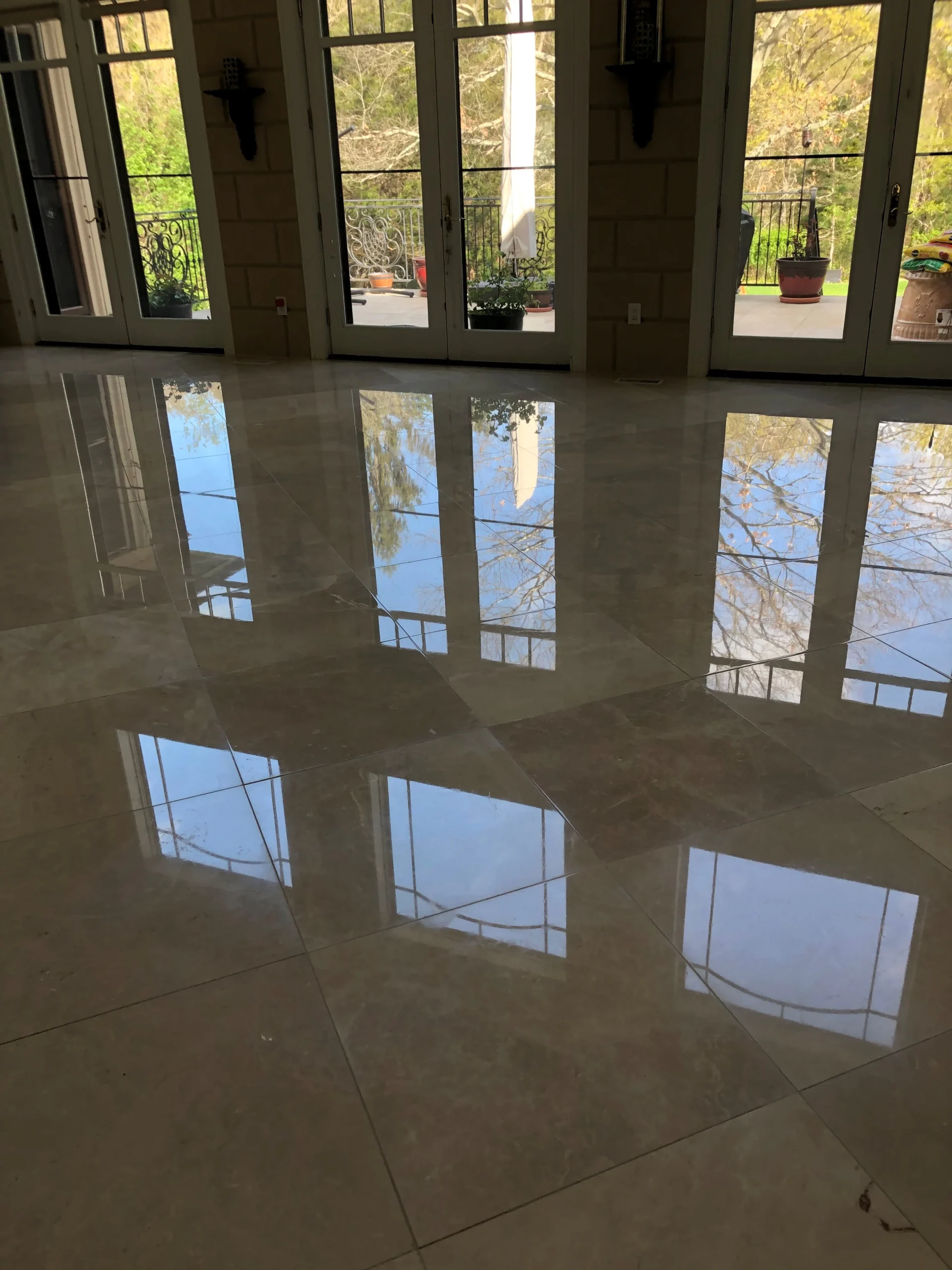
The cracks are filled and stabilized. The etching from decades of acidic cleaners is gone. The dull, worn surface that made your entryway look tired now reflects light the way it did when your home was built in the 1880s.
You’re not covering up damage or masking problems. The marble is actually restored—structurally sound, polished to its original finish, and protected against future wear.
This matters if you’re planning to sell, because original marble in good condition adds value. It matters if you’re staying, because you’ll stop worrying every time someone walks through with shoes on. And it matters if you care about preserving the character of your historic East Moriches home, because replacement marble never looks quite right in a Victorian-era property.
Most importantly, the floor is done. You’re not calling someone back in six months because the “fix” didn’t hold.
High Definition Marble Restoration Inc has been restoring historic floors across Long Island since 1998. We’re owner-operated, which means you work directly with someone who’s spent 25+ years figuring out how to fix marble that most companies consider unfixable.
The New York Times featured our work in 2001 for bringing century-old floors back to life. The Garden City Hotel has trusted us exclusively for over 16 years. Those relationships exist because we show up, do the work right, and don’t subcontract to crews who’ve never touched historic materials.
East Moriches has one of Long Island’s best-preserved historic districts—Victorian homes from the 1870s and 1880s with original architectural details that deserve proper care. We understand what you’re trying to protect. The marble in your home isn’t just a floor. It’s part of the reason you bought the house in the first place.
First, we assess the damage. Not just surface scratches—we’re looking at structural issues, settling cracks, loose sections, and whether the subfloor needs attention before we touch the marble itself.
Then we stabilize and repair. Cracks get filled properly, not just covered. Loose tiles get reset. Any grout issues get addressed. If the foundation isn’t solid, polishing won’t matter.
Next comes the actual restoration. We remove etching, scratches, and stains using a multi-step process that gradually brings the marble back to its original finish. This isn’t buffing or coating—we’re physically removing damaged layers and re-polishing the stone.
The process is dustless and takes one to two days for most residential floors. You can stay in your home. We’re not tearing anything out or creating a construction zone.
Finally, we seal and protect the surface so it holds up better against daily wear. You’ll get care instructions that actually make sense for historic marble, not generic advice written for modern materials.

Ready to get started?
You get a full structural assessment before any cosmetic work starts. That means identifying subfloor issues, checking for moisture problems, and making sure the marble is properly supported.
Crack repair and stabilization are included—not just filling, but actually addressing why the cracks formed in the first place. Settling happens in historic East Moriches homes, and if we don’t account for movement, repairs won’t last.
The restoration itself involves removing etch marks, scratches, stains, and dullness through a multi-step honing and polishing process. We’re bringing the marble back to its original finish, which is different from applying a topical coating that wears off.
Grout repair, tile resetting, and lippage correction (uneven tiles) are handled as needed. These aren’t upsells—they’re part of doing the job right.
You also get guidance on proper marble floor care moving forward. Most damage we see comes from people using the wrong cleaners or techniques. We’ll tell you what actually works so you’re not calling us back in a year because someone used vinegar on your newly restored floor.
We also offer concrete restoration and polishing for properties that mix historic and modern materials.
Restoration costs a fraction of replacement—usually 20-30% of what you’d pay for new marble installation. That’s the financial answer.
Here’s the practical one: replacement means tearing out original marble, disposing of it, sourcing new stone that probably won’t match your home’s era, and dealing with installation that disrupts your entire first floor for weeks. You’ll also lose the character and authenticity that made your historic East Moriches home worth $800K+.
Restoration means we work with what’s already there. The marble that’s been in your entryway since the 1880s gets repaired and brought back to its original condition. The process takes one to two days, not weeks. And when we’re done, you have floors that look new but are actually original—which matters to buyers and appraisers who understand historic properties.
Yes, and that’s specifically what we’re good at. The worse the floor, the better the project is for us.
Etching from acidic spills, scratches from decades of foot traffic, cracks from settling, stains that have been there since before you bought the house—all of that is fixable. We’re not covering it up or hiding it. We’re removing damaged layers and re-polishing the stone to its original finish.
The only thing we can’t fix is marble that’s been structurally destroyed—like tiles that have crumbled or stone that’s been ground down so far there’s nothing left to work with. But if the marble is still there, even if it looks terrible, we can almost always restore it.
Most companies won’t touch historic marble because it requires different techniques than modern materials. We’ve spent 25+ years figuring out those techniques. That’s why The New York Times featured our work and why we’ve maintained exclusive relationships with high-end commercial clients for over a decade.
Most residential marble floor restoration projects take one to two days. That includes repair work, honing, polishing, and sealing.
Larger or more complex jobs—like entire first floors in historic homes with significant structural issues—might take three to four days. We’ll tell you the timeline upfront during the free quote.
The process is dustless, so you’re not dealing with construction mess throughout your home. You can stay in the house while we work. We’re not tearing anything out or creating a situation where you need to move furniture into storage.
You’ll need to stay off the floors for a few hours after sealing to let everything cure properly, but that’s it. This isn’t a multi-week renovation project. We show up, do the work, and you have restored marble floors by the end of the week.
Polishing is the final step in restoration. It’s what creates the shine and smooth finish. But polishing alone won’t fix damaged marble.
If your floors have etching, cracks, stains, or structural issues, polishing will just make the damage more obvious. You need actual restoration first—repair work, honing to remove damaged layers, and then polishing.
A lot of companies offer “marble polishing services” but don’t do real restoration. They’ll buff your floors and maybe apply a coating, but that doesn’t address the underlying problems. Six months later, the coating wears off and you’re back where you started.
We do full marble restoration, which includes polishing as the finishing step. That means your floors aren’t just shiny—they’re actually fixed. The etching is gone. The cracks are filled and stabilized. The stone is sealed and protected.
If your marble just needs polishing because it’s dull but otherwise undamaged, we can do that too. But most floors in 100-year-old East Moriches homes need more than surface work.
Yes, especially in historic properties where original materials matter. Professional marble restoration can increase property value by up to 25% according to real estate data on historic home improvements.
Here’s why: buyers shopping for Victorian-era homes in East Moriches are specifically looking for preserved original details. When they walk into your entryway and see restored marble floors that look like they did in 1880, that’s a selling point. When they see cracked, stained, or damaged marble, that’s a negotiating point—or a reason to walk away.
Appraisers also recognize the difference between original restored materials and cheap replacements. Modern marble installed in a historic home doesn’t carry the same value as properly restored original stone.
Even if you’re not selling, restoration protects your investment. Letting marble deteriorate leads to more expensive structural repairs down the line. Addressing it now costs less than waiting until the damage spreads.
We specialize in marble floor restoration, but we also restore and polish concrete floors. That’s a newer service we’ve added because a lot of East Moriches properties mix historic and modern materials.
We don’t work on porcelain. Our focus is natural stone and concrete—materials that require specialized knowledge and equipment to restore properly.
If you have other natural stone like limestone, travertine, or terrazzo, we can handle that too. The techniques are similar to marble restoration, just adjusted for the specific characteristics of each material.
What we don’t do is general tile cleaning or maintenance services. We’re restoration specialists. If your floor needs actual repair work—fixing damage, removing years of buildup, bringing back the original finish—that’s what we do. If you just need someone to mop and buff, we’re not the right fit.