


If you’ve got a marble floor that’s seen better days, you’re probably weighing two options: live with it or rip it out. There’s a third option most people don’t know exists until they find us.
Restoration brings back the original surface without replacing a single tile. That means you keep the authentic material, the historical integrity, and the craftsmanship that modern installations can’t replicate. You also avoid the $70-190 per square foot that new marble runs on Long Island.
What you get instead is a floor that looks like it did decades ago—smooth, uniform, and polished—without the downtime, dust, or demolition. Most jobs wrap up in under two days. You’re not waiting weeks for contractors to rebuild your bathroom or entryway from scratch.
This matters in East Meadow, where so many homes were built in the mid-1950s with quality materials that have held up remarkably well. Those floors weren’t meant to be thrown away. They were built to last, and with the right care, they still can.
We’ve been restoring marble floors across Nassau and Suffolk Counties for over 25 years. We’re not a franchise. We don’t use subcontractors. When you call, you talk to the owner. When we show up, it’s the same person who gave you the quote.
We were featured in The New York Times back in 2001 for our work on historic floors, and that’s still what we do best. The older the floor, the more we’re in our element. East Meadow has plenty of homes with original marble that’s worth saving, and we’ve worked on enough of them to know what these materials need.
You’re not getting a cleaning service with a buffer. You’re getting someone who understands how marble ages, how it responds to different abrasives, and how to bring it back without destroying the surface in the process.
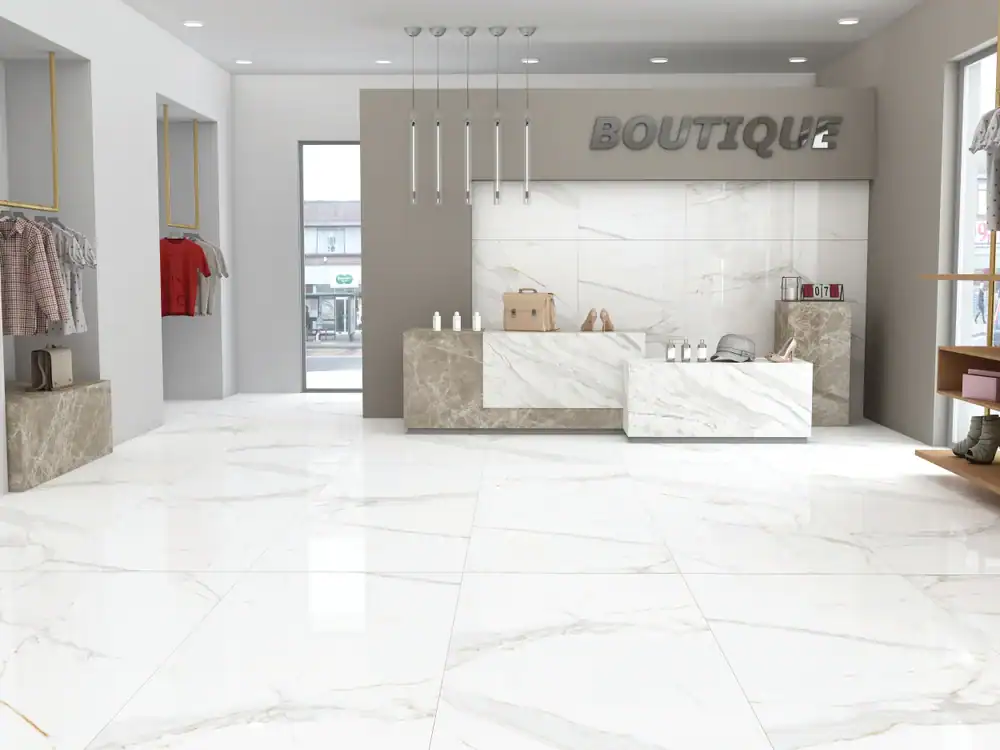
We start with an assessment of the surface. Not all marble damage is the same, and not all marble is the same material. We need to see what we’re working with before we touch it.
Once we know the condition, we use diamond abrasives to remove the damaged outer layer. This isn’t a topical fix—it’s a mechanical process that grinds away scratches, etching, and dullness to expose fresh stone underneath. Diamond abrasives cut faster and hold their shape longer than traditional methods, which means we can work precisely without over-grinding.
After the surface is leveled, we move through progressively finer grits to refine the finish. This is where the polish comes back. By the time we’re done, the floor is smooth, reflective, and sealed to protect against future wear.
The whole process typically takes less than two days for most residential jobs. You’ll have some dust and noise during the work, but we contain it as much as possible. When we leave, your floor is ready to use—no curing time, no waiting around.

Ready to get started?
You’re getting marble floor polishing, marble refinishing, and marble repair handled by someone who’s done this for decades. We work on bathroom floors, entryways, foyers, and full rooms. If it’s marble and it’s damaged, we can fix it.
We also handle concrete restoration and polishing, which is a newer offering but one that’s becoming more popular in East Meadow. Polished concrete is durable, low-maintenance, and works well in basements, garages, and commercial spaces. It’s a different process than marble, but the principle is the same: restore the surface instead of replacing it.
East Meadow homeowners tend to value longevity. The median property value here is over $628,000, and most of that housing stock is owner-occupied. People aren’t flipping these homes—they’re living in them. That means they care about maintaining original features, especially when those features can increase property value by 3-5% when properly restored.
We price everything upfront. No surprises, no change orders. You know what you’re paying before we start, and the owner oversees every project personally. That’s how we’ve stayed in business this long.
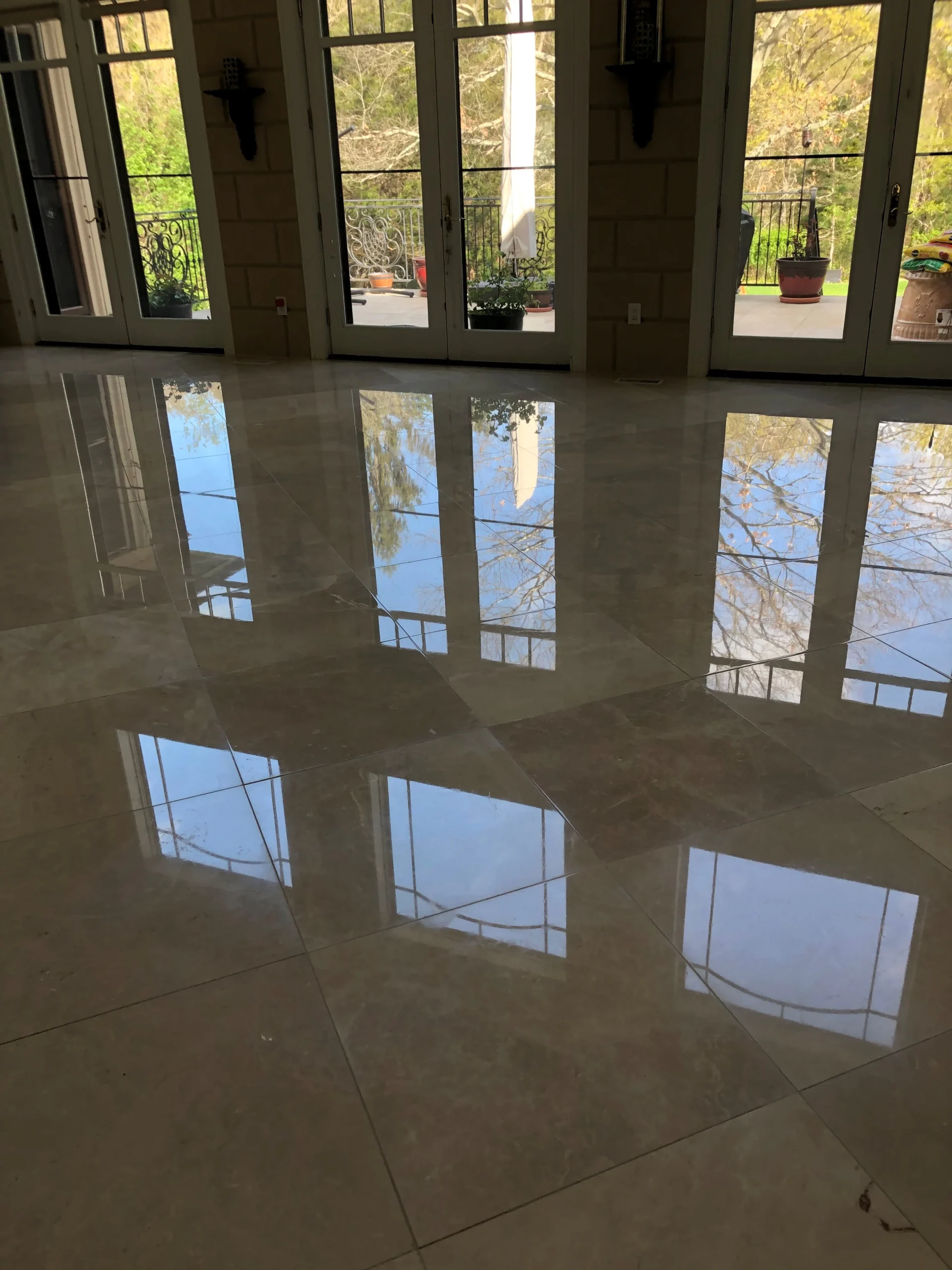
Restoration costs a fraction of what replacement runs. New marble installation on Long Island typically costs between $70 and $190 per square foot when you factor in materials, demolition, disposal, and labor.
Professional marble restoration costs significantly less because we’re not tearing anything out or bringing in new stone. We’re working with what’s already there. For most residential projects, you’re looking at a cost that’s 60-80% lower than full replacement.
The other advantage is time. Replacement means demo, subfloor prep, new tile installation, grouting, and curing. That’s a multi-week process. Restoration is typically done in under two days, and the floor is usable immediately after we finish.
Yes. Etching from acidic cleaners, wine, citrus, or vinegar is one of the most common types of damage we see, and it’s completely reversible with the right process.
Etching happens when acid dissolves the calcium carbonate in marble, leaving dull spots or rough patches. It’s not a stain—it’s actual surface damage. That means you can’t buff it out with a cleaning product. You need to remove the damaged layer and re-polish the stone.
We use diamond abrasives to grind away the etched surface and restore a uniform finish. Depending on how deep the damage goes, this can take anywhere from a few hours to a full day. Once the surface is leveled and polished, the etching is gone. We also seal the floor afterward to give you some protection against future spills, though marble will always be vulnerable to acid if it sits too long.
With proper care, a restored marble floor can go 10-15 years or more before it needs another full restoration. Marble is incredibly durable—it’s been used in buildings for thousands of years because it holds up.
What shortens that lifespan is neglect or improper maintenance. If you’re using acidic cleaners, dragging furniture without pads, or letting grit sit on the surface, you’ll wear it down faster. But if you’re sweeping regularly, using pH-neutral cleaners, and addressing spills quickly, the floor will stay in good shape for a long time.
High-traffic areas like entryways might need touch-ups sooner than a bathroom or bedroom, but that’s normal. The key is that marble can be restored multiple times over its life. You’re not on a countdown to replacement—you’re maintaining an asset that can last as long as the house does.
Historic floors are actually our specialty. The older and more complicated the floor, the better. We’ve worked on century-old marble throughout Nassau and Suffolk Counties, including plenty of homes in East Meadow with original installations from the 1950s and earlier.
Historic marble often presents challenges that modern floors don’t. The stone might be softer, the finish might have been done with techniques we don’t use anymore, and there’s often existing damage from decades of foot traffic and questionable cleaning methods. That’s where experience matters.
We treat these floors with the care they deserve. That means understanding the material, testing our approach before we commit, and making sure we’re not doing anything that compromises the historical integrity. If your floor has been in your family for generations, we’re not going to treat it like a standard cleaning job.
Polishing and refinishing are often used interchangeably, but they’re technically different levels of work. Polishing usually refers to the final step—bringing out the shine on a surface that’s already smooth. Refinishing is the full process, which includes grinding, honing, and polishing.
If your floor just looks dull but doesn’t have scratches, etching, or major damage, polishing might be enough. We can bring back the gloss without doing a full refinish. But if there’s real surface damage, you need refinishing—starting with coarser abrasives to remove the damaged layer, then working up through finer grits to restore smoothness and shine.
Most of the floors we see need refinishing, not just polishing. People don’t usually call us until there’s visible damage. But we assess every floor individually and recommend only what’s necessary. If polishing is enough, that’s what we’ll do. If you need a full refinish, we’ll explain why and what’s involved.
We restore marble anywhere it exists—bathrooms, entryways, kitchens, foyers, you name it. Bathrooms are actually one of the most common places we work because that’s where marble takes the most abuse from water, soap, shampoo, and cleaning products.
Bathroom floor restoration follows the same process as any other marble work, but we pay extra attention to grout lines, corners, and areas around fixtures where moisture tends to cause problems. If the grout is damaged or missing, we’ll let you know, but our focus is on restoring the stone itself.
The size of the space doesn’t matter. We’ve restored single bathroom floors and we’ve restored entire homes. What matters is the condition of the marble and whether restoration makes sense compared to replacement. In most cases, it does—especially in East Meadow, where original materials add value and character that new installations just don’t have.