

You’re looking at floors that have survived a century. They’ve seen generations of footsteps, spills, furniture moves, and probably a few renovation attempts that didn’t quite work out. The marble itself is still solid—it’s just buried under decades of wear, etching, and dullness that regular cleaning can’t touch.
Restoration brings back the depth and clarity you’d expect from natural stone. Not a surface-level buff, but a complete process that removes scratches, eliminates etching from acidic damage, and rebuilds the finish to how it looked when it was first installed. Most jobs take less than two days.
The difference shows up in how light moves across the surface. In how the veining becomes visible again. In knowing you didn’t replace something irreplaceable just because it looked tired.
Well-maintained original floors in historic homes can increase property value by 3-5%. Buyers pay premium prices for authentic features that were restored properly, not ripped out and replaced with something modern that doesn’t belong.
High Definition Marble Restoration Inc has been restoring floors in Nassau and Suffolk Counties since 1998. We’re owner-operated, which means the person who quotes your job is the same person doing the work. No crews showing up unsupervised. No miscommunication about what you were promised.
We focus on historic restoration—the 100-year-old floors in Gold Coast estates and vintage Long Island homes that need someone who understands old materials and original installation techniques. The New York Times featured our work in 2001, back when we were just getting started. The philosophy hasn’t changed: the worse the floor, the better the opportunity to show what real restoration looks like.
Dix Hills has plenty of homes from Long Island’s estate-building era, and many still have original marble in entryways, bathrooms, and kitchens. If your floors have been there since the house was built, you’re dealing with craftsmanship and materials that aren’t replicated today. That’s worth preserving correctly.
First, we assess the condition. Not every floor needs the same level of work, and we’re not going to sell you a full restoration if honing and polishing will get you there. We look at etching, scratches, staining, cracks, and overall surface integrity.
If the floor needs it, we start with grinding to remove the damaged top layer—this is where deep scratches, etching, and old coatings come off. Then we move through progressively finer honing stages to smooth the surface and prepare it for polishing. This is the part that takes skill with historic marble, because older stone has different hardness and porosity than what’s quarried today.
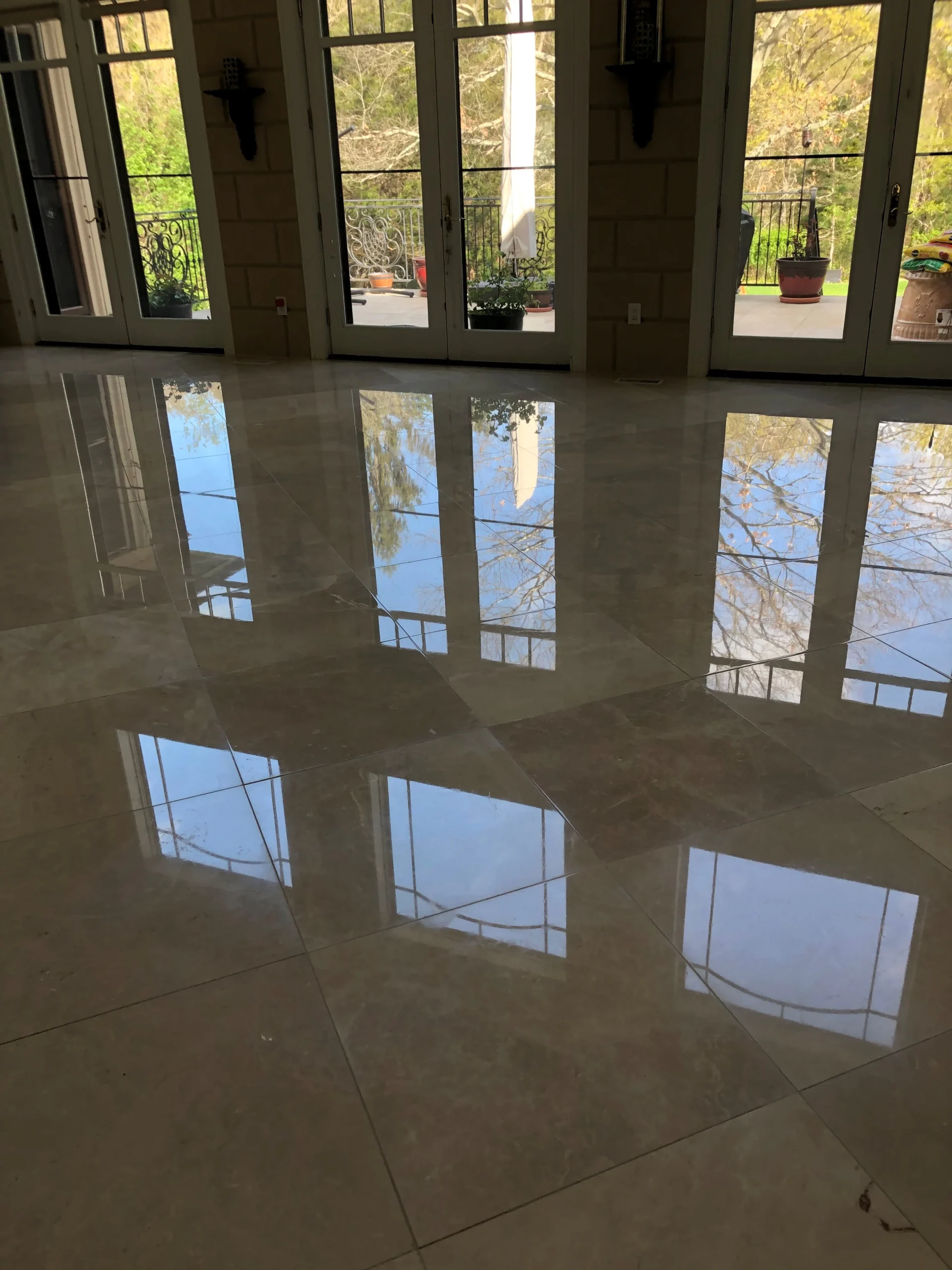
Polishing brings back the shine. We’re talking about a mirror-like finish that makes the stone look wet, even when it’s dry. The veining comes back. The depth returns. It looks like stone again, not like a worn-out floor.
If there are cracks, we address them during the process. Cracks spread, and they collect dirt and moisture, so fixing them isn’t cosmetic—it’s structural. Most jobs wrap up in under two days, depending on square footage and condition.

Ready to get started?
You’re getting a complete restoration, not just a polish. That means surface repair, etching removal, stain treatment where possible, crack repair, honing, and polishing. We also handle marble floor care recommendations so you know how to maintain the finish once we’re done.
We work on bathroom floors, kitchen floors, entryway marble, and full-room installations. If it’s marble and it’s in rough shape, that’s our specialty. We also do concrete restoration and polishing, which is a newer service but follows the same process—grinding, honing, polishing—to bring out the natural look of the material.
Dix Hills homeowners dealing with original marble from the early 1900s are often surprised by how much of the stone’s character comes back. The color deepens. The patterns become visible again. It stops looking like something you’re embarrassed about and starts looking like something you’re proud to show off.
We don’t work on porcelain, so if that’s what you have, we’re not the right fit. But if it’s natural stone—especially old, historic marble that’s seen better days—we’ve probably worked on something similar and know exactly how to bring it back.
Restoration is almost always more affordable than replacement, and it’s faster. Tearing out old marble means demolition, disposal, subfloor prep, new material, and installation. You’re looking at weeks of work and costs that climb quickly, especially if the original marble is thick or set in mortar.
Restoration skips all of that. We’re working with what’s already there, which means no demo, no new stone, no downtime waiting for materials to arrive. Most jobs finish in less than two days, and you’re left with the original floor—the one that’s been there for decades or longer—looking like it did when it was new.
The other factor is value. Buyers pay more for authentic, restored features in historic homes. Replacing original marble with modern stone might look fine, but it doesn’t carry the same appeal or the same return on investment. You’re preserving something irreplaceable, and that matters both financially and historically.
Yes. Etching happens when acidic substances—wine, citrus, vinegar, even some cleaners—break down the calcium carbonate in marble. It leaves dull spots or rough patches that don’t respond to regular cleaning. You can’t buff etching out with a mop or a DIY polish kit.
We remove etching by honing the surface. That means grinding away the damaged layer and smoothing the stone back to an even finish. Once the etching is gone, we polish the marble to restore the shine. The spot disappears completely because we’re not covering it up—we’re removing it.
This is especially common in bathrooms and kitchens where spills happen. If your marble doesn’t shine like it used to, or if you see dull patches that won’t go away no matter how much you clean, that’s etching. It’s fixable, and it’s one of the most common reasons people call us. The process works, and the results are immediate.
If the restoration is done correctly and you maintain the floor properly, you’re looking at years before it needs attention again. Marble is durable—it’s why it’s lasted a century in your home already. The finish we create during restoration is built to handle foot traffic, normal use, and everyday wear.
That said, how you care for the floor matters. Use pH-neutral cleaners made for natural stone. Clean up spills quickly, especially anything acidic. Avoid dragging furniture across the surface. Put mats at entryways to catch dirt and grit before it gets tracked onto the marble. These aren’t complicated steps, but they make a difference.
Over time, high-traffic areas might lose some shine. That’s normal. A maintenance polish every few years keeps the floor looking sharp without needing a full restoration. But the structural work we do—removing scratches, fixing cracks, eliminating etching—that lasts. You’re not going to need this level of work done again anytime soon if the job is done right the first time.
Honing smooths the surface of the marble using abrasives, but it doesn’t create a shine. The result is a matte or satin finish that’s smooth to the touch but doesn’t reflect light. Honing is what prepares the floor for polishing, and it’s also the step that removes scratches, etching, and surface damage.
Polishing comes after honing. It uses finer abrasives and compounds to bring out the stone’s natural gloss. This is what gives marble that mirror-like finish where you can see reflections and the veining really stands out. Polishing doesn’t just make the floor look better—it also tightens the surface, which makes the marble slightly more resistant to staining.
Some people prefer a honed finish because it’s less slippery and hides wear better in high-traffic areas. Others want the full polish because that’s the classic marble look. We can do either, depending on what you’re after. But for historic floors, polishing usually makes the most sense because it brings back the original appearance and shows off the quality of the stone.
That’s exactly what we specialize in. Older marble behaves differently than modern stone—it’s often denser, the veining is more pronounced, and the way it was installed (usually set in thick mortar) affects how we approach the work. But age isn’t a problem. If anything, it’s an advantage because older marble tends to be higher quality.
The key is understanding what you’re working with. Historic marble might have old coatings, wax buildup, or previous repair attempts that need to be undone before real restoration can happen. We’ve worked on floors in Gold Coast estates and vintage Long Island homes where the marble has been down since the early 1900s. The process is the same—assess, grind, hone, polish—but the experience matters because you’re dealing with materials and techniques that aren’t common anymore.
If your floor has been there for a century, it’s worth restoring correctly. You’re not going to find that same stone or that same craftsmanship in a replacement. We’ve seen floors that looked completely ruined come back to the point where you’d think they were just installed. It’s not magic—it’s just knowing how to work with old materials the right way.
Yes. We’ll come out, look at the floor, and give you a straightforward quote based on the condition, square footage, and what needs to be done. No pressure, no upselling, no vague estimates that change later. You’ll know what the job costs and how long it takes before we start.
Because we’re owner-operated, the person who gives you the quote is the same person doing the work. That means you’re getting an accurate assessment from someone who’s actually going to be on-site, not a salesperson who’s never restored a floor. We’ll explain what we’re seeing, what the process involves, and what you can expect as an outcome.
If you’re in Dix Hills or anywhere in Nassau or Suffolk Counties, reach out. We respond quickly, and we’re used to working with homeowners who want their historic floors handled correctly. The quote is free, and it gives you a clear picture of what restoration actually looks like for your specific floor.