
You walk into your entryway and actually see the depth in the stone again. The veining that’s been hidden under years of etching and scratches comes back to life. Your bathroom floor reflects light the way it did when the house was built.
That’s what proper marble floor restoration does. It brings back the finish without replacing the stone, which means you keep the original craftsmanship and character that drew you to your Brookhaven home in the first place.
Most homeowners don’t realize restoration is even possible until they’re already pricing out replacement. But here’s the reality: restoration costs less than half of what replacement runs, and it’s done in a fraction of the time. You’re not living through weeks of construction. You’re getting your floors back in two days, and they look better than they have in decades.
The difference shows up in more than just appearance. Well-maintained original marble can add 3-5% to your property value. Buyers in Nassau and Suffolk Counties pay premium prices for authentic, restored features—especially in historic homes where original materials can’t be replicated.
High Definition Marble Restoration Inc specializes in the kind of work most contractors won’t touch—100-year-old floors with damage that looks impossible to fix. That’s exactly where we do our best work.
We’re owner-operated, which means the person who quotes your job is the same person overseeing the restoration. No handoffs, no miscommunication, no surprises. We’ve been serving homeowners throughout Nassau and Suffolk Counties for over 25 years, and our work was featured in The New York Times back in 2001 for a reason—we understand historic materials and the techniques required to restore them properly.
Brookhaven has 16 historic districts and 46 town-designated landmarks. The homes here weren’t built with modern materials, and they shouldn’t be restored with modern shortcuts. When you’re dealing with marble installed in 1920 using methods that don’t exist anymore, you need someone who knows how to work with what’s already there—not someone who’s going to sand it down with harsh abrasives and call it done.
First, we assess the floor. Not every marble floor needs the same level of work, and we’re not going to sell you services you don’t need. We look at the type of stone, the extent of etching or scratching, and what finish you’re trying to achieve.
Then we start the restoration process. This typically involves honing to remove surface damage, polishing to bring back the shine, and sealing to protect the stone going forward. The specific steps depend on your floor’s condition, but the goal is always the same: restore the original finish without replacing the stone.
The work itself is faster than most people expect. We’re talking about two days or less for most residential projects. You’re not dealing with demolition, disposal, or installation of new materials. We’re working with what’s already there, which is why the timeline is so much shorter than replacement.
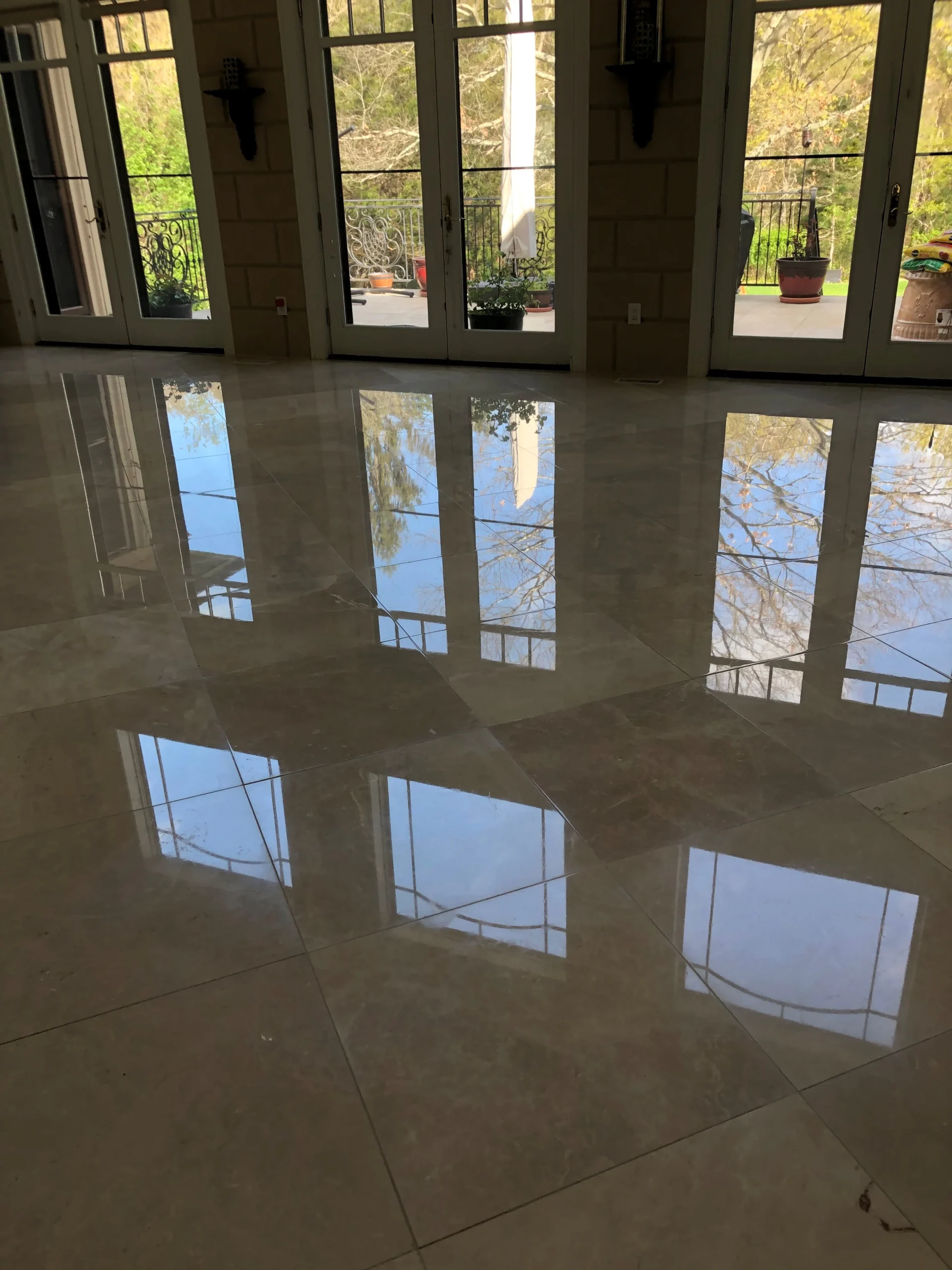
Once we’re done, you’ll see the difference immediately. The stone looks deeper, clearer, and more defined. The finish is smooth and reflective. And because we seal the marble properly, it’s protected against the kind of daily wear that caused the damage in the first place.

Ready to get started?
You’re getting a complete restoration—not just a surface polish that wears off in six months. That means honing to remove etching and scratches, polishing to restore the original finish, and sealing to protect against future damage.
We also handle marble repair for chips, cracks, and other structural issues that go beyond surface wear. If your bathroom floor has a crack from settling or your entryway has a chip from dropped furniture, we can address that as part of the restoration. The goal is to return the floor to its original condition, not just make it look better temporarily.
Brookhaven’s historic homes often have marble in multiple areas—entryways, bathrooms, kitchens, even fireplaces. We work on all of it. And because we’ve expanded our expertise to include concrete restoration and polishing, we can handle modern installations alongside your historic marble. That matters if you’re updating parts of your home while preserving the original character in others.
The other thing worth mentioning: we don’t use harsh chemicals or abrasive techniques that damage the stone. A lot of cleaning companies will go at marble with acids and rough pads, which makes the problem worse. We use methods designed specifically for natural stone, which is why the results last.
Restoration typically runs around $12 per square foot, while replacement can easily hit $50-$60 per square foot once you factor in demolition, disposal, new materials, and installation. You’re looking at saving 70-80% by restoring instead of replacing.
But the cost difference isn’t the only reason to restore. Replacement means losing the original stone—and in historic Brookhaven homes, that stone was often installed using techniques and materials that don’t exist anymore. Once it’s gone, it’s gone. You can’t replicate the character of 100-year-old marble with modern materials.
Restoration also takes less time, which means less disruption to your daily life. You’re not living through weeks of construction. Most residential projects are done in two days or less, and you’re back to using the space immediately.
Yes. Etching from acidic cleaners is one of the most common problems we see, and it’s completely fixable. Most generic household cleaners are too caustic for marble and will eat away at the finish over time. That’s what causes the dull, cloudy appearance that won’t buff out no matter how much you scrub.
The good news is that etching is surface-level damage. We hone the stone to remove the damaged layer, then polish it back to the original finish. The marble underneath is still intact—you’re just removing the top layer that’s been compromised by improper cleaning.
Once the restoration is done, we seal the marble and walk you through proper maintenance so the problem doesn’t come back. That usually means switching to pH-neutral cleaners designed specifically for natural stone. It’s a small change that makes a big difference in how long the restoration lasts.
A properly done restoration can last 10-15 years or more, depending on foot traffic and how well you maintain the floor. The key is using the right sealer and following basic maintenance practices—pH-neutral cleaners, regular dust mopping, and addressing spills quickly.
High-traffic areas like entryways will show wear faster than low-traffic areas like bathrooms, but even in high-traffic spaces, you’re looking at a decade or more before you need another full restoration. And when that time comes, you’re restoring again—not replacing. The stone itself can last centuries if it’s cared for properly.
The other factor is the quality of the original work. If the restoration is done with harsh abrasives or improper techniques, it won’t hold up. That’s why we use methods designed specifically for historic marble and why the owner oversees every project. You’re getting work that’s built to last, not a quick fix that looks good for six months.
Honing removes surface damage—scratches, etching, stains—by grinding down the top layer of the stone. It creates a smooth, matte finish that’s even across the entire floor. Polishing comes after honing and brings back the shine by buffing the stone to a high gloss.
Most restoration projects involve both. You hone first to get rid of the damage, then polish to restore the original finish. The level of polish depends on what you’re trying to achieve. Some homeowners prefer a high-gloss finish that’s very reflective. Others want a softer, satin finish that’s less shiny but still smooth and refined.
The process is similar to refinishing hardwood floors, except we’re working with stone instead of wood. You’re removing the damaged surface layer and revealing the clean, undamaged stone underneath. That’s why restoration works so well—the marble itself is still in good condition. It’s just the surface that needs attention.
Absolutely. Bathroom floor restoration is one of our most common projects. Marble in bathrooms takes a beating from water, soap, shampoo, and other products that can etch or stain the stone over time. But all of that is surface-level damage that can be removed through proper restoration.
The key with bathrooms is sealing the marble correctly after the restoration is done. We use sealers designed for high-moisture environments, which helps protect the stone from water penetration and staining. That doesn’t mean the marble becomes waterproof—it’s still a natural stone—but it does mean it’s much more resistant to the kind of damage that happens in bathrooms.
We also address grout and caulk issues as part of the restoration if needed. Grout can stain or crack over time, and caulk around tubs and showers can fail. If those issues are present, we’ll point them out and handle them so the entire floor looks cohesive when we’re done.
That’s our specialty. Historic floor restoration is exactly the kind of work we’re set up to handle. Brookhaven has some of the most beautiful historic properties on Long Island—Victorian farmhouses from the 1870s, Gold Coast estates from the early 1900s—and many of them have original marble floors that have been there for a century or more.
Those floors were installed using techniques and materials that aren’t common today, which means they require a different approach than modern marble. The stone itself is often softer or more porous than contemporary marble, and the installation methods were different. You can’t just treat it like a floor that was installed last year.
We’ve been working on historic homes throughout Nassau and Suffolk Counties for over 25 years. We understand the unique requirements of older stone, and we know how to restore it without damaging the original material. If your floor is 100 years old and looks like it’s beyond saving, that’s exactly the kind of project we want to see.