
You get your original marble back. Not a dull, etched surface that makes you cringe when guests walk in. Not slippery staircases that worry you every time someone uses them. The floors that made you fall in love with your home in the first place.
Most Baywood homeowners don’t realize their marble can be saved. You’ve probably tried store-bought cleaners or called a general cleaning company. Maybe you got a quote for replacement and nearly fell over at the $70-190 per square foot price tag.
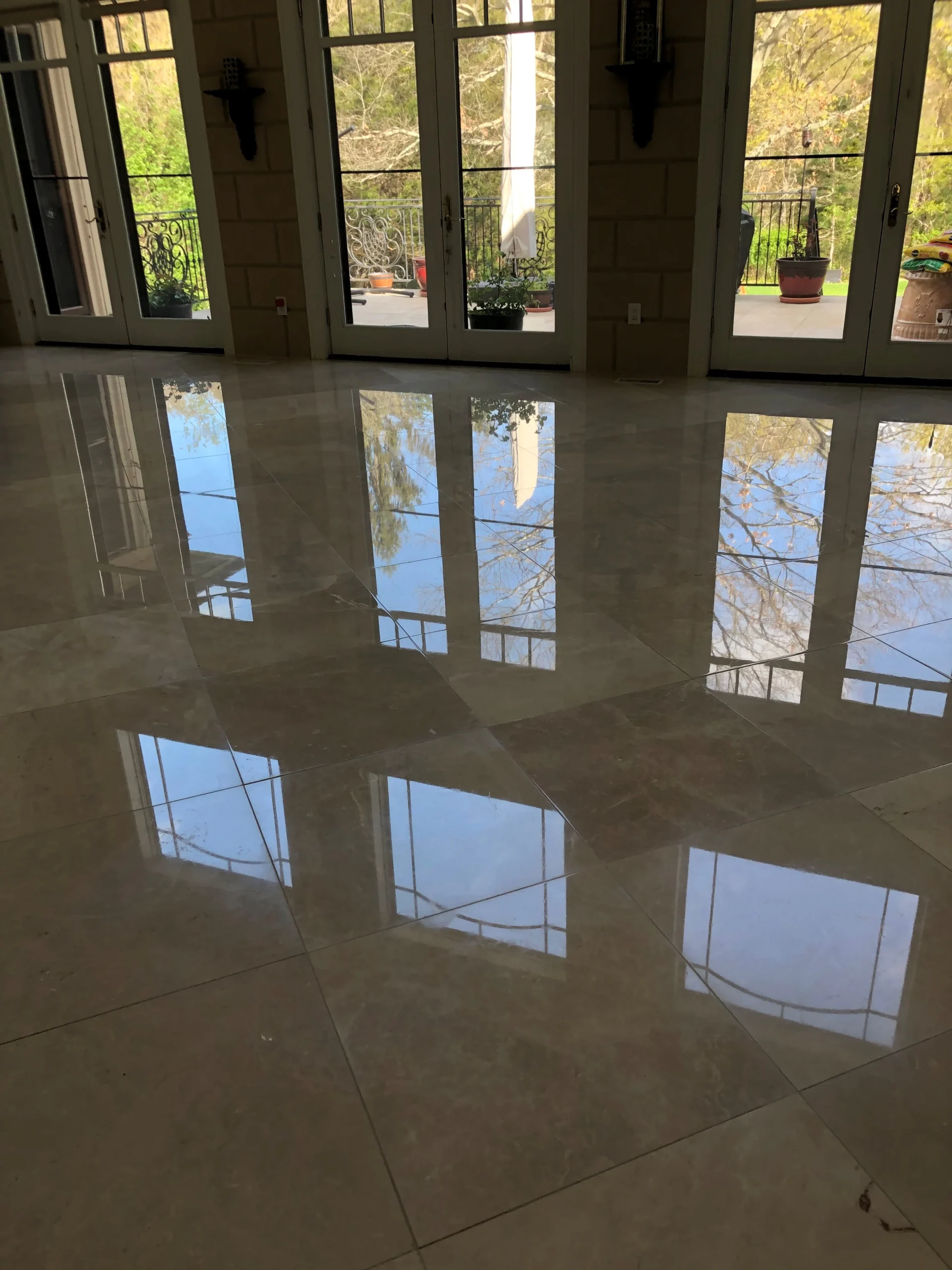
Professional marble floor polishing removes years of etching, hard water stains, and damage from acidic cleaners. Your floors regain their original depth and clarity. The process also restores the natural texture that provides grip, addressing the safety issues that come with worn, overly-polished surfaces.
This isn’t a temporary fix. When marble restoration is done correctly by someone who understands the stone, the results last. You’re looking at floors that increase your property value by 3-5%—especially important in Baywood’s historic homes where original features command premium prices.
We’ve been restoring historic marble floors in Nassau County since 1998. We’re owner-operated, which means you’re working directly with someone who’s been doing this for over 25 years—not a crew that learned last month.
The New York Times featured our work in 2001 for bringing century-old floors back to life. Our very first client, the Garden City Hotel, has used us exclusively for over 16 years. That doesn’t happen unless you consistently deliver.
Baywood’s historic homes, many built between 1940-1969, have marble that requires specialized knowledge. The coastal environment here accelerates wear—salt air, humidity, temperature swings all affect your floors differently than homes inland. We account for these conditions in every restoration. The worse the floor, the better the project is for us.
First, we assess the damage. Different marble types—calcite, hematite, limonite—require different approaches. What works on one can destroy another. We identify your specific stone and the type of damage you’re dealing with: etching, staining, scratches, or wear patterns.
Next comes the actual restoration. We use diamond abrasives in a multi-step process that removes damaged surface layers without harming the stone underneath. This isn’t aggressive buffing that creates more problems. It’s controlled material removal that reveals fresh marble beneath the damage.
Then we hone and polish to the finish level you want. Some historic floors look best with a softer hone. Others need high polish. We match the original finish or adjust based on your preferences and how you use the space.
Throughout the process, we mask and protect everything around the work area. Most jobs take less than two days. You get transparent pricing upfront—no surprises when we’re done. The owner oversees every project personally, so there’s direct accountability from start to finish.

Ready to get started?
You’re getting someone who understands that your marble tells a story. These floors have witnessed decades of your family’s life—or the families who lived here before you. They’re part of Baywood’s architectural character, installed with techniques and materials that don’t exist anymore.
The restoration process addresses the specific damage common to Long Island homes. Etching from acidic substances—wine, coffee, lemon juice, even some cleaning products—gets removed. Hard water deposits from our mineral-heavy local water supply come out. The cloudy, dull appearance that develops over years of improper cleaning disappears.
If previous owners or a well-meaning cleaning company damaged your floors with harsh chemicals or abrasive pads, we can usually reverse that too. We’ve seen floors that homeowners thought were ruined. Most can be saved.
You also get education on proper marble floor care moving forward. Most damage happens because installers never explained how to maintain these surfaces. You’ll know exactly what products are safe, what to avoid, and how to clean up spills before they become permanent problems. This knowledge protects your investment long after we’re gone.
Professional marble restoration typically costs 60-80% less than replacement. You’re looking at a fraction of the $70-190 per square foot that new marble installation runs on Long Island.
The exact cost depends on your floor’s size, condition, and the finish level you want. Heavily damaged floors require more steps to restore. Larger square footage obviously costs more than a small entryway. But even complex restoration jobs come in well below replacement costs.
Most Baywood homeowners are shocked at the difference. You’re keeping your original floors—which matters for historic home value—and spending significantly less. Plus, restoration usually takes under two days versus the week or more that replacement requires. You get transparent pricing before any work starts, so you know exactly what you’re paying.
Yes. Etching is actually the most common problem we fix. It happens when acidic substances dissolve the calcium carbonate in your marble’s surface—creating those dull, rough spots that don’t come out with regular cleaning.
Common culprits include lemon juice, vinegar, wine, coffee, and many household cleaners. Even products marketed as “safe for natural stone” can cause etching if they contain acidic ingredients. The damage is permanent in the sense that cleaning won’t remove it, but restoration absolutely can.
We remove the etched layer using diamond abrasives in a controlled process that reveals undamaged marble underneath. Then we hone and polish to restore the original finish. Your floors regain their depth, clarity, and shine. The key is using the right technique for your specific marble type—what works on one stone can damage another.
Not if the restoration is done correctly. In fact, proper restoration often makes floors safer than they were before.
Here’s what happens: Heavy foot traffic and improper cleaning gradually wear away the natural texture that provides grip. The surface becomes smoother and more slippery over time. Water on overly-polished marble creates genuinely hazardous conditions, especially on staircases.
During restoration, we can adjust the finish level to balance appearance with safety. High-traffic areas and stairs often work better with a honed finish rather than high polish. You get a beautiful floor that isn’t a liability. We discuss finish options based on how you actually use each space.
The goal is floors that look stunning and function safely for your family. We’ve restored plenty of marble staircases in Baywood’s historic homes. Safety is always part of the conversation.
Most residential marble floor restoration projects take less than two days. Smaller areas like bathroom floors or entryways might be done in a single day. Larger spaces or heavily damaged floors may need additional time.
The timeline depends on your floor’s square footage, the extent of damage, and the number of steps required to achieve the finish you want. We give you an accurate timeframe during the initial assessment—before any work begins.
Compare that to replacement, which typically takes a week or more once you factor in demolition, disposal, substrate prep, installation, and cleanup. Restoration is faster, less disruptive, and costs a fraction of the price. You’re not living in a construction zone for weeks. Most homeowners are surprised at how quickly we can transform floors that looked beyond saving.
Absolutely. Baywood’s proximity to the Atlantic creates specific challenges for marble that homes inland don’t face.
Salt air, higher humidity levels year-round, and temperature fluctuations accelerate wear on marble surfaces. The moisture in coastal air interacts with the stone differently. Hard water—which Long Island is known for—leaves mineral deposits that build up over time and eventually create permanent-looking stains.
Homes near the water sometimes deal with basement or ground-level flooding that affects marble installations. The coastal environment also means your floors are exposed to more moisture overall, which can worsen existing damage or create new problems if the stone wasn’t properly sealed.
We account for these local conditions in every restoration. The techniques and products we use are chosen specifically for marble in Nassau County’s coastal environment. This isn’t a one-size-fits-all approach. Your floors face different challenges than marble in, say, Arizona—and the restoration process needs to reflect that.
Polishing is one step in the restoration process, but it’s not the whole job. If your floors have etching, deep scratches, stains, or significant wear, polishing alone won’t fix the problem.
Full marble restoration involves removing damaged surface layers with diamond abrasives, then honing the stone through progressively finer grits, and finally polishing to achieve the desired finish. It’s a multi-step process that addresses damage at the structural level—not just the surface.
Polishing by itself only works if your marble is in good condition and just needs the finish refreshed. Most floors we see in Baywood’s historic homes need actual restoration. Years of etching from cleaning products, hard water damage, and wear from foot traffic require more than a polish.
Some companies offer “marble polishing services” but use aggressive methods that create more damage. They’re essentially buffing the surface without addressing underlying problems. Real restoration requires understanding the stone type, the damage, and the correct technique to bring it back without causing harm. That’s the difference between a cleaning company and a marble restoration company.