

You’re looking at marble that used to turn heads. Now it’s dull, scratched, or stained—and you’re wondering if it’s even worth saving.
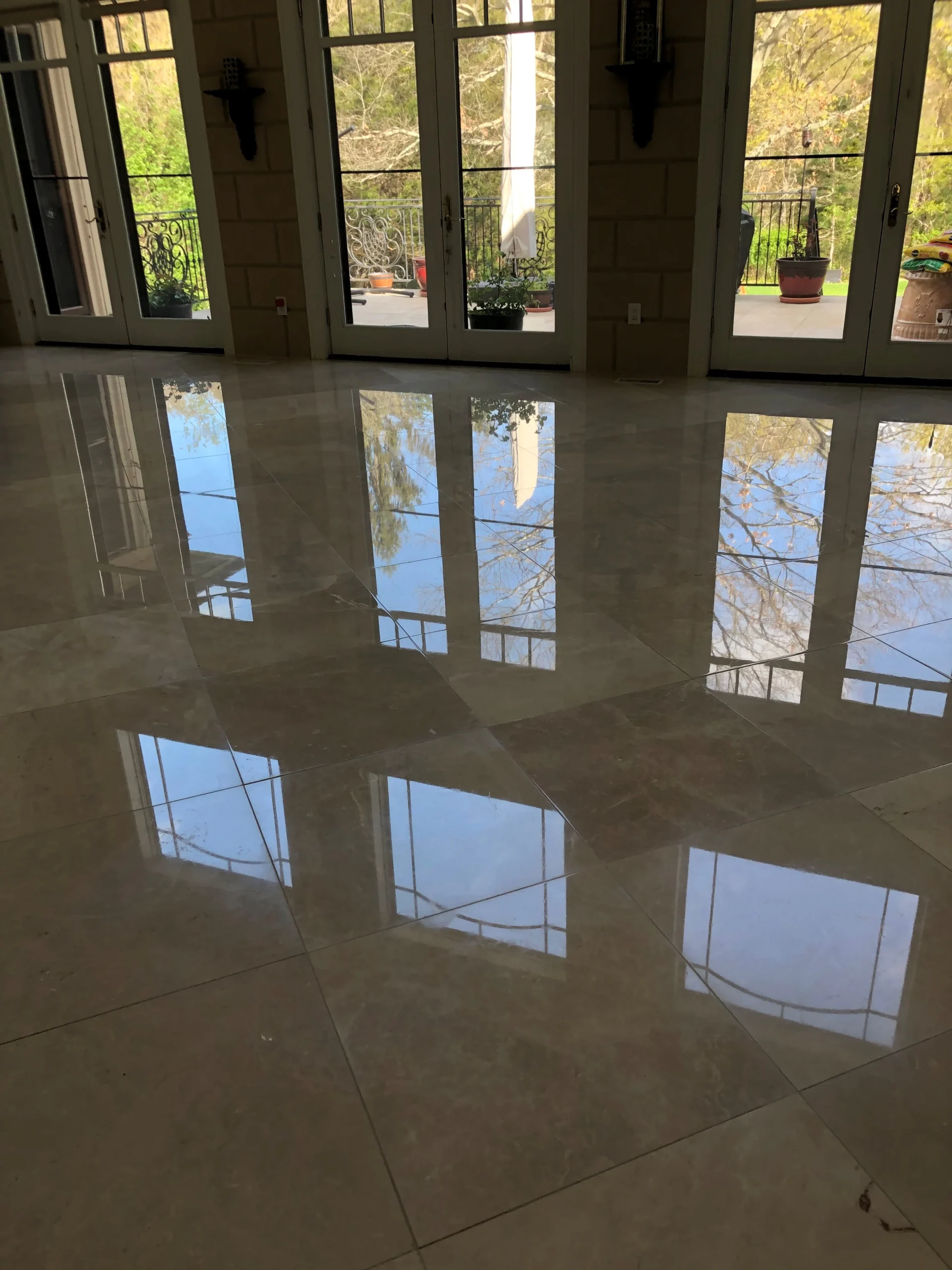
It is. Professional marble floor restoration brings surfaces back to a mirror finish that lasts 10-15 years in residential settings. That’s not a quick buff job that fades in months. It’s a complete process that removes etching, eliminates scratches, and restores the depth and clarity your marble had when it was first installed.
Most Baldwin homeowners are surprised by two things: how much better their floors look than they expected, and how much faster the work gets done. We’re talking 1-2 days for most residential projects. You can use your bathroom or kitchen immediately after we’re finished.
The difference between restored marble and replaced tile isn’t just aesthetic. Original marble floors—especially in Nassau County’s older homes—have veining patterns and color variations you can’t replicate with modern materials. When you restore instead of replace, you’re keeping the authentic character that makes your home valuable.
High Definition Marble Restoration Inc has spent over 25 years working on Nassau County’s most challenging marble projects. We’re not a cleaning company that dabbles in stone work. We’re specialists in historic floor restoration—the kind of work that requires understanding how 100-year-old marble behaves differently than modern materials.
Our owner oversees every project personally. No subcontractors. No surprises. When you call, you’re talking to someone who’s actually done the work, not a salesperson reading from a script.
We’ve been featured in the New York Times for our restoration work. The Garden City Hotel has trusted us exclusively for over 16 years. Baldwin homeowners choose us because we understand Long Island’s unique challenges—the coastal humidity, the hard water, and the age of local properties that create specific marble problems requiring specialized knowledge to solve properly.
First, we assess the damage. Etching, scratches, and stains all require different approaches. What looks like a stain to most homeowners is often etching—physical damage to the marble’s surface that won’t respond to cleaning products.
We start with diamond abrasives to remove the damaged layer. This isn’t sanding in the traditional sense. We’re using progressively finer grits to eliminate scratches and etching while maintaining the floor’s original plane. The process is dusty, which is why we mask off your space carefully and clean thoroughly as we go.
Next comes honing and polishing. This is where the marble’s natural shine returns. We’re not applying a coating that will wear off in a few months. We’re bringing out the stone’s inherent reflective properties through mechanical polishing that penetrates the surface.
Finally, we seal the marble with a penetrating sealer that protects against future staining without changing the appearance. You get a surface that looks stunning and stands up to daily use in Baldwin’s humid climate.
The entire process typically takes 1-2 days for residential bathrooms and kitchens. Larger areas take longer, but most homeowners are back to normal use faster than they expected.

Ready to get started?
You’re getting a complete restoration, not a surface-level cleaning. That means removing etching from acidic cleaners, eliminating scratches from years of foot traffic, and restoring the mirror finish that makes marble worth having in the first place.
We handle bathroom floor restoration differently than kitchen work because the damage patterns are different. Bathrooms in Nassau County deal with constant hard water exposure—Long Island’s mineral-heavy water leaves deposits that etch marble over time. We remove that damage and seal the surface to slow future buildup.
Historic marble gets special attention. If your Baldwin home has original marble from the early 1900s, we’re working with stone that has different characteristics than modern materials. The restoration process accounts for how these older marbles respond to polishing and sealing.
You also get transparent pricing upfront. We quote the job after seeing the condition of your floors, and that quote doesn’t change unless you change the scope. No hidden fees for “unexpected damage” we should have noticed during the initial assessment.
The work comes with a comprehensive warranty. We’re confident enough in our process to back it up long-term, which matters when you’re making a significant investment in your home’s appearance and value.
Professional marble restoration typically costs 60-80% less than full replacement. You’re looking at restoring what you have for a fraction of the price of ripping everything out and starting over.
The exact cost depends on the marble’s condition and the square footage involved. Severe etching takes more work than light scratching. Larger areas cost more than small bathroom floors. But even complex restoration jobs usually come in well below replacement costs.
Replacement also means dealing with demolition, disposal, subfloor work, and installation—all of which add time and expense. Most marble restoration projects in Baldwin are completed in 1-2 days. Replacement can take a week or more when you factor in ordering materials and scheduling multiple trades.
There’s also the value consideration. Restored original marble maintains the authentic character that makes Nassau County’s historic properties desirable. Replacement tile, even high-quality marble, doesn’t have the same veining patterns and color depth as stone that’s been in place for decades.
Yes, but only if it’s actual polishing—not just buffing or cleaning. Etching is physical damage to the marble’s surface, usually from acidic cleaners or Long Island’s hard water. The damaged layer needs to be removed and the surface re-polished.
Many Baldwin homeowners waste time trying stain removal techniques on etch marks. Those don’t work because nothing has penetrated the stone. The marble’s surface has been chemically altered, leaving dull spots that feel slightly rough to the touch.
Professional marble floor polishing uses diamond abrasives to remove the etched layer, then progressively finer grits to restore the shine. This is different from what cleaning companies do when they “polish” marble with topical products. Those treatments might add temporary shine, but they don’t fix the underlying damage.
The process works on both light etching and severe damage. Light etching from occasional cleaner contact might only need honing and polishing. Heavy etching from years of harsh bathroom cleaners requires more aggressive restoration. Either way, the marble can be brought back to its original finish.
Professional marble restoration typically lasts 10-15 years in residential settings throughout Nassau County and Suffolk County. This timeline assumes normal use and proper maintenance, which is significantly longer than the 2-3 years you might get from basic cleaning services.
The longevity depends partly on how you care for the marble after restoration. Using pH-neutral cleaners instead of acidic bathroom products makes a difference. Addressing Long Island’s hard water with regular squeegee use in showers helps prevent new etching.
Traffic patterns matter too. A marble bathroom floor used by two people will hold up longer than a high-traffic entryway. But even in busy areas, properly restored and sealed marble maintains its appearance for years before needing attention.
The restoration process itself contributes to longevity. We’re not applying a coating that wears off. We’re mechanically polishing the stone and sealing it with a penetrating sealer that protects from within. That approach holds up better in Baldwin’s humid coastal climate than topical treatments that can peel or yellow over time.
Yes—historic marble restoration is actually our specialty. We’ve worked on century-old marble throughout Nassau County, including many of Baldwin’s older properties, and we understand how these materials behave differently than modern stone.
Historic marble often has characteristics that require adjusted restoration techniques. The stone may be softer than contemporary marble, or it may have existing repairs from previous generations that need to be worked around carefully. We account for these factors when planning the restoration approach.
The risk comes from inexperienced contractors who treat all marble the same. Using overly aggressive abrasives or harsh chemicals can damage historic stone permanently. We’ve seen cleaning companies ruin original marble by applying techniques that work fine on modern materials but destroy older installations.
Our process preserves the marble’s original character while bringing it back to life. You’re not getting a modern-looking floor that feels out of place in a historic home. You’re getting the same marble that’s been there for decades, restored to how it looked when it was first installed. The veining patterns, color variations, and craftsmanship remain intact—we’re just removing the damage from years of use and improper maintenance.
Marble repair addresses specific damage like cracks, chips, or isolated stains. Full marble floor restoration addresses the overall condition of the entire surface—dullness, etching, scratches, and wear patterns across the whole floor.
Many Baldwin homeowners start by asking about repair because they notice one obvious problem area. But when we assess the floor, we often find that the “good” sections are actually dull or lightly etched—they just look acceptable compared to the severely damaged spots.
Full restoration brings the entire surface to the same level of finish. That means you don’t have shiny repaired areas that stand out against dull surrounding marble. Everything gets honed, polished, and sealed to match.
The process can include repairs as part of the overall restoration. If your marble has cracks or chips, we address those first, then restore the entire surface so the repairs blend invisibly. This approach makes more sense than repairing damage and leaving the rest of the floor in mediocre condition. You’re investing in the work anyway—might as well get the whole floor looking the way it should.
Yes, and it’s one of the most common projects we handle in Nassau County. Long Island’s hard water creates ongoing challenges for marble bathroom floors, and professional restoration removes the mineral deposits and etching that build up over time.
Hard water damage shows up as cloudy areas, white residue, or rough patches—especially around showers and tubs where water sits on the marble. These mineral deposits are difficult to remove with standard cleaners, and many bathroom products are too acidic for marble, leading to additional etching when homeowners try to clean the buildup.
The restoration process removes both the mineral deposits and the etching they cause. We’re taking off the damaged surface layer and re-polishing the marble underneath. Then we seal it with a penetrating sealer that helps protect against future hard water damage.
That said, restoration isn’t a permanent fix for hard water exposure. Baldwin’s water supply will continue depositing minerals on your marble. Regular maintenance—wiping down surfaces after use, using a squeegee in the shower, and cleaning with pH-neutral products—extends the time between restorations. But the marble itself will be in much better shape to handle daily exposure after professional restoration than it was when damaged and unsealed.