You’re looking at floors that have seen a century of foot traffic. Maybe the marble in your entryway has lost its shine, or the bathroom floor shows etching from decades of harsh cleaners. The veining that once made guests stop and admire now sits dull under a haze of wear.
Replacement isn’t your only option. Professional marble floor restoration brings those surfaces back to their original condition—the gleam, the depth, the character—without tearing anything out. You’re talking about spending hundreds instead of thousands, and you keep the irreplaceable craftsmanship that came with your home.
Most restoration projects in Albertson wrap up in a day or two. No weeks of construction chaos. No disposal fees or demolition. Just skilled work that protects what you already have and adds value to your property. Historic marble, properly restored, can increase your home’s value by 3-5% because buyers in Nassau County specifically seek authentic period features.
We specialize in the floors that other companies won’t touch. The 100-year-old marble with damage that looks irreversible. The historic surfaces where one wrong move ruins everything.
We’re owner-operated, which means you get direct expertise on every project—not a crew that learned marble restoration last month. The New York Times featured our work in 2001, and we’ve spent 25+ years since then restoring historic floors throughout Nassau County. Albertson’s vintage homes, with their original marble installations from Long Island’s estate-building era, are exactly the kind of projects we handle best.
You’ll know your costs upfront. You’ll work directly with someone who understands the difference between 1920s Carrara and modern marble, and why that matters for your restoration approach.
First, we assess your marble floor in person. Not every surface needs the same approach—antique marble restoration requires understanding the original installation methods, the specific stone type, and what’s causing the current damage. We’ll tell you exactly what’s needed and what it’ll cost before any work starts.
The restoration itself typically involves removing surface damage through careful grinding and honing, then polishing the marble back to its original finish. For historic floors in Albertson, we often deal with etching from acidic cleaners, scratches from decades of use, or dullness from improper maintenance. Each issue gets addressed with techniques specific to your marble type.
We finish with proper sealing to protect against Nassau County’s coastal humidity and mineral-rich water—both of which affect marble differently than in drier climates. You’ll get guidance on maintaining the restoration long-term, because the goal isn’t just making your floors look good for a week.

Ready to get started?
Marble floor restoration covers everything from minor polishing to complete surface refinishing. If your floors just need their shine back, marble polishing services can handle that in hours. Deeper damage—etching, scratches, lippage between tiles—requires more intensive work, but it’s still far less disruptive than replacement.
Bathroom floor restoration is particularly common in Albertson’s older homes. Decades of moisture exposure and cleaning products leave marble dull, stained, or etched. We restore those surfaces to their original condition, then seal them properly against future water damage—a real concern in Nassau County, where humidity stays high year-round.
For historic properties, we handle marble repair that preserves the floor’s authentic character. The veining patterns and color variations in century-old marble can’t be replicated with modern materials. Once you replace those floors, that craftsmanship is gone. Restoration keeps what makes your home valuable while bringing back the visual impact those floors had when they were first installed.
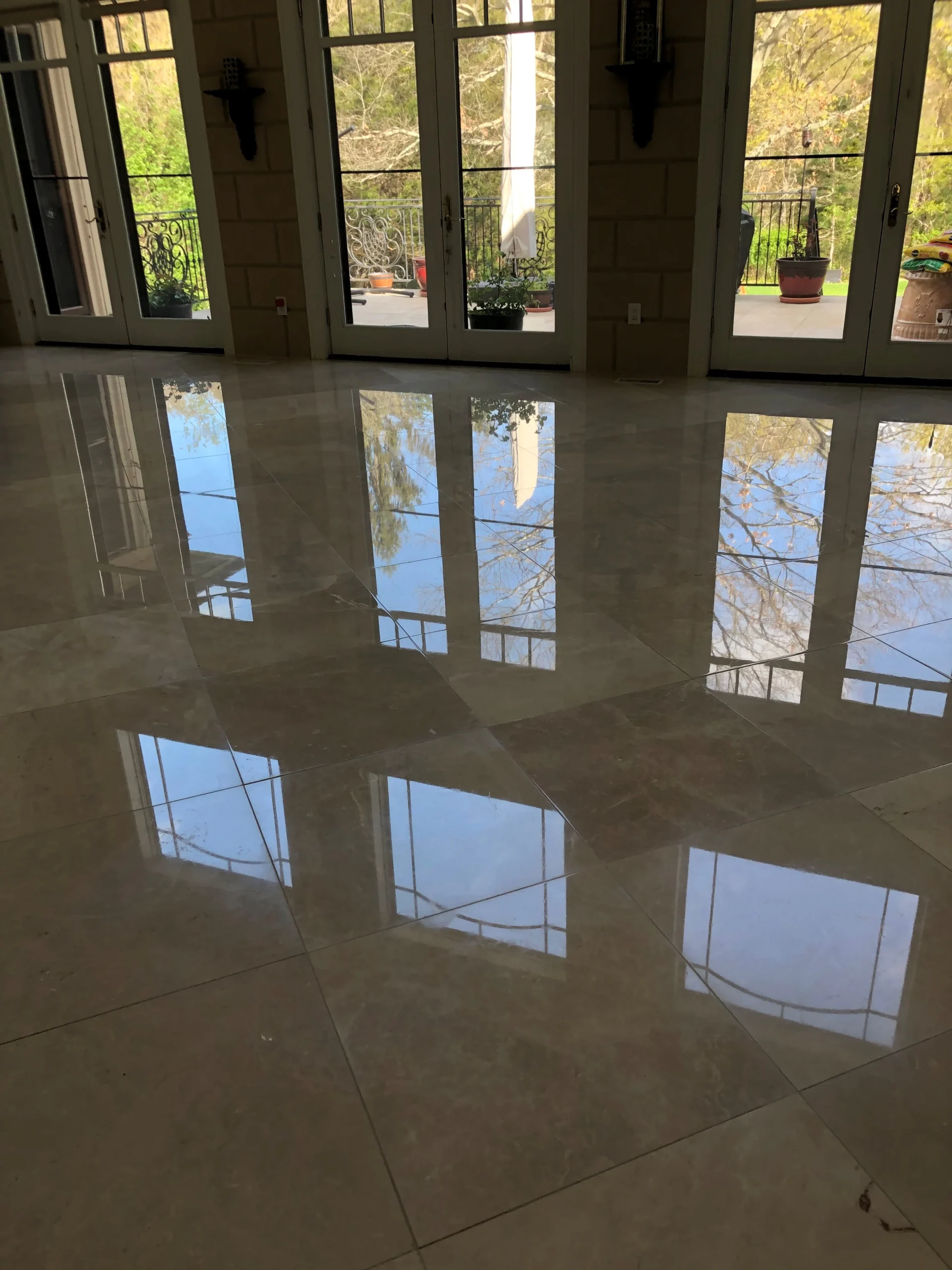
Professional marble restoration typically costs 60-80% less than full replacement. You’re looking at the difference between a few hundred dollars for polishing and refinishing versus several thousand for demolition, disposal, new materials, and installation.
Replacement also means dealing with potential plumbing modifications, subfloor repairs, and weeks of construction. Restoration work usually wraps up in one to two days with minimal disruption to your daily routine.
For historic homes in Albertson, there’s another cost to consider: property value. Buyers pay premium prices for authentic period features. Replace your original marble floors and you lose that selling point permanently. Restore them properly and you’re protecting an asset that can increase your home’s value by 3-5%.
Yes—and often the worse the damage, the more dramatic the results. We’ve restored century-old marble floors throughout Nassau County that looked beyond saving. Heavy etching, deep scratches, dullness from years of wrong cleaning products—all of that can be addressed.
The key is understanding what you’re working with. Antique marble requires different techniques than modern stone. The minerals present in historic marble, the way it was originally finished, even how it was installed all affect the restoration approach.
What won’t work is DIY attempts or hiring a general cleaning company. Marble gets ruined easily by inexperienced work—harsh acids, wrong abrasives, improper polishing techniques. You’ll find plenty of companies offering marble services who’ve actually never worked with historic materials. That’s where permanent damage happens.
Most residential marble restoration projects in Albertson take one to two days, depending on the floor’s size and condition. A standard entryway or bathroom might be done in a single day. Larger areas or floors requiring extensive repair work could take longer.
Compare that to replacement, which means weeks of your home turned into a construction zone. You’re dealing with demolition noise, dust, disposal trucks, subfloor work, new installation, grouting, and curing time before you can actually use the space.
Restoration is efficient because we’re working with what’s already there. The marble doesn’t need to cure or set. Once the polishing and sealing are complete, you can walk on your floors the same day. There’s no waiting period, no extended disruption to your household.
Properly restored and sealed marble handles Nassau County’s coastal environment well—but the sealing part is critical. Albertson’s proximity to the Atlantic means higher humidity year-round, and Long Island’s mineral-rich water leaves calcium and magnesium deposits on marble surfaces if they’re not protected.
We seal restored marble with products designed for these specific conditions. That protection guards against moisture penetration, which is particularly important in older Albertson homes where original moisture barriers weren’t standard. Basement and ground-level marble installations near the water need extra attention.
You’ll also get maintenance guidance specific to local conditions. The cleaning products that work fine in Arizona will damage marble in a humid coastal climate. Knowing how to care for your floors after restoration—what to use, what to avoid, how often to reseal—makes the difference between marble that lasts another century and marble that needs work again in five years.
If your marble is original to an older Albertson home, restoration almost always makes more sense. You’re preserving irreplaceable craftsmanship and materials that add authentic value to your property—something buyers specifically look for in Nassau County’s historic neighborhoods.
The marble installed during Long Island’s estate-building era has characteristics you can’t replicate today. The veining patterns, the color depth, even the way it was cut and finished represent techniques that aren’t standard anymore. Replace those floors and you lose that character permanently.
There’s also the practical side: restoration costs a fraction of replacement and takes days instead of weeks. Unless your marble is structurally compromised—cracked subfloor, severe lippage that can’t be leveled—restoration will get you the results you want without the expense and disruption of starting over. Most damage that looks permanent to a homeowner is completely fixable to someone who actually specializes in historic marble restoration.
Marble polishing addresses surface-level dullness and minor wear. If your floors have lost their shine but don’t have deep scratches, etching, or damage, polishing brings back that glossy finish in a matter of hours. It’s the least invasive option and costs the least.
Full marble restoration involves grinding down the surface to remove deeper damage—scratches, etching, lippage, stains that have penetrated the stone. Then we hone and polish the marble back to its original finish. This process takes longer and costs more, but it addresses problems that polishing alone can’t fix.
For most historic floors in Albertson, you’re looking at full restoration. Decades of foot traffic, improper cleaning, and environmental exposure create damage that goes beyond what polishing can handle. We’ll assess your specific situation during the quote and tell you exactly what’s needed—not upsell you on work your floors don’t require.